ガニュメデスの略奪
ピーテル・パウル・ルーベンス · 1630s
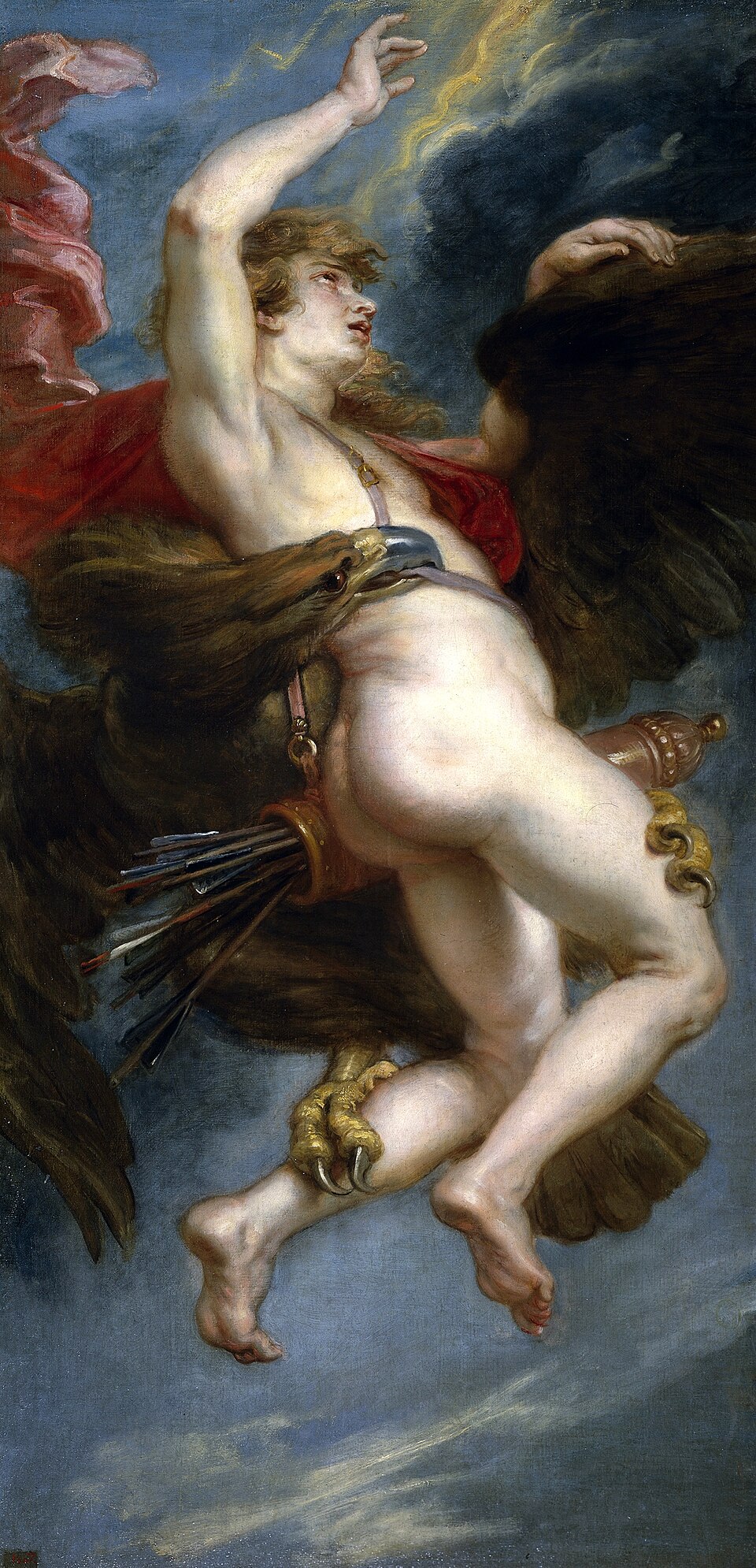
An eagle seizes a young shepherd and tears him into the sky, while a thunderbolt cracks above. Rubens painted this himself for the Spanish king's hunting lodge in the late 1630s, turning Ovid's story into one upward rush of wings and bodies.
The story behind the painting
In 1636 King Philip IV of Spain commissioned Rubens to create a series of about 60 mythological paintings for the Torre de la Parada, a royal hunting lodge outside Madrid, largely based on Ovid's Metamorphoses. Rubens carried out this huge commission with many Antwerp painters, including Jacob Jordaens, Cornelis de Vos and Jan Cossiers, who worked from his designs. A number of the final paintings he executed himself, and The Rape of Ganymede, produced between 1636 and 1638, is one of them. A preparatory sketch is in the Princeton University Art Museum. Wikidata dates it simply to the 1630s.
What to look for
Rubens shows the instant the eagle catches the young man and lifts him violently into the air. The diagonal composition drives everything upward, and the thunderbolt in the background adds force and fury. The figure of Ganymede is based on one of the sons in the ancient Laocoön group in the Vatican, which Rubens had sketched in Rome decades earlier, and the eagle on his own Prometheus Bound. Ganymede's left hand rests on the eagle's outstretched wing and he looks up at the lightning. Compared with the sketch, Rubens added a quiver, whose strap the eagle's beak now catches, and the thunderbolt.
Meaning and intent
In Ovid, Jupiter burns with love for the Trojan youth and himself takes the form of the eagle, the bird that carries his thunderbolts. In Virgil, Jupiter sends an eagle instead. In the final painting Ganymede appears more apprehensive than in the sketch, possibly because Rubens saw the eagle as Jupiter's messenger, as in Virgil, with the god himself present in the lightning above. The story is homoerotic, and the quiver added to the final version is shaped and placed in a way that clearly points to its erotic meaning. The scene gave Rubens a chance to paint a beautiful male nude in violent motion.
Legacy
The painting's tall, narrow format, about 181 by 87 cm, suggests it was meant to hang between windows in the king's hunting lodge. It is now in the Museo del Prado in Madrid. Rubens had treated the same story much earlier, around 1611 to 1612, in a work showing Ganymede arriving on Olympus, where Hebe, the previous cup-bearer, hands him her vessel as a banquet begins. The preparatory designs for the Torre de la Parada series are spread among museums in Madrid, Rotterdam, Brussels and Princeton, and one more sketch for this picture may have belonged to the painter Richard Cosway, an admirer of Rubens.
豆知識
- Painted by Rubens himself between 1636 and 1638.
- Made for Philip IV's hunting lodge, the Torre de la Parada.
- Ganymede's pose is based on the ancient Laocoön group.
- Now in the Museo del Prado, Madrid; a sketch is in Princeton.
画家について
ピーテル・パウル・ルーベンス (1577-1640)
同じ画家の作品: ピーテル・パウル・ルーベンス
.jpg) キリスト昇架 - Peter Paul Rubens (1609)
キリスト昇架 - Peter Paul Rubens (1609) レウキッポスの娘たちの略奪 - Peter Paul Rubens (1618)
 ルーベンスとイザベラ・ブラント - Peter Paul Rubens (1600s)
 サムソンとデリラ - Peter Paul Rubens (1600s)
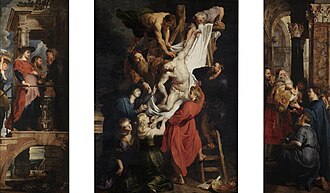 キリスト降架 - Peter Paul Rubens (1611)
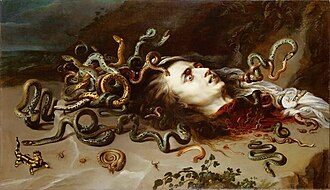 メドューサの頭部 - Peter Paul Rubens (1618)
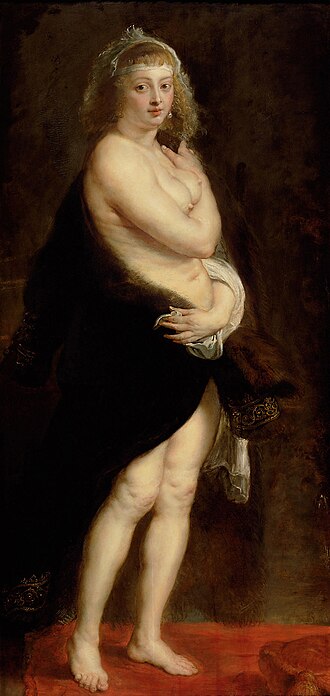 毛皮をまとったエレーヌ・フールマン - Peter Paul Rubens (1638)
.jpg) 愛の園 - Peter Paul Rubens (1632)
愛の園 - Peter Paul Rubens (1632)
関連する画家の作品
 星月夜 - Vincent van Gogh (1889)
.jpg) 夜のカフェテラス - Vincent van Gogh (1888)
夜のカフェテラス - Vincent van Gogh (1888)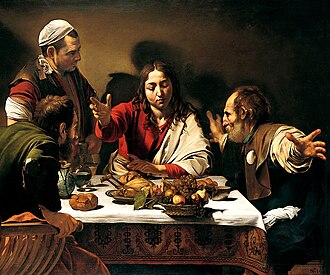 エマオの晩餐 - Caravaggio (1601)
 聖マタイの召命 - Caravaggio (1609)
 ラス・メニーナス - Diego Velázquez (1656)
 ブレダの開城 - Diego Velázquez (1635)
%20-%20Google%20Art%20Project.jpg) チャールズ1世の三面肖像画 - Anthony van Dyck (1635)
チャールズ1世の三面肖像画 - Anthony van Dyck (1635)%20with%20M.%20de%20St%20Antoine%20-%20Google%20Art%20Project.jpg) 馬上のチャールズ1世とサン・アントワーヌの領主の肖像 - Anthony van Dyck (1636)
馬上のチャールズ1世とサン・アントワーヌの領主の肖像 - Anthony van Dyck (1636) 夜警 - Rembrandt van Rijn (1642)
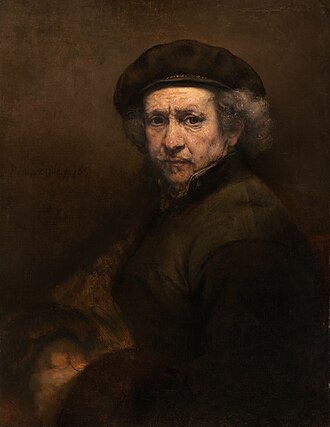 自画像 - Rembrandt van Rijn (1659)
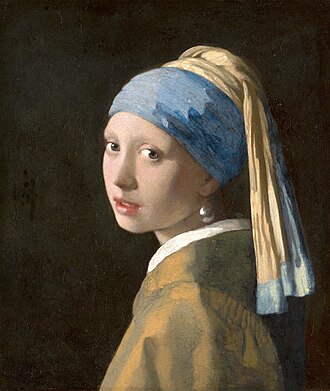 真珠の耳飾りの少女 - Johannes Vermeer (1665)
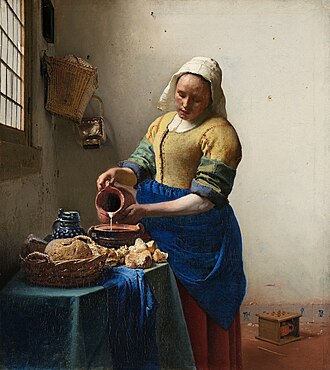 牛乳を注ぐ女 - Johannes Vermeer (c. 1658)