畑から戻る農夫たち
ピーテル・パウル・ルーベンス · 1640
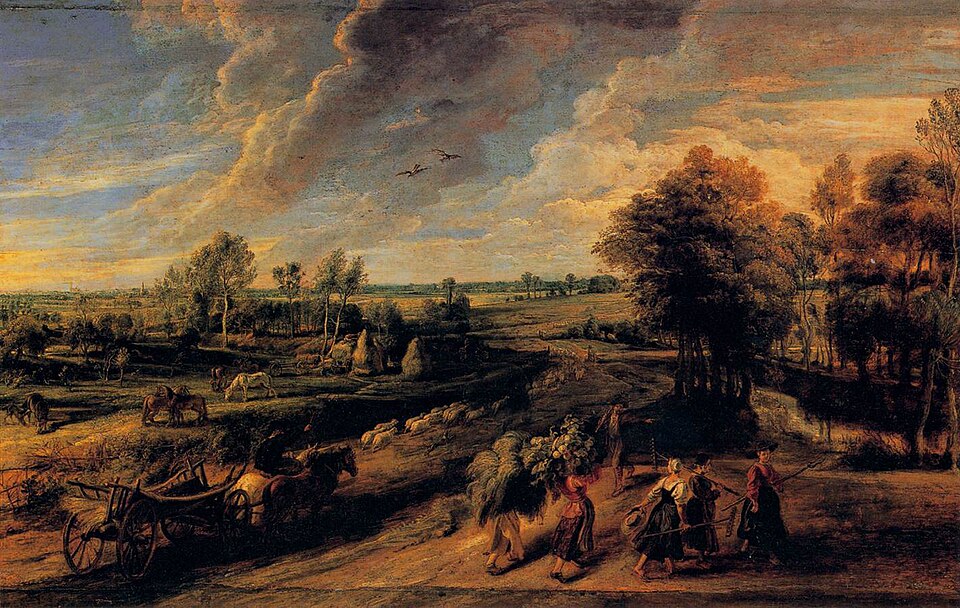
Seen from a height, a wide Flemish countryside glows in golden light while small figures head home from work and a cart halts for a flock of sheep. In this Rubens, the landscape itself is the hero.
The story behind the painting
The date of this painting has moved around. Estimates range from 1620 to 1635, the year a copy of it was signed and dated by its maker. The most convincing hypotheses place it in the early 1630s: some say 1632 to 1634, perhaps in collaboration with Lucas van Uden, others put it in Rubens's last phase, around 1640, which is the date Wikipedia and Wikidata use. For the cart Rubens used two preparatory drawings, one at Chatsworth House with a reaper and one in the Kupferstichkabinett in Berlin showing two carts.
What to look for
The view looks out from a high point over countryside dotted with trees, the horizon falling roughly at the middle of the picture. Small figures, in the manner of Pieter Bruegel the Elder's genre scenes, tell us the time of day: peasants returning from the fields, and a wagon with a man on horseback that seems to stop for a flock of sheep on the road. Between the two women carrying hay and the rams, look for a pentimento, a visible trace of the artist changing his mind. In the sky, streaks of bare canvas echo the diagonal lines in the lower half.
Meaning and intent
The real subject is the landscape; the rural scene is little more than a pretext. The land is probably around Mechelen, shown as a serene vision of nature bathed in golden light. The people are kept small so that the wide view, the trees and the light can dominate. It is a picture about the end of a working day in a peaceful countryside, and about the pleasure of looking far across it. Wikidata gives the panel's size as 121 by 194 cm.
Legacy
For a long time the painting was paired with Odysseus on the Island of the Phaeacians as a companion piece. Both were in the collection of the Duke of Richelieu in 1677 and, after a period in the Habsburg collection, came to Florence in 1765 on the initiative of the Lorraine family. French commissioners took both panels to Paris in March and April 1799, and they stayed in France until the end of 1815; even the restitution reports by Canova and Karcher describe them together. The painting is now in the Galleria Palatina in Florence.
豆知識
- Dated variously between 1620 and 1640; usually given as about 1640.
- Long paired with Odysseus on the Island of the Phaeacians.
- Arrived in Florence in 1765.
- Taken to Paris in 1799 and returned after 1815.
画家について
ピーテル・パウル・ルーベンス (1577-1640)
女性 · 男性 · 風景画 · ウマ · パラティーナ美術館 · 農民 · ヒツジ · 牧畜民
同じ画家の作品: ピーテル・パウル・ルーベンス
.jpg) キリスト昇架 - Peter Paul Rubens (1609)
キリスト昇架 - Peter Paul Rubens (1609) レウキッポスの娘たちの略奪 - Peter Paul Rubens (1618)
 ルーベンスとイザベラ・ブラント - Peter Paul Rubens (1600s)
 サムソンとデリラ - Peter Paul Rubens (1600s)
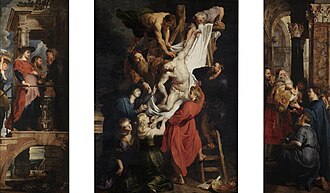 キリスト降架 - Peter Paul Rubens (1611)
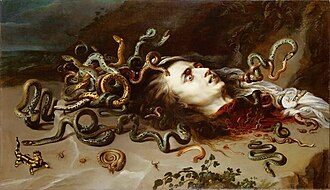 メドューサの頭部 - Peter Paul Rubens (1618)
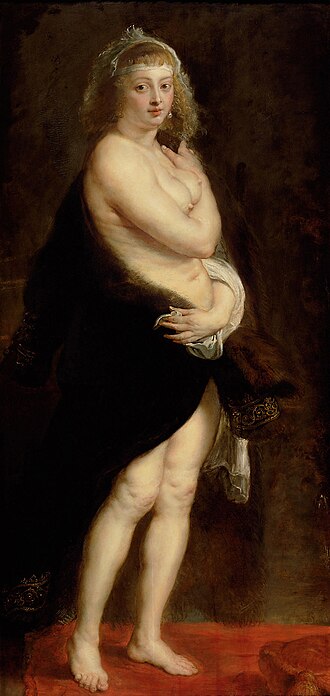 毛皮をまとったエレーヌ・フールマン - Peter Paul Rubens (1638)
.jpg) 愛の園 - Peter Paul Rubens (1632)
愛の園 - Peter Paul Rubens (1632)
関連する画家の作品
 星月夜 - Vincent van Gogh (1889)
.jpg) 夜のカフェテラス - Vincent van Gogh (1888)
夜のカフェテラス - Vincent van Gogh (1888) エマオの晩餐 - Caravaggio (1601)
 聖マタイの召命 - Caravaggio (1609)
 ラス・メニーナス - Diego Velázquez (1656)
 ブレダの開城 - Diego Velázquez (1635)
%20-%20Google%20Art%20Project.jpg) チャールズ1世の三面肖像画 - Anthony van Dyck (1635)
チャールズ1世の三面肖像画 - Anthony van Dyck (1635)%20with%20M.%20de%20St%20Antoine%20-%20Google%20Art%20Project.jpg) 馬上のチャールズ1世とサン・アントワーヌの領主の肖像 - Anthony van Dyck (1636)
馬上のチャールズ1世とサン・アントワーヌの領主の肖像 - Anthony van Dyck (1636) 夜警 - Rembrandt van Rijn (1642)
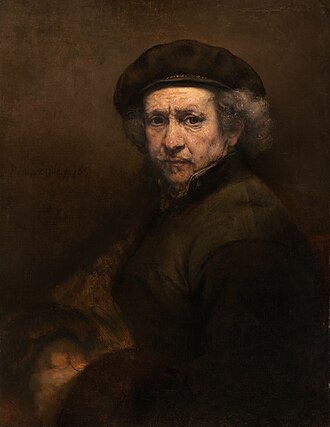 自画像 - Rembrandt van Rijn (1659)
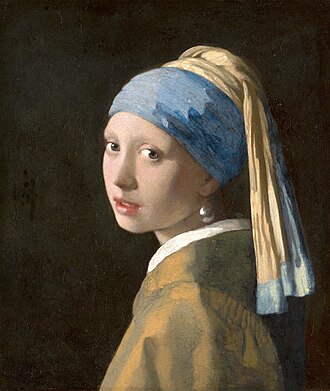 真珠の耳飾りの少女 - Johannes Vermeer (1665)
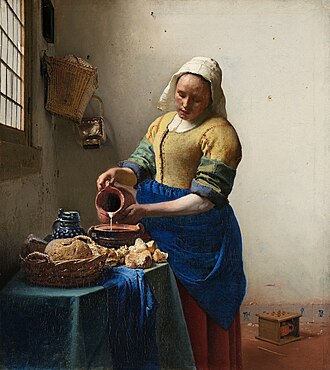 牛乳を注ぐ女 - Johannes Vermeer (c. 1658)