The Parca and the Angel of Death
ギュスターヴ・モロー · 1890
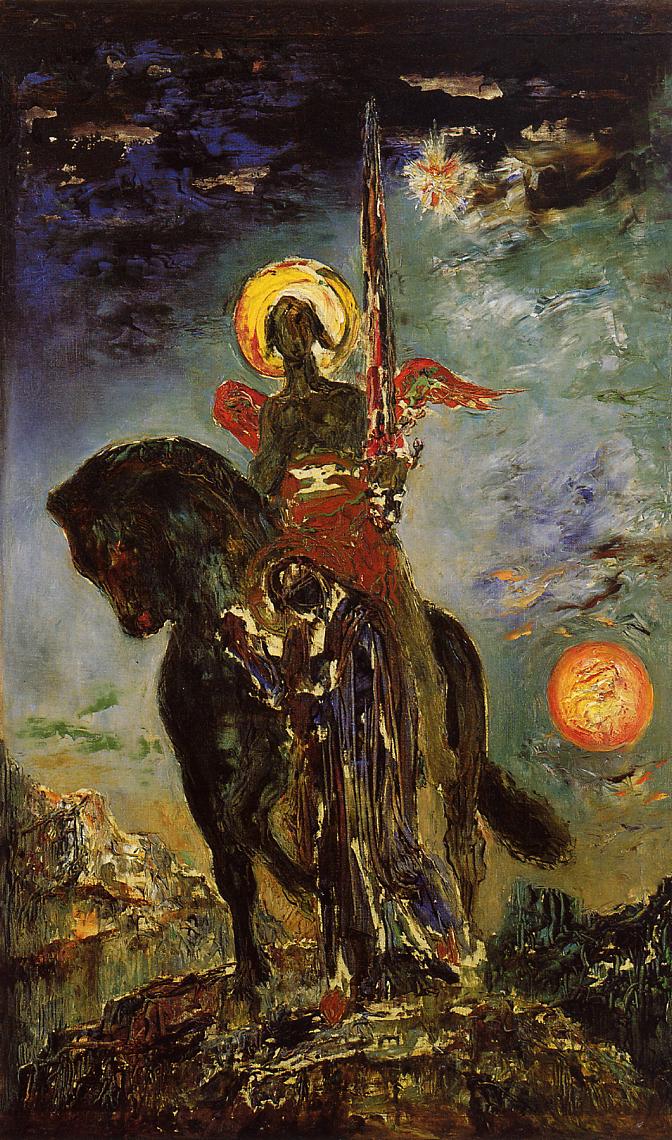
An old woman cloaked to the eyes leads a black horse across a desolate height, and on its back rides a faceless angel with red wings and a great sword. Gustave Moreau painted it in 1890, after losing the one person he called his only friend.
The story behind the painting
In 1890 Gustave Moreau withdrew from public life and began to make more autobiographical works. His companion Alexandrine Dureux, whom he called his best and only friend, had died, and he painted this picture in her memory, at the same time as Orpheus Weeping Upon Eurydice's Tomb. The source calls the work a true meditation on death, made just as Moreau retired from painting. It is an oil on canvas of about 110 by 67 cm and is held today at the Musée national Gustave Moreau in Paris, in the house that holds his work.
What to look for
Atropos, one of the Parcae or Fates, walks ahead holding the bridle of the Angel of Death's black horse. The Angel carries a large sword and wears a halo and red wings, but has no face. Behind them stretches a desolate landscape under a red moon and a waning, glowing sun. Look at the paint itself: large flows of colour, sometimes laid one over another, sometimes ground up and thick, with quick, scraped strokes and heavy use of black. The writer Francis Poictevin described the horse's fevered eye and its head turning, quivering, toward its guide.
Meaning and intent
Atropos was the most terrible of the three Parcae, the one who cut the thread of life, while the Angel of Death could be one of the Four Horsemen of the Apocalypse. Moreau thus mixes pagan and Christian traditions in the syncretism typical of his painting. The work evokes grief, and as often with Moreau, nature takes part in the feeling: the setting sun is itself an image of death. Painted in mourning, the picture lets a private loss take the form of an ancient, impersonal procession toward the edge of the world.
Legacy
The handling is almost expressionist, especially in the black, the scraped paint and the reddening tones. Its daring use of colour made the painting a precursor of fauvism some fifteen years later, particularly of the work of Georges Rouault, Moreau's pupil and the first curator of the Musée Gustave Moreau. The canvas stayed in the museum Moreau left behind, where visitors can still see how a teacher's late, grieving experiment opened a path that his student would follow into the new century.
豆知識
- Painted in 1890 in memory of Alexandrine Dureux.
- Shows Atropos leading the faceless Angel of Death on a black horse.
- Its colour made it a precursor of fauvism and of Georges Rouault.
- Held at the Musée national Gustave Moreau, Paris.
画家について
ギュスターヴ・モロー (1826-1898)
風俗美術 · 天使 · ランドスケープ · 空 · ウマ · 月 · 恒星 · collection du musée Gustave-Moreau
同じ画家の作品: ギュスターヴ・モロー
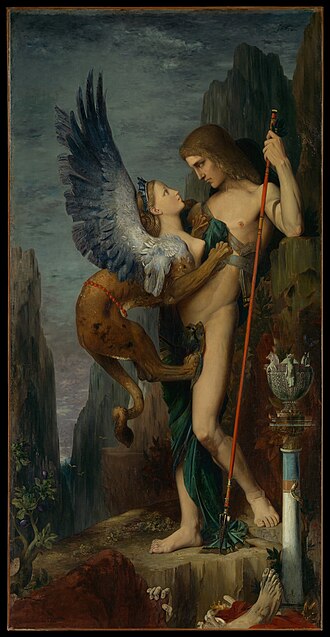 オイディプスとスフィンクス - Gustave Moreau (1864)
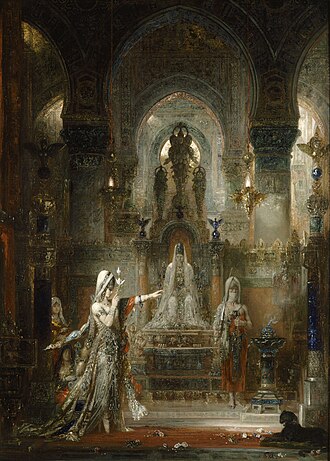 ヘロデ王の前で踊るサロメ - Gustave Moreau (1876)
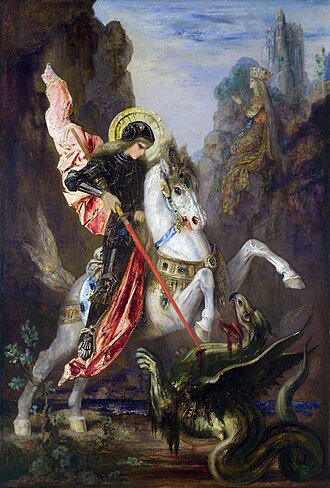 聖ゲオルギウスと竜 - Gustave Moreau (1880s)
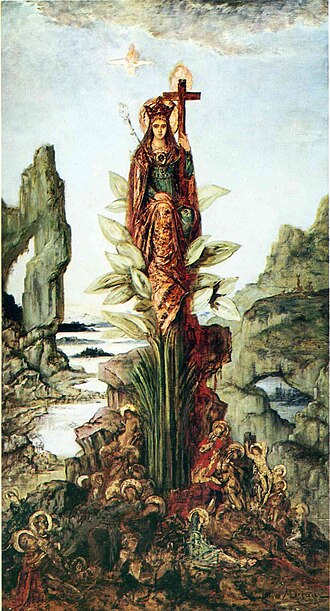 Mystic Flower - Gustave Moreau (1890)
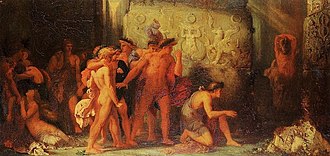 Athenians being Delivered to the Minotaur in the Cretan Labyrinth - Gustave Moreau (1855)
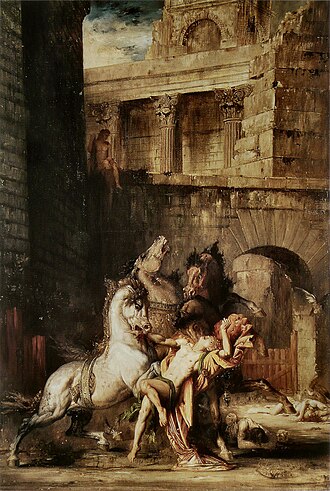 Diomede devoured by his horses - Gustave Moreau (1865)
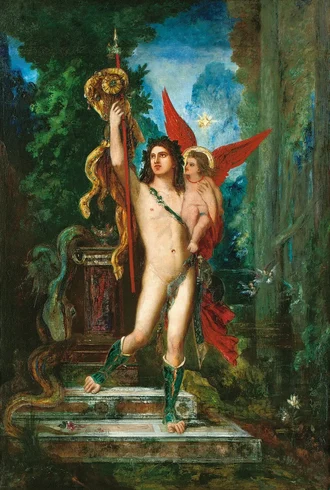 Jasón y Eros - Gustave Moreau (1891)
 Les Chimères - Gustave Moreau (1884)
関連する画家の作品
 指し降ろされた親指 - Jean-Léon Gérôme (1872)
 奴隷市場 - Jean-Léon Gérôme (1866)
 草上の昼食 - Édouard Manet (1863)
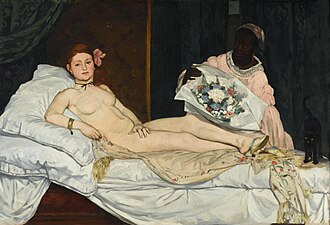 オランピア - Édouard Manet (1863)
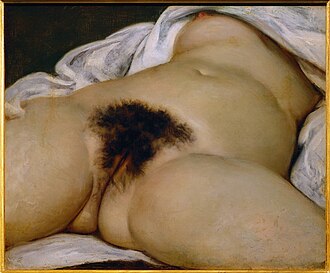 世界の起源 - Gustave Courbet (1866)
 オルナンの埋葬 - Gustave Courbet (2020)
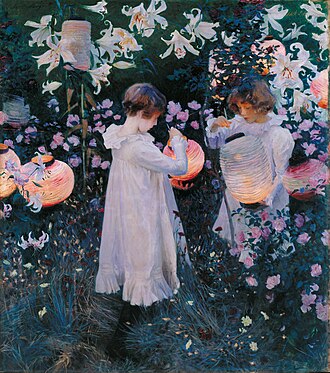 カーネーション、リリー、リリー、ローズ - John Singer Sargent (1885-1886)
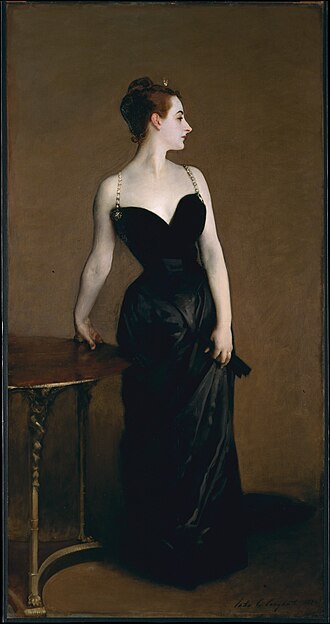 マダムXの肖像 - John Singer Sargent (1884)
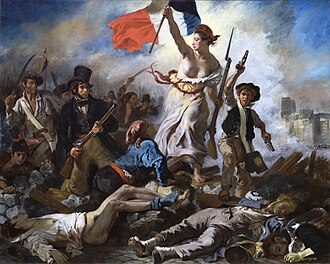 民衆を導く自由の女神 - Eugène Delacroix (1830)
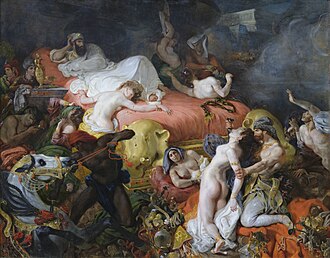 サルダナパールの死 - Eugène Delacroix (1827)
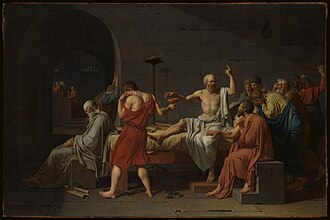 ソクラテスの死 - Jacques-Louis David (1787)
 ホラティウス兄弟の誓い - Jacques-Louis David (1784)