Mystic Flower
ギュスターヴ・モロー · 1890
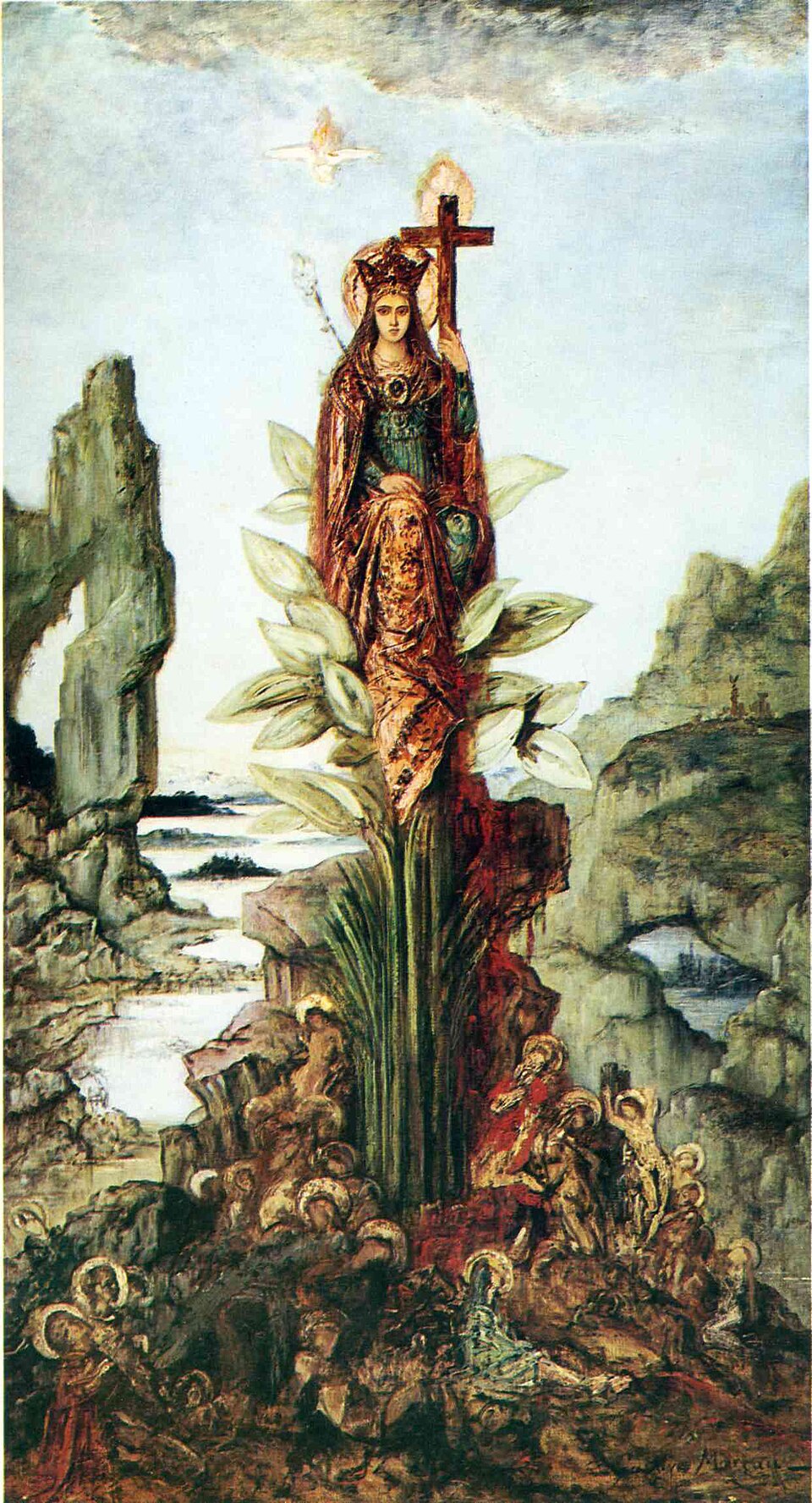
A giant lily rises from a mound of martyrs, and on its flower sits a still, towering Virgin. Painted near the end of Moreau's life, this two-and-a-half-metre canvas closes his Cycle of Man.
The story behind the painting
Moreau painted The Mystic Flower around 1890, at the end of his life, when he was thinking about the future of his work, editing accounts of his paintings and making canvases in a museum format. It came after the deaths of his mother and of his companion Alexandrine Dureux, after which his subjects grew more meditative and melancholic. Raised by agnostic parents and not practising, he developed very personal beliefs: he said he believed only in what he did not see and what he felt, and that only his inner feeling seemed eternal.
What to look for
The canvas is 253 cm tall and 137 cm wide, a vast rocky landscape. At the base, a mound is covered with small figures of martyrs in the pain of their torture. From it springs an immense lily, and on top sits a figure of the Church with a Byzantine stillness, which Moreau himself identified with the Virgin Mary, holding a cross visited by a celestial bird. Together they form a pyramid. The idea of a saint on a sheaf of palms comes from Carpaccio's Glory of Saint Ursula, which Moreau copied in Venice in 1858, and the rocks recall Leonardo's Virgin of the Rocks.
Meaning and intent
Moreau chose the tall format to express domination. He wrote that all the martyrs who died for her had watered this mystical flower, symbol of purity, with their blood. The source reads this as the Church dominating the martyrs, linked to a religion of redemptive suffering that echoed Moreau's own in his last years. In late 19th-century imagery a giant Virgin meant fear more than protection: here she is at the summit, out of scale and alone against the many, sitting above the martyrs rather than sheltering them.
Legacy
Moreau's heroes, from Oedipus and Prometheus to Saint John the Baptist, are devoted to sacrifice: civilising figures who show spirit over matter, yet must die. With The Mystic Flower, the Cycle of Man described by Leonce Benedite is completed. The painting belongs to the collection of the Musee Gustave Moreau in Paris, a fitting home for a canvas Moreau made in a museum format as he thought about the future of his work.
豆知識
- Painted around 1890, late in Moreau's life.
- 253 cm tall, in a deliberately vertical format.
- Inspired by Carpaccio's Glory of Saint Ursula, copied in Venice in 1858.
- Completes Moreau's Cycle of Man.
画家について
ギュスターヴ・モロー (1826-1898)
聖母マリア · 歴史画 · ランドスケープ · 遺体 · collection du musée Gustave-Moreau · 十字架 · 玉座
同じ画家の作品: ギュスターヴ・モロー
 オイディプスとスフィンクス - Gustave Moreau (1864)
 ヘロデ王の前で踊るサロメ - Gustave Moreau (1876)
 聖ゲオルギウスと竜 - Gustave Moreau (1880s)
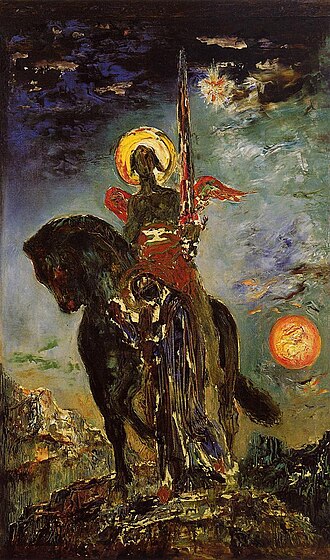 The Parca and the Angel of Death - Gustave Moreau (1890)
 Athenians being Delivered to the Minotaur in the Cretan Labyrinth - Gustave Moreau (1855)
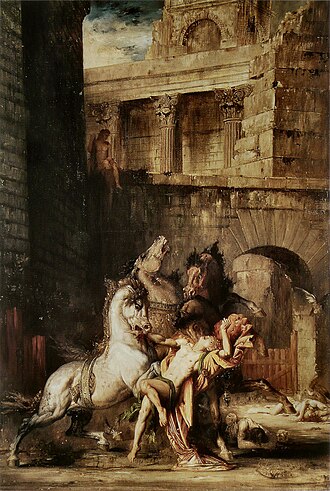 Diomede devoured by his horses - Gustave Moreau (1865)
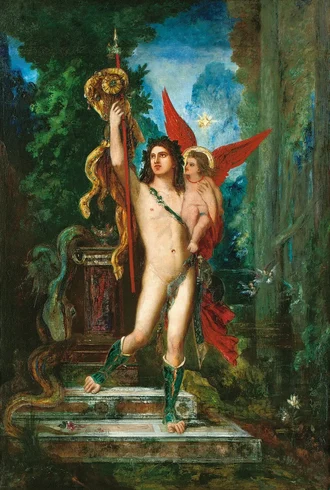 Jasón y Eros - Gustave Moreau (1891)
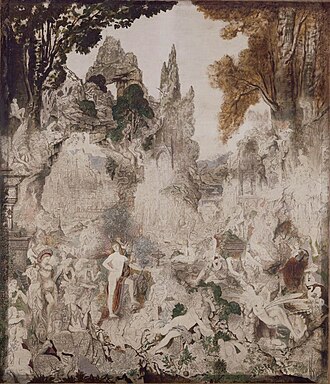 Les Chimères - Gustave Moreau (1884)
関連する画家の作品
 指し降ろされた親指 - Jean-Léon Gérôme (1872)
 奴隷市場 - Jean-Léon Gérôme (1866)
 草上の昼食 - Édouard Manet (1863)
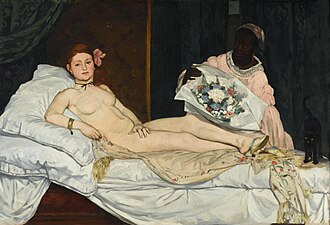 オランピア - Édouard Manet (1863)
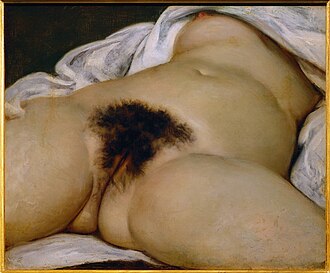 世界の起源 - Gustave Courbet (1866)
 オルナンの埋葬 - Gustave Courbet (2020)
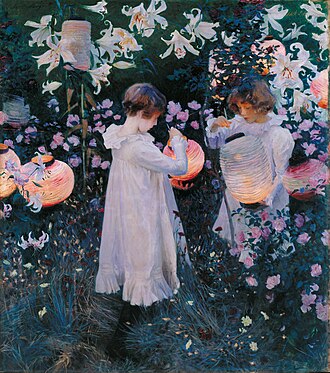 カーネーション、リリー、リリー、ローズ - John Singer Sargent (1885-1886)
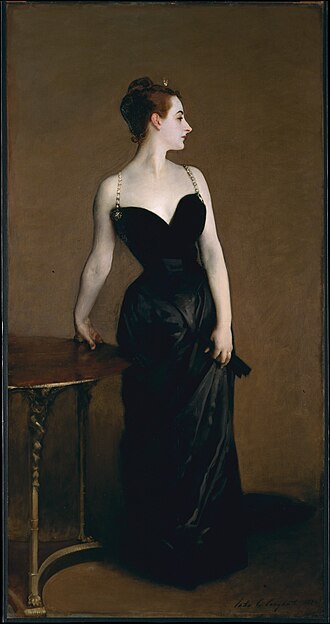 マダムXの肖像 - John Singer Sargent (1884)
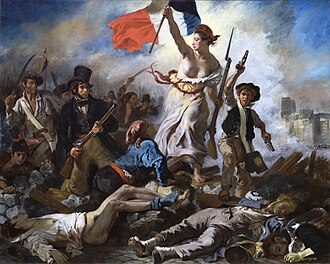 民衆を導く自由の女神 - Eugène Delacroix (1830)
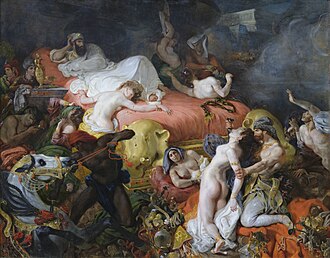 サルダナパールの死 - Eugène Delacroix (1827)
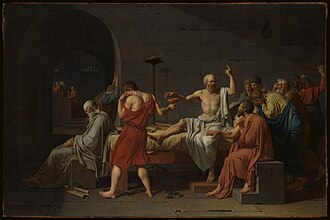 ソクラテスの死 - Jacques-Louis David (1787)
 ホラティウス兄弟の誓い - Jacques-Louis David (1784)