指し降ろされた親指
ジャン=レオン・ジェローム · 1872
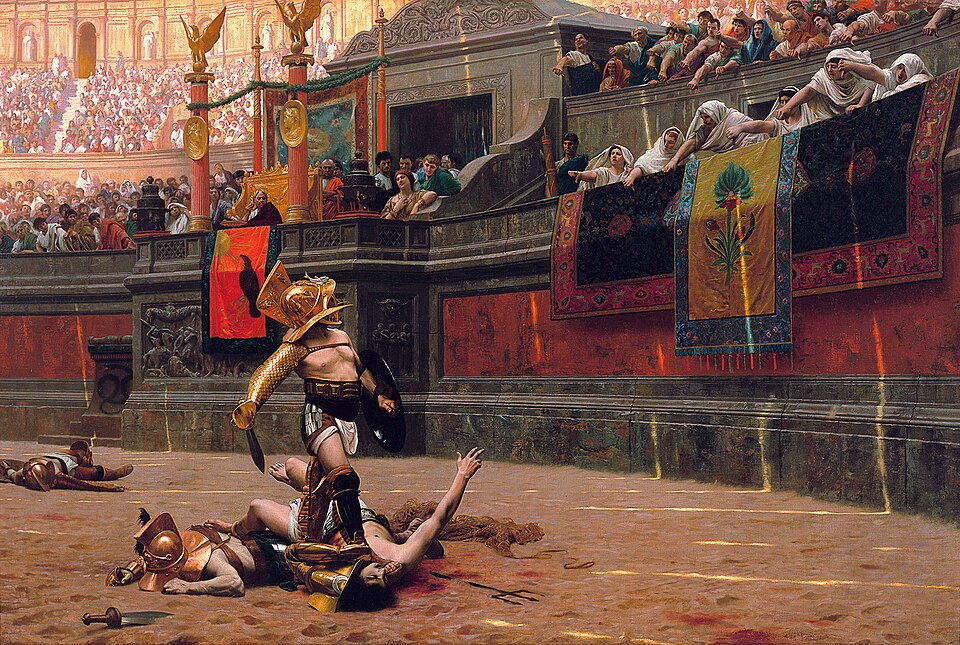
In the Colosseum a victorious gladiator stands over his fallen opponent, and the crowd, Vestal Virgins among them, turn their thumbs down. Gérôme's picture fixed that gesture in our imagination and later hooked Ridley Scott on Gladiator.
The story behind the painting
Pollice verso is Latin for with a turned thumb. Gérôme painted the scene in 1872, imagining the moment when the spectators of the Colosseum decide the fate of a defeated gladiator. The painter took care over the setting: his architecture of the Colosseum is based on accurate drawings, and the gladiators' armour follows examples found at Pompeii, though there are some inaccuracies in the murmillo's armour. The American merchant Alexander Turney Stewart bought the painting directly from Gérôme, setting a new record for the artist, and exhibited it in New York City.
What to look for
A victorious murmillo stands over a defeated retiarius, the net fighter, who raises two fingers to plead for mercy. In the stands, spectators including the Vestal Virgins thrust their thumbs down towards the winner. The emperor sits in his box above the arena. Look at the Vestals: priestesses of purity, they lean forward eagerly, demanding death. That choice may come from the Christian poet Prudentius, who described a Vestal in the arena calling the victor her pet and, with a turn of her thumb, ordering him to pierce the breast of his fallen foe.
Meaning and intent
The picture made thumbs up mean life and thumbs down mean death for a defeated gladiator, but whether Rome worked that way is unknown. Almost at once a controversy began. A 26-page pamphlet of 1879 reprinted evidence for and against Gérôme's gesture, including a letter from the painter himself dated 8 December 1878. The question remains open: historical, archaeological and literary records leave it uncertain whether the thumb was turned up, down, held sideways or hidden in the hand. The painting is a powerful image of cruelty as spectacle, built on an uncertain detail.
Legacy
Gérôme took up sculpture and made a large bronze gladiator with his foot on his victim, based on this painting, shown at the Paris Universal Exhibition of 1878. After his death his son-in-law Aimé Morot made a monument showing Gérôme sculpting it, now in the Musée d'Orsay. This picture and Ave Caesar! Morituri te Salutant shaped how filmmakers showed ancient Rome from silent movies on. Shown a reproduction before reading the script of Gladiator, Ridley Scott said the image spoke of Rome in all its glory and wickedness and he was hooked. The painting is now in the Phoenix Art Museum.
豆知識
- Painted by Gérôme in 1872.
- The Vestal Virgins give the thumbs-down gesture.
- Whether Romans used thumbs down for death is still uncertain.
- Now in the Phoenix Art Museum, Arizona.
画家について
ジャン=レオン・ジェローム (1824-1904)
同じ画家の作品: ジャン=レオン・ジェローム
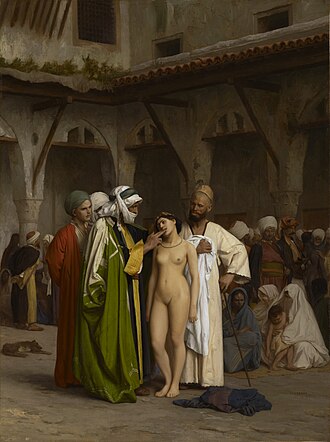 奴隷市場 - Jean-Léon Gérôme (1866)
%20-%2001.jpg) アレオパゴス会議のフリュネ - Jean-Léon Gérôme (1861)
アレオパゴス会議のフリュネ - Jean-Léon Gérôme (1861)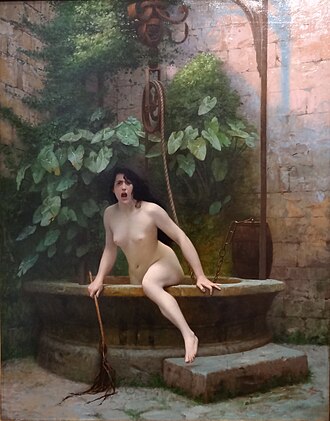 人類に恥を知らせるため井戸から出てくる〈真実〉 - Jean-Léon Gérôme (1896)
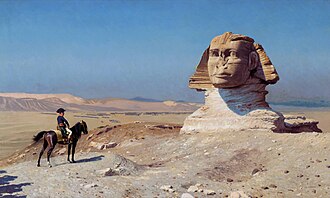 Bonaparte Before the Sphinx - Jean-Léon Gérôme (1867)
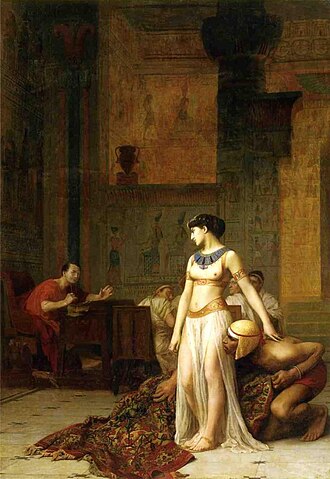 Cleopatra and Caesar - Jean-Léon Gérôme (1866)
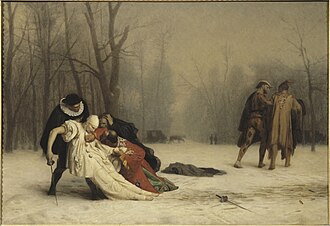 仮面舞踊会の後の決闘 - Jean-Léon Gérôme (1857)
.jpg) The Execution of Marshal Ney - Jean-Léon Gérôme (1868)
The Execution of Marshal Ney - Jean-Léon Gérôme (1868)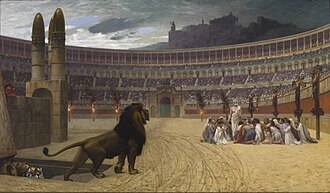 The Christian Martyrs' Last Prayer - Jean-Léon Gérôme (1883)
関連する画家の作品
 草上の昼食 - Édouard Manet (1863)
 オランピア - Édouard Manet (1863)
 世界の起源 - Gustave Courbet (1866)
 オルナンの埋葬 - Gustave Courbet (2020)
 カーネーション、リリー、リリー、ローズ - John Singer Sargent (1885-1886)
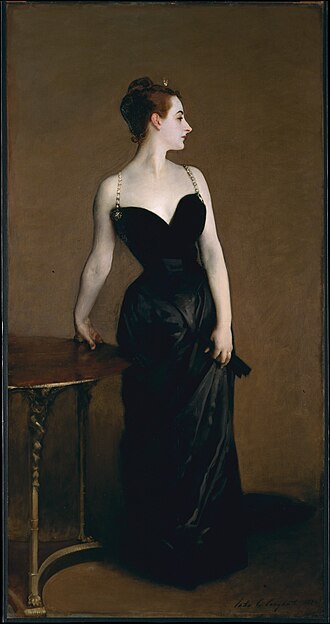 マダムXの肖像 - John Singer Sargent (1884)
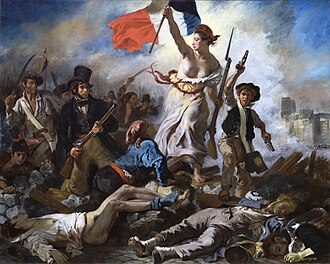 民衆を導く自由の女神 - Eugène Delacroix (1830)
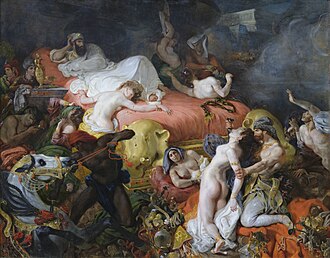 サルダナパールの死 - Eugène Delacroix (1827)
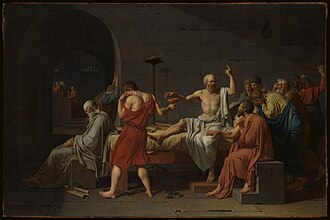 ソクラテスの死 - Jacques-Louis David (1787)
 ホラティウス兄弟の誓い - Jacques-Louis David (1784)
 戦艦テメレール号 - J. M. W. Turner (1839)
 雨、蒸気、速度 - グレート・ウェスタン鉄道 - J. M. W. Turner (1844)