ヴィーナスの祝祭
ピーテル・パウル・ルーベンス · 1636
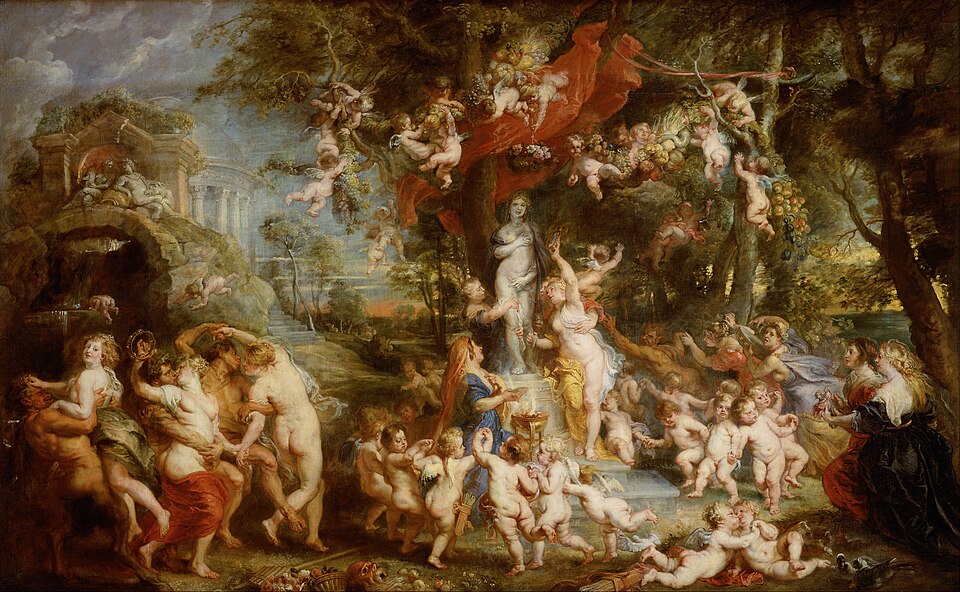
Cupids dance in a whirling crowd around a statue of the goddess of love, while a satyr lifts a laughing nymph who looks straight at us. She has the face of Rubens' young wife, Helena Fourment, in this joyous feast of 1635 to 1636.
The story behind the painting
Rubens painted The Feast of Venus in 1635 to 1636; it is a large canvas, about 217 by 350 cm, now in the Kunsthistorisches Museum in Vienna. It is a fanciful picture of the Roman festival Veneralia, held in honour of Venus Verticordia. Rubens greatly admired Titian and had made a copy of the Venetian's The Worship of Venus, which he kept in his own collection until he died. Titian's picture was itself based on the Imagines of Philostratus of Lemnos, descriptions of ancient paintings, including one of a swarm of cupids in a fragrant garden gathering and kissing apples, shooting arrows of love at each other, wrestling and chasing a hare.
What to look for
At the centre stands a statue of Venus Verticordia in a modest pose, ringed by attendants and then by dancing cupids, satyrs, nymphs and maenads. Well-dressed matrons perform the rites: one washes the statue, another prays and offers incense at a flaming tripod. The dancing cupids part to let two eager brides rush in with dolls as offerings. Nearly naked women at the goddess's feet hold up a comb and a mirror so she can see herself. A winged cupid lowers a wreath of roses on her head. Behind are her temple and a grotto where water spills into an overflowing basin, crowned by statues of Ceres and Bacchus. Some cupids are wingless girls, and others gather apples, wheat and grapes.
Meaning and intent
Rubens also drew on Ovid's Fasti, which describes an April women's festival for Venus Verticordia and Fortuna Virilis, with the washing of the statue, bathing under myrtle and offerings of incense. Ovid's account mixes matrons, brides and prostitutes, and Rubens includes all three. From these sources and his own invention he made a spirited allegory of married happiness, in which, in the words quoted by Wikipedia, sensuality is joined and enhanced by the propriety of marriage. Philipp Fehl suggests the amorous couple at right with two pairs of doves is Cupid and Psyche. The wheat and grapes recall the saying that without Ceres and Bacchus, Venus grows cold.
Legacy
The most personal detail is at the far left. In front of the grotto, frolicking nymphs and satyrs stand for pure erotic desire, and Rubens used his young wife Helena Fourment as the model for the nymph held aloft by a leering satyr; she grips his horns and looks out of the canvas with a knowing glance. The painting shows how Rubens absorbed Titian, Philostratus and Ovid and turned them into something his own: a swirling, crowded celebration of love, fertility and marriage. It remains in Vienna's Kunsthistorisches Museum, one of his most joyous crowded scenes.
豆知識
- Painted in 1635-1636, about 217 x 350 cm.
- Inspired by Titian's The Worship of Venus, Philostratus and Ovid's Fasti.
- Helena Fourment modelled the nymph at the far left.
- Now in the Kunsthistorisches Museum, Vienna.
画家について
ピーテル・パウル・ルーベンス (1577-1640)
神話画 · 美術史美術館 · 観察者の方向を見つめる · ウェヌス
同じ画家の作品: ピーテル・パウル・ルーベンス
.jpg) キリスト昇架 - Peter Paul Rubens (1609)
キリスト昇架 - Peter Paul Rubens (1609) レウキッポスの娘たちの略奪 - Peter Paul Rubens (1618)
 ルーベンスとイザベラ・ブラント - Peter Paul Rubens (1600s)
 サムソンとデリラ - Peter Paul Rubens (1600s)
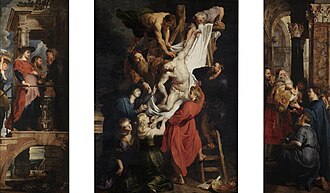 キリスト降架 - Peter Paul Rubens (1611)
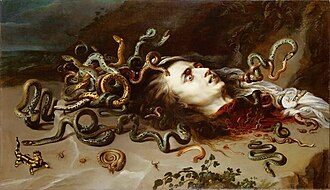 メドューサの頭部 - Peter Paul Rubens (1618)
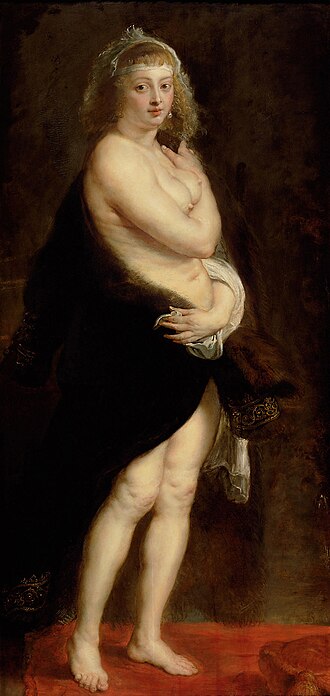 毛皮をまとったエレーヌ・フールマン - Peter Paul Rubens (1638)
.jpg) 愛の園 - Peter Paul Rubens (1632)
愛の園 - Peter Paul Rubens (1632)
関連する画家の作品
 星月夜 - Vincent van Gogh (1889)
.jpg) 夜のカフェテラス - Vincent van Gogh (1888)
夜のカフェテラス - Vincent van Gogh (1888) エマオの晩餐 - Caravaggio (1601)
 聖マタイの召命 - Caravaggio (1609)
 ラス・メニーナス - Diego Velázquez (1656)
 ブレダの開城 - Diego Velázquez (1635)
%20-%20Google%20Art%20Project.jpg) チャールズ1世の三面肖像画 - Anthony van Dyck (1635)
チャールズ1世の三面肖像画 - Anthony van Dyck (1635)%20with%20M.%20de%20St%20Antoine%20-%20Google%20Art%20Project.jpg) 馬上のチャールズ1世とサン・アントワーヌの領主の肖像 - Anthony van Dyck (1636)
馬上のチャールズ1世とサン・アントワーヌの領主の肖像 - Anthony van Dyck (1636) 夜警 - Rembrandt van Rijn (1642)
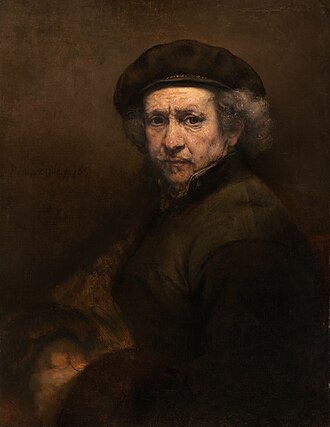 自画像 - Rembrandt van Rijn (1659)
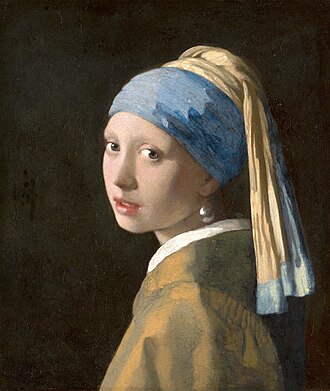 真珠の耳飾りの少女 - Johannes Vermeer (1665)
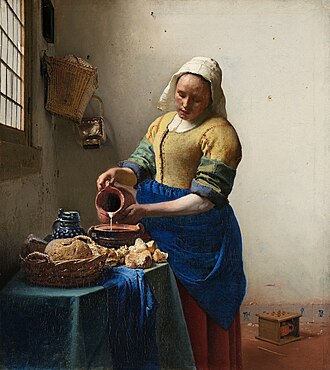 牛乳を注ぐ女 - Johannes Vermeer (c. 1658)