キルトの袖をつけた男の肖像
ティツィアーノ・ヴェチェッリオ · 1510
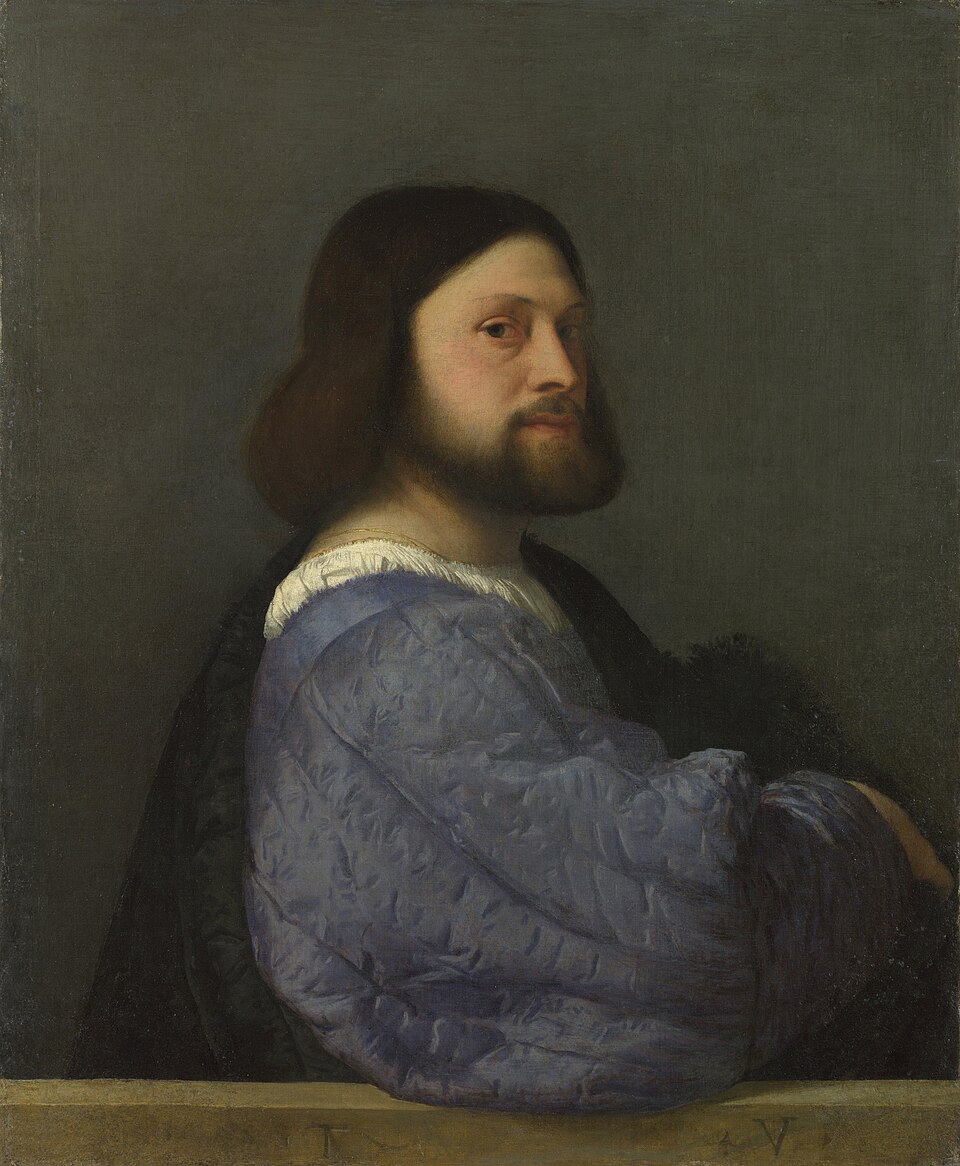
A man turns over his shoulder and looks down at us, one eyebrow raised, his huge blue quilted sleeve spilling over the stone ledge into our space. Rembrandt saw this Titian in Amsterdam and borrowed the pose for himself.
The story behind the painting
Titian painted this portrait around 1510, and all proposed dates fall between about 1509 and 1512. Nicholas Penny suggests it may be Titian's earliest portrait apart from a Knight of Malta in the Uffizi. Who the sitter is has long been argued. From at least the 1630s it was thought to be the poet Ariosto, an idea modern critics reject. In 1895 Jean Paul Richter linked it to a Titian portrait Vasari described, of a gentleman of the Barbarigo family who was the artist's friend. Since 2017 the National Gallery has called it Portrait of Gerolamo (?) Barbarigo, keeping the question mark.
What to look for
Early Renaissance portraits often put a parapet between sitter and viewer. Here the sleeve pushes slightly past it, bringing the picture into our space. The turning pose, head slightly tilted and an eyebrow raised exactly halfway across the composition, adds life and drama. The blue sleeve is brilliantly painted, and the way the shadowed parts of the figure melt into the grey background is called one of its most innovative features. On the parapet, widely spaced letters T V look carved into stone, usually read as Titian's initials, Tiziano Vecellio. Infrared shows a second V once there.
Meaning and intent
Gerolamo Barbarigo turned thirty in 1509, the age at which Venetian patricians could hold significant office, perhaps a good moment for a portrait. But Charles Hope has warned that claims about early Titian remain speculative. Cecil Gould and Kenneth Clark thought it might be a self-portrait: the pose suits a right-handed painter looking in a mirror, and the convex mirrors of the day could lengthen the face and explain the faintly superior air. Wikipedia sets out all these views side by side. The painting has also been attributed at times to Giorgione, well into the twentieth century.
Legacy
In 1639 the work, or a copy, was in the Amsterdam collection of Alfonso Lopez, where Rembrandt saw it; he borrowed the pose for his Self-portrait at the Age of 34 and an etching of 1639. It may have passed through Van Dyck's estate and Charles I. The first certain record is at Cobham Hall with the Earl of Darnley by 1824. In 1904 the National Gallery in London acquired it from Sir George Donaldson with contributions from several donors and the government, a turning point in keeping great paintings in Britain. It measures 81.2 by 66.3 cm.
豆知識
- Painted about 1510 by Titian, possibly his earliest portrait.
- Once thought to show Ariosto, then a self-portrait.
- Rembrandt copied its pose for his own self-portraits.
- In the National Gallery, London, since 1904.
画家について
ティツィアーノ・ヴェチェッリオ (1488-1576)
肖像 · 盛期ルネサンス · ナショナル・ギャラリー · ヴェネツィア派
同じ画家の作品: ティツィアーノ・ヴェチェッリオ
.jpg) ウルビーノのヴィーナス - Titian (1538)
ウルビーノのヴィーナス - Titian (1538)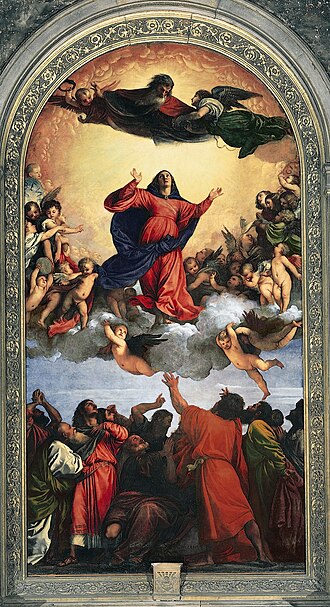 聖母被昇天 - Titian (1510s)
FXD.jpg) 聖愛と俗愛 - Titian (1510s)
聖愛と俗愛 - Titian (1510s)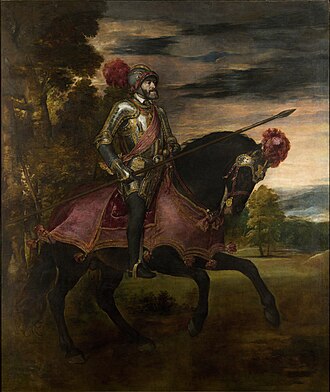 騎乗像 - Titian (1548)
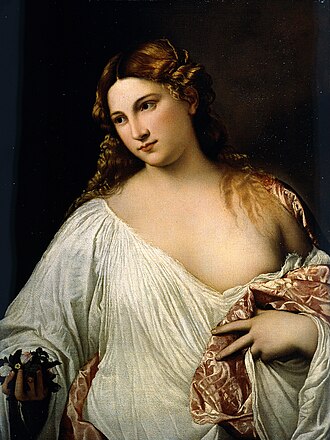 フローラ - Titian (1517)
 賢明の寓意 - Titian (1550)
 バッカスとアリアドネ - Titian (1520s)
%20nave%20left%20-%20Altar%20of%20Madona%20di%20Ca'Pesaro.jpg) ペーザロ家の祭壇画 - Titian
ペーザロ家の祭壇画 - Titian