Pallas and Arachne
ピーテル・パウル・ルーベンス · 1637
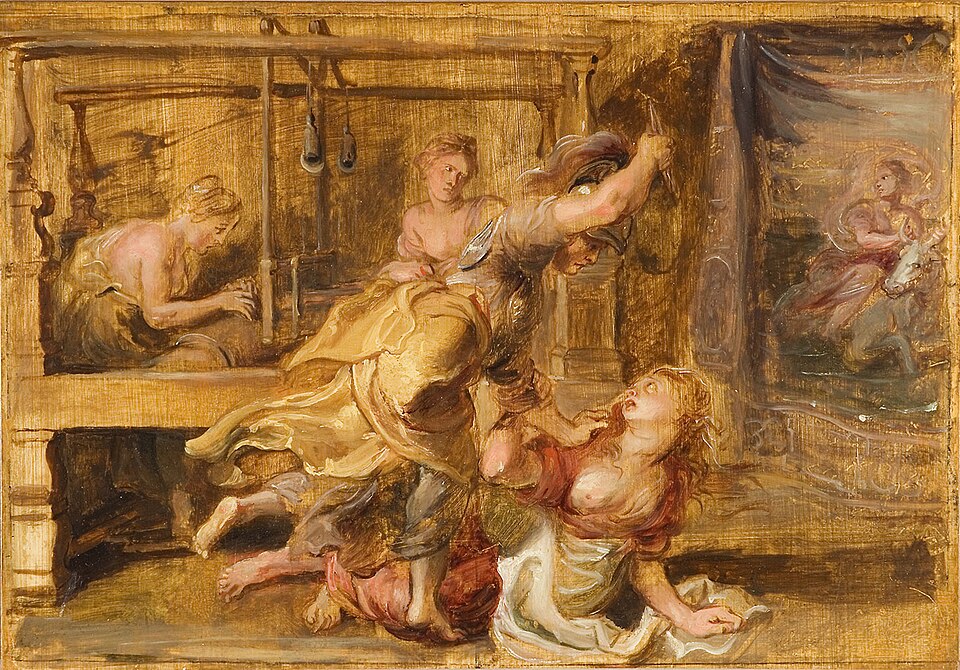
A goddess raises her hand against a mortal weaver who dared to be better. Rubens's small oil study tells Ovid's tale of pride and punishment, and it later found its way into the background of Las Meninas.
The story behind the painting
Pallas and Arachne, also called Minerva Punishing Arachne, is an oil study on board that Rubens completed in 1636 or 1637; Wikidata gives 1637. It was a preparatory study for one of the series of paintings that Rubens and his workshop made for the Torre de la Parada, a royal hunting lodge of the Spanish king. The finished painting for that series is now lost, which makes this small study a precious witness to it. The study itself is now in the Virginia Museum of Fine Arts in Richmond.
What to look for
The scene comes from Ovid's Metamorphoses: the weaving contest between the goddess Athena, or Pallas, and the mortal Arachne. Look for the loom and the gesture of the angry goddess about to strike. In the background hangs a partly visible tapestry showing Titian's The Rape of Europa. According to Ovid, Europa was exactly the theme Arachne wove during the contest, so Rubens lets us see the very work that caused her downfall. Because this is an oil sketch on a panel, the brushwork is quick and free, made to work out the composition.
Meaning and intent
In the myth, Athena challenges Arachne and loses. She punishes Arachne anyway, for insulting the gods by not recognising the divine source of her skill and for making a work more beautiful than the goddess's own. The painting is therefore about art itself: the risk of rivalling the gods, and the price of pride and of talent. By quoting Titian inside the picture, Rubens also pays homage to the great Venetian painter he admired, and turns the scene into a story about artists and their models.
Legacy
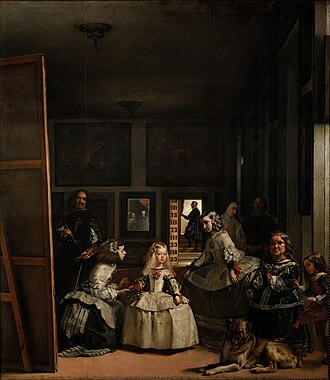
The painting had a remarkable afterlife. Juan Bautista Martínez del Mazo, the son-in-law of Diego Velázquez, made a copy of it. Velázquez placed Mazo's copy behind himself when composing Las Meninas, paired with another painting about a contest of the arts between gods and mortals, Apollo as Victor over Pan. The copy was painted into the background of Las Meninas, one of the most analysed canvases in Western art. A copy by Rubens of Titian's Europa, Velázquez's favourite work, belonged to Philip IV, so one painting nests inside another, inside another.
豆知識
- An oil study on board by Rubens, 1636 or 1637.
- A study for the lost Torre de la Parada series.
- Shows Titian's Rape of Europa as the tapestry in the background.
- A copy of it appears in the background of Las Meninas by Velázquez.
画家について
ピーテル・パウル・ルーベンス (1577-1640)
同じ画家の作品: ピーテル・パウル・ルーベンス
.jpg) キリスト昇架 - Peter Paul Rubens (1609)
キリスト昇架 - Peter Paul Rubens (1609)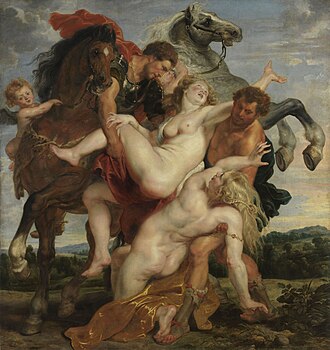 レウキッポスの娘たちの略奪 - Peter Paul Rubens (1618)
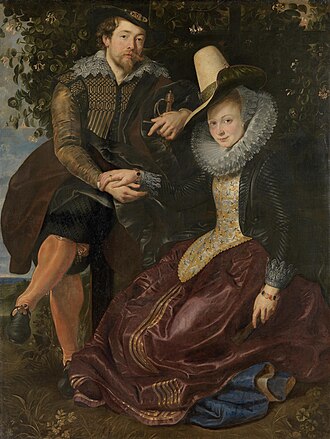 ルーベンスとイザベラ・ブラント - Peter Paul Rubens (1600s)
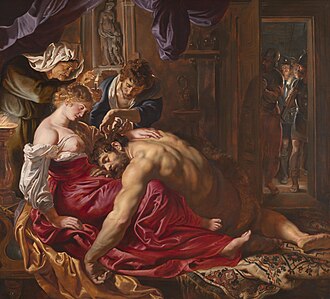 サムソンとデリラ - Peter Paul Rubens (1600s)
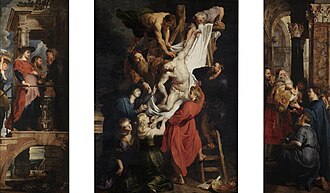 キリスト降架 - Peter Paul Rubens (1611)
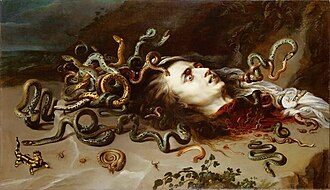 メドューサの頭部 - Peter Paul Rubens (1618)
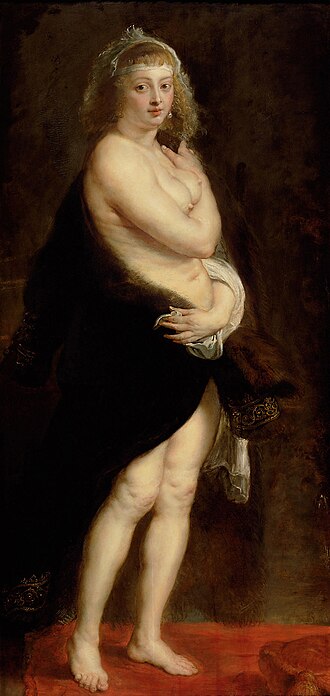 毛皮をまとったエレーヌ・フールマン - Peter Paul Rubens (1638)
.jpg) 愛の園 - Peter Paul Rubens (1632)
愛の園 - Peter Paul Rubens (1632)
関連する画家の作品
 星月夜 - Vincent van Gogh (1889)
.jpg) 夜のカフェテラス - Vincent van Gogh (1888)
夜のカフェテラス - Vincent van Gogh (1888)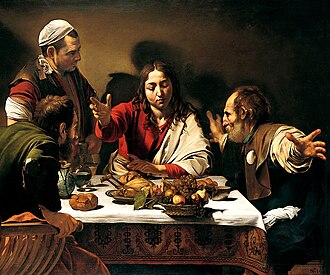 エマオの晩餐 - Caravaggio (1601)
 聖マタイの召命 - Caravaggio (1609)
 ラス・メニーナス - Diego Velázquez (1656)
 ブレダの開城 - Diego Velázquez (1635)
%20-%20Google%20Art%20Project.jpg) チャールズ1世の三面肖像画 - Anthony van Dyck (1635)
チャールズ1世の三面肖像画 - Anthony van Dyck (1635)%20with%20M.%20de%20St%20Antoine%20-%20Google%20Art%20Project.jpg) 馬上のチャールズ1世とサン・アントワーヌの領主の肖像 - Anthony van Dyck (1636)
馬上のチャールズ1世とサン・アントワーヌの領主の肖像 - Anthony van Dyck (1636) 夜警 - Rembrandt van Rijn (1642)
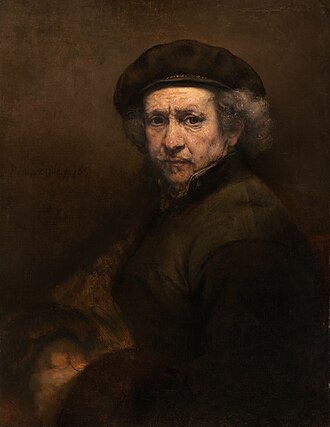 自画像 - Rembrandt van Rijn (1659)
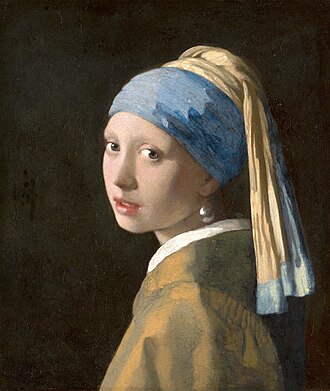 真珠の耳飾りの少女 - Johannes Vermeer (1665)
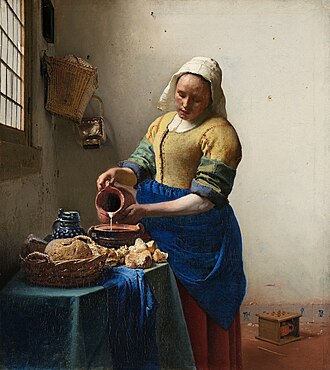 牛乳を注ぐ女 - Johannes Vermeer (c. 1658)