Le Marchand de fourrures au Caire
ジャン=レオン・ジェローム · 1869
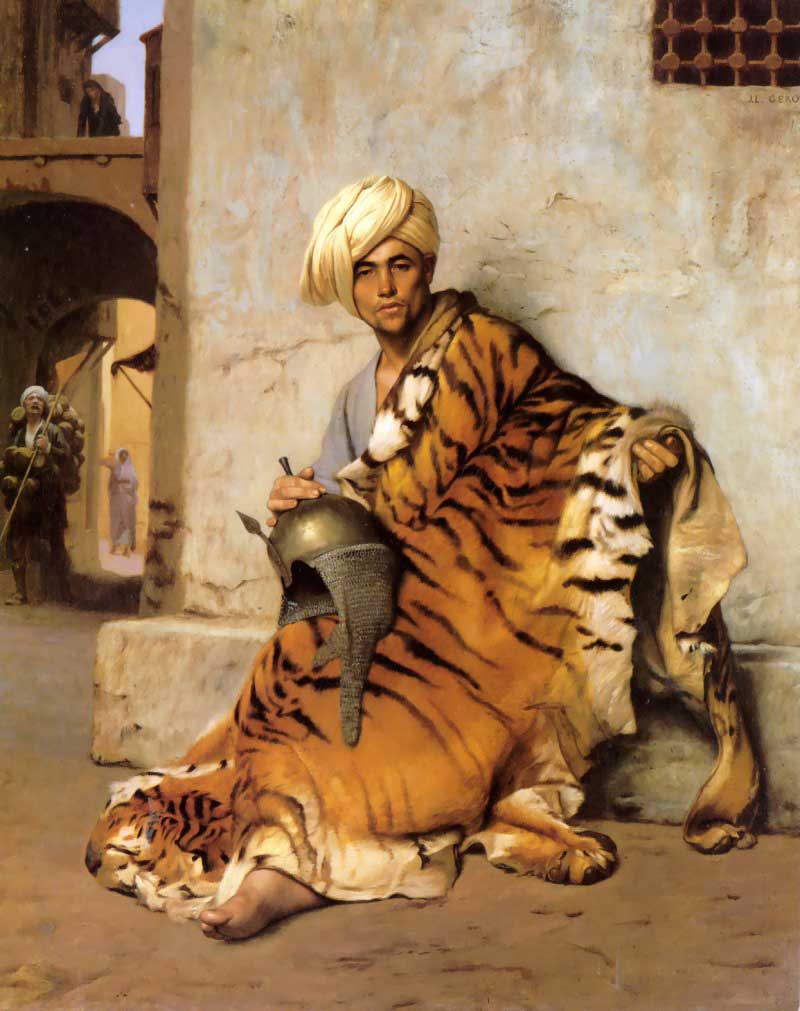
A young street seller in Cairo sits on a wall bench wrapped in a tiger skin, an old helmet in his hand. Gérôme borrowed the pose from a Rembrandt he admired above all other painters.
The story behind the painting
Jean-Léon Gérôme painted this oil on canvas in 1869. It is also known by a second, more ironic title, Le Brocanteur de gloire, roughly the dealer in second-hand glory. The painting is in a private collection, and so is an autograph replica that Gérôme made himself in 1880. Thirty years after the first version, in 1899, Gérôme was asked by letter which painter he considered his ideal. He answered that it was Rembrandt, a man remarkable for his love of nature, his naivety and his sincerity, and a great poet because of those qualities.
What to look for
The young man sits along a wall bench at a street corner. He wears a turban, and his tunic is almost entirely covered by a tiger skin that leaves his bare feet showing. In his right hand he holds a helmet of the kind called kulah khud. The tiger and the helmet return again and again in Gérôme's work. On the left, a narrow lane sinks into shadow and leads toward a patch of light, and a peddler loaded with jars steps out of the dark toward us, a small second scene folded into the first. The signature, JL. GEROME, sits at the upper right under the window. The canvas measures 61.5 by 50.2 cm.
Meaning and intent
The French Wikipedia article traces the pose to Rembrandt's Saul and David, painted around 1630 and now in the Städel Museum in Frankfurt. The posture of the figure is almost identical, and the contrast between rich fabrics and a plain, sober body is the same. Several of Rembrandt's compositional devices are taken over, notably the line that runs from foot to hand to head. Even the turban may look accidental but is described as a deliberate choice. Seen this way, a market scene in Cairo becomes a quiet tribute from one painter to another he admired.
Legacy
Gérôme returned to the subject in 1880 with a larger replica, 72 by 57 cm, also in private hands. In that version he places a sword at the young man's side and replaces the peddler with jars by two passers-by, while a figure above the gallery disappears. The signature moves to the lower right. Comparing the two versions shows how Gérôme kept the central figure and his Rembrandt pose but kept adjusting the life of the street around him, as if the seller of glory stayed still while Cairo moved on.
豆知識
- Painted in 1869, oil on canvas, 61.5 x 50.2 cm.
- Also called Le Brocanteur de gloire.
- The pose echoes Rembrandt's Saul and David.
- Gérôme painted a larger replica in 1880.
画家について
ジャン=レオン・ジェローム (1824-1904)
同じ画家の作品: ジャン=レオン・ジェローム
 指し降ろされた親指 - Jean-Léon Gérôme (1872)
 奴隷市場 - Jean-Léon Gérôme (1866)
 アレオパゴス会議のフリュネ - Jean-Léon Gérôme (1861)
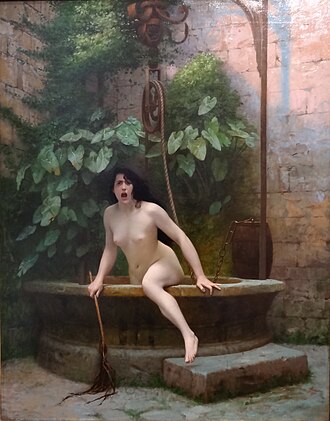 人類に恥を知らせるため井戸から出てくる〈真実〉 - Jean-Léon Gérôme (1896)
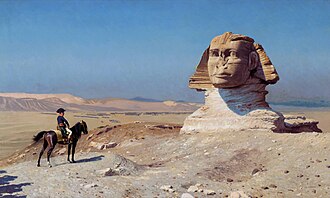 Bonaparte Before the Sphinx - Jean-Léon Gérôme (1867)
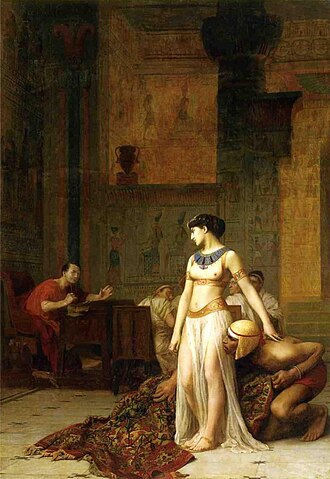 Cleopatra and Caesar - Jean-Léon Gérôme (1866)
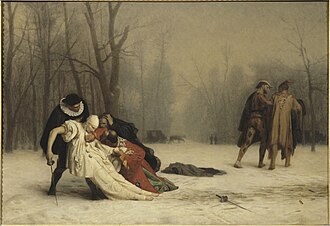 仮面舞踊会の後の決闘 - Jean-Léon Gérôme (1857)
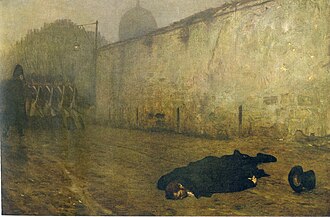 The Execution of Marshal Ney - Jean-Léon Gérôme (1868)
関連する画家の作品
 草上の昼食 - Édouard Manet (1863)
 オランピア - Édouard Manet (1863)
 世界の起源 - Gustave Courbet (1866)
 オルナンの埋葬 - Gustave Courbet (2020)
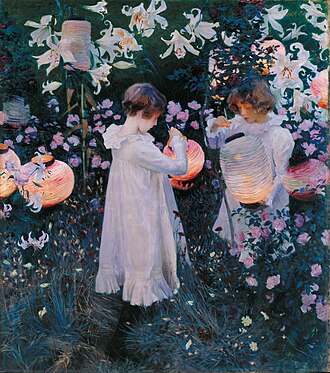 カーネーション、リリー、リリー、ローズ - John Singer Sargent (1885-1886)
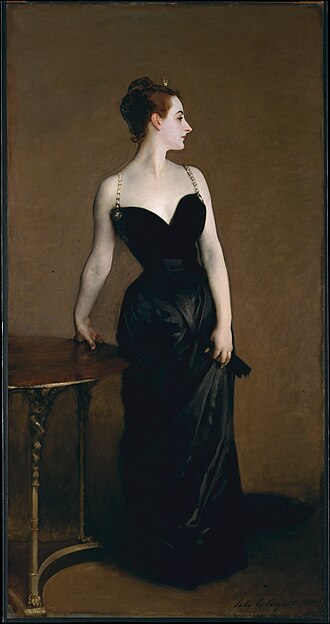 マダムXの肖像 - John Singer Sargent (1884)
 民衆を導く自由の女神 - Eugène Delacroix (1830)
 サルダナパールの死 - Eugène Delacroix (1827)
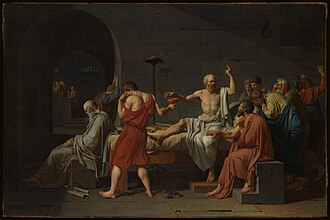 ソクラテスの死 - Jacques-Louis David (1787)
 ホラティウス兄弟の誓い - Jacques-Louis David (1784)
 ウォルドグレイヴ家の貴婦人たち - Joshua Reynolds (1780)
 ジョージ K. H. クースメイカー大尉 - Joshua Reynolds (1782)