Adoration of the Magi
ピーテル・パウル・ルーベンス · 1610s
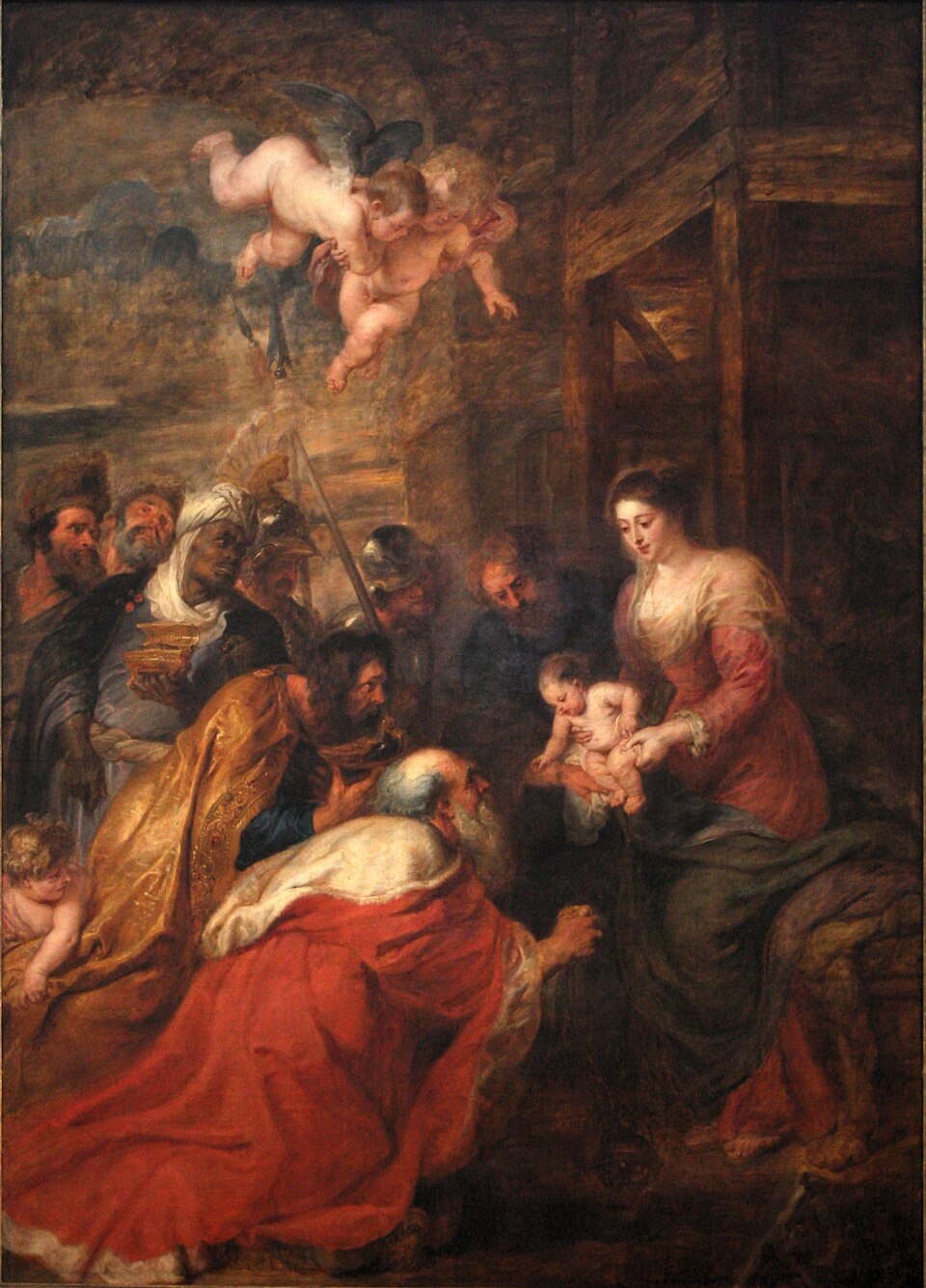
A Rubens altarpiece made for nuns in Louvain now stands behind the altar of King's College Chapel in Cambridge. Getting it there meant lowering a floor, and the change still divides people.
The story behind the painting
Rubens painted this Adoration of the Magi as an altarpiece for the chapel of the Convent of the White Nuns in Louvain, then in the Spanish Netherlands and now in Belgium. The dates differ: the article opens with 1633 to 1634 and later gives 1632 to 1633, while Wikidata places it in the 1610s. A preparatory oil sketch is in the Wallace Collection in London, and Hans Witdoeck engraved the composition in 1638. After convents were suppressed in 1780 the painting was sold, reached the Marquess of Lansdowne in 1788 and then the Grosvenor family in 1806.
What to look for
It is a tall work, oil on panel, about 328 by 247 cm according to Wikidata, while the Corpus Rubenianum gives 3.28 by 2.49 metres. Its vertical shape is what an altarpiece needed, and the composition was made to be seen above an altar. Today it sits in a wooden triptych frame created for it, with a new harlequin grisaille, at the east end of the chapel. Standing in the long Gothic chapel, notice how the painting is placed low enough that it does not block the great stained glass windows behind it.
Meaning and intent
Made to stand over an altar where nuns prayed, the picture returned to that role three centuries later. In 1959 it was sold from the estate of the 2nd Duke of Westminster and bought by the property developer Alfred Ernest Allnatt, who two years later gave it to King's College. The college accepted what it called a munificent gift, meaning to show it in the chapel, possibly as an altarpiece. It first hung in the antechapel before the decision was made to rebuild the east end around it.
Legacy
To fit the painting, three steps up to the altar were removed and the floor lowered, and the oak panelling, communion rail and a reredos designed by Detmar Blow in 1906 were taken out. Critics condemned the loss of irreplaceable features, arguing it was all for appearances during the chapel's annual broadcast of the Festival of Nine Lessons and Carols. The painting has stood there since 1968. In June 1974 it was vandalised, with the letters IRA, two feet high, scratched into its surface.
豆知識
- Painted as an altarpiece for the White Nuns' convent in Louvain.
- Given to King's College, Cambridge, by Alfred Ernest Allnatt.
- Installed at the east end of King's College Chapel in 1968.
- Vandalised with scratched letters in June 1974.
画家について
ピーテル・パウル・ルーベンス (1577-1640)
同じ画家の作品: ピーテル・パウル・ルーベンス
.jpg) キリスト昇架 - Peter Paul Rubens (1609)
キリスト昇架 - Peter Paul Rubens (1609)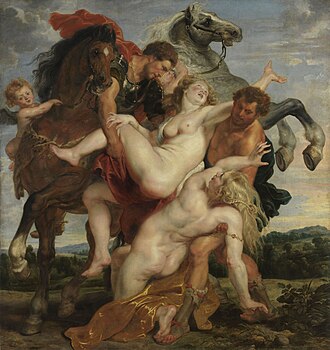 レウキッポスの娘たちの略奪 - Peter Paul Rubens (1618)
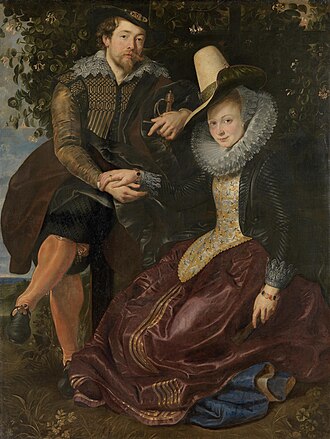 ルーベンスとイザベラ・ブラント - Peter Paul Rubens (1600s)
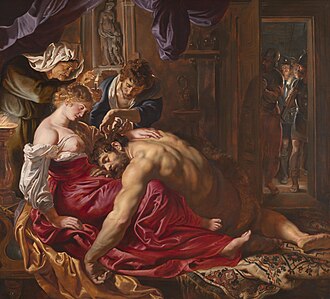 サムソンとデリラ - Peter Paul Rubens (1600s)
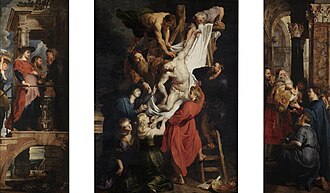 キリスト降架 - Peter Paul Rubens (1611)
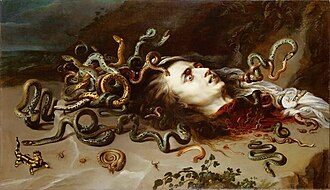 メドューサの頭部 - Peter Paul Rubens (1618)
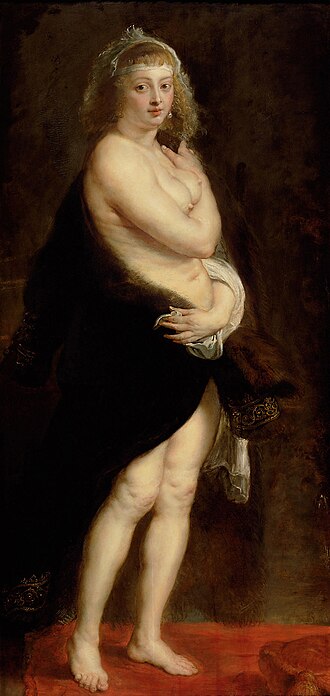 毛皮をまとったエレーヌ・フールマン - Peter Paul Rubens (1638)
.jpg) 愛の園 - Peter Paul Rubens (1632)
愛の園 - Peter Paul Rubens (1632)
関連する画家の作品
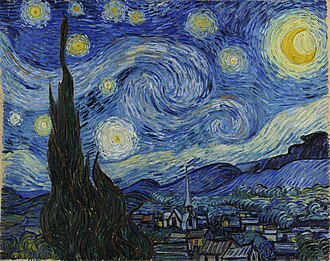 星月夜 - Vincent van Gogh (1889)
.jpg) 夜のカフェテラス - Vincent van Gogh (1888)
夜のカフェテラス - Vincent van Gogh (1888) エマオの晩餐 - Caravaggio (1601)
 聖マタイの召命 - Caravaggio (1609)
 ラス・メニーナス - Diego Velázquez (1656)
 ブレダの開城 - Diego Velázquez (1635)
%20-%20Google%20Art%20Project.jpg) チャールズ1世の三面肖像画 - Anthony van Dyck (1635)
チャールズ1世の三面肖像画 - Anthony van Dyck (1635)%20with%20M.%20de%20St%20Antoine%20-%20Google%20Art%20Project.jpg) 馬上のチャールズ1世とサン・アントワーヌの領主の肖像 - Anthony van Dyck (1636)
馬上のチャールズ1世とサン・アントワーヌの領主の肖像 - Anthony van Dyck (1636)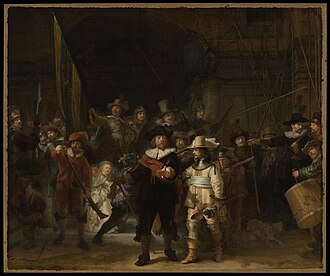 夜警 - Rembrandt van Rijn (1642)
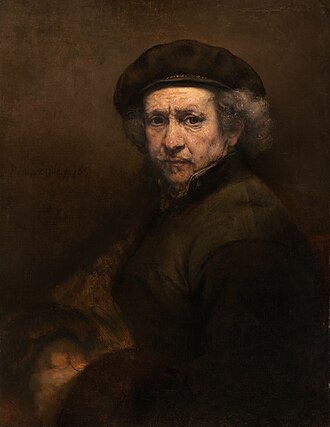 自画像 - Rembrandt van Rijn (1659)
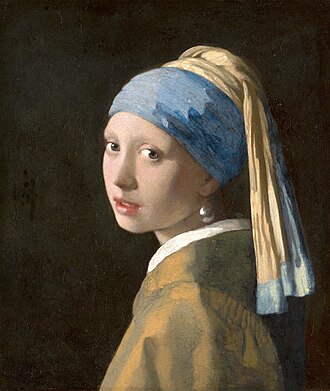 真珠の耳飾りの少女 - Johannes Vermeer (1665)
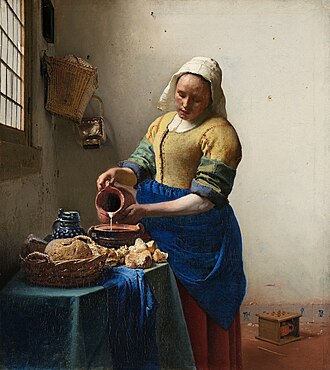 牛乳を注ぐ女 - Johannes Vermeer (c. 1658)