Wheatfield with Crows
Vincent van Gogh · 1890
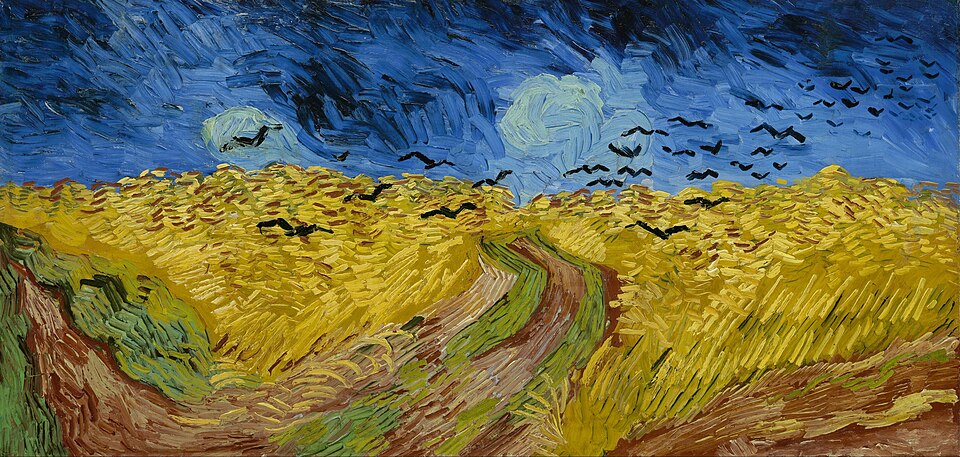
A poignant and powerful landscape that continues to captivate art lovers with its expressive brushwork and evocative symbolism.
The story behind the painting
Vincent van Gogh painted Wheatfield with Crows in July 1890, during the last weeks of his life. At the time, he was living in Auvers-sur-Oise, near Paris, under the care of the homoeopathic doctor Paul Gachet. Despite struggling with depression and mental illness, Van Gogh was incredibly productive, creating numerous paintings in a short period. Wheatfield with Crows was likely completed around July 10, 1890, and was one of several large canvases he worked on during this time, including Wheatfield under Clouded Sky and Daubigny's Garden. Van Gogh wrote to his brother Theo and his wife Jo Bonger, describing his efforts to express sadness and extreme loneliness in his work, while also finding solace in the countryside.
What to look for
In Wheatfield with Crows, Van Gogh depicted a dramatic, cloudy sky filled with crows over a wheat field. The windswept wheat field fills two-thirds of the canvas, with a central path leading nowhere and the uncertain direction of flight of the crows. The painting features bold, expressive brushwork and a vivid color palette, with swirling clouds and a deep blue sky. The crows are scattered throughout the sky, adding a sense of movement and tension to the composition. The path, rendered in contrasting colors of red and green, draws the viewer's eye into the painting.
Meaning and intent
Van Gogh used the crows in Wheatfield with Crows as a symbol of death and rebirth, or resurrection. The painting has been interpreted as expressing both sorrow and a sense of his life coming to an end. The road, in contrasting colors of red and green, may be seen as a metaphor for a sermon he gave based on Bunyan's The Pilgrim's Progress. Van Gogh's letters suggest that he aimed to convey a sense of sadness and loneliness, but also to highlight the beauty and solace he found in the countryside.
Legacy
Wheatfield with Crows is considered one of Van Gogh's greatest works and is held in the collection of the Van Gogh Museum in Amsterdam. The painting has been widely influential, with its expressive brushwork and emotive symbolism contributing to the development of modern art. Despite being created over a century ago, Wheatfield with Crows remains a powerful and moving work, continuing to captivate audiences with its beauty and poignancy. In 1991, the painting was stolen and quickly recovered, but not before suffering severe damage.
Lo sapevi?
- Van Gogh's final painting was actually Tree Roots, not Wheatfield with Crows.
- The crows in the painting are a personal symbol closely associated with Van Gogh's own life.
- Wheatfield with Crows was stolen and recovered in 1991, along with 19 other Van Gogh paintings.
- The painting is characterized by its use of elongated double-square canvases, a format used exclusively by Van Gogh in the last few weeks of his life.
Wikipedia · Wikipedia - Vincent van Gogh · Wikidata
L'artista
Vincent van Gogh (1853-1890)
landscape painting · Post-impressionism · Van Gogh Museum · sky · field
Altre opere di Vincent van Gogh
 The Starry Night - Vincent van Gogh (1889)
.jpg) Café Terrace at Night - Vincent van Gogh (1888)
Café Terrace at Night - Vincent van Gogh (1888)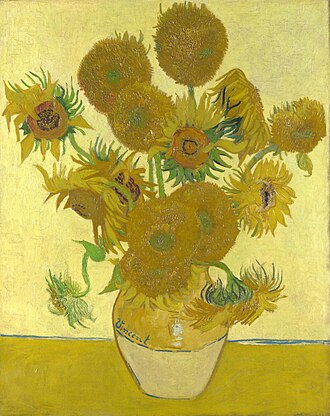 Sunflowers - Vincent van Gogh (1888)
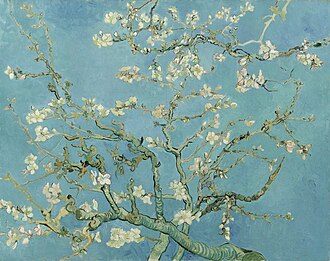 Almond Blossoms - Vincent van Gogh (1890)
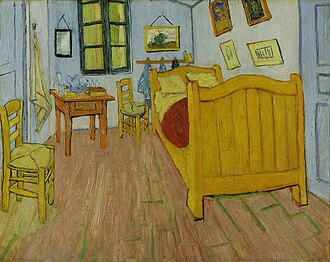 The Bedroom - Vincent van Gogh (1888)
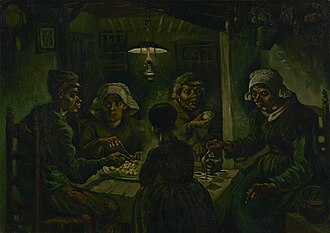 The Potato Eaters - Vincent van Gogh (1885)
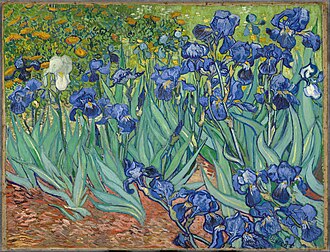 Irises - Vincent van Gogh (1889)
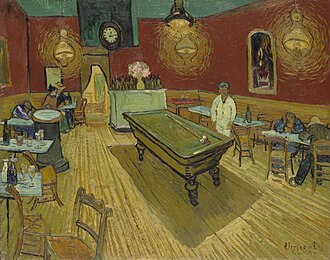 The Night Café - Vincent van Gogh (1888)
Dipinti di artisti collegati
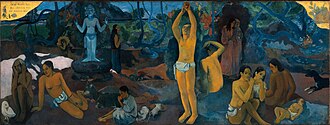 Where Do We Come From? What Are We? Where Are We Going? - Paul Gauguin (1897-1898)
%201889.jpg) Cristo giallo - Paul Gauguin (1889)
Cristo giallo - Paul Gauguin (1889) Luncheon on the Grass - Édouard Manet (1863)
 Olympia - Édouard Manet (1863)