The Night Café
Vincent van Gogh · 1888
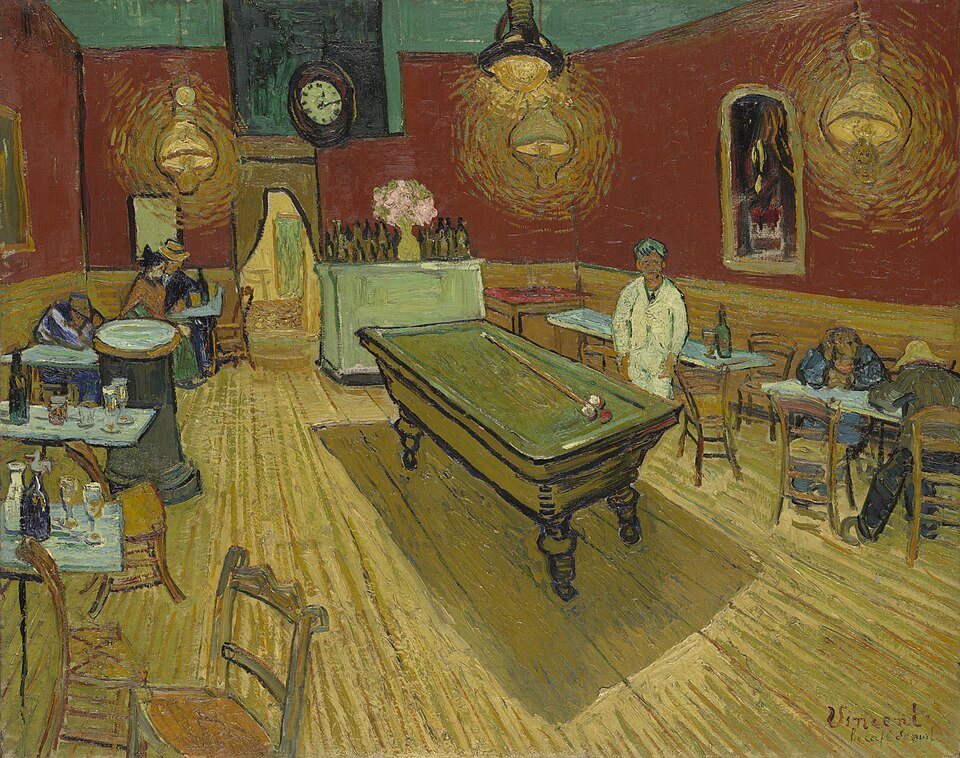
A masterpiece of somber beauty, Vincent van Gogh's The Night Café is a poignant portrayal of a late-night gathering place for the downtrodden, rendered in bold, expressive brushstrokes and vivid, clashing colors.
The story behind the painting
In September 1888, Vincent van Gogh created The Night Café in Arles, where he was living at the time. The painting depicts the interior of the Café de la Gare, a local establishment that stayed open all night, providing a refuge for those who had nowhere else to go. Van Gogh wrote to his brother Theo that he aimed to express the idea that the café was a place where one could ruin oneself, go mad, or commit a crime. He saw it as a 'place of darkness' and wanted to convey this through his use of color and composition.
What to look for
The painting's dominant red and green hues create a sense of tension and unease, while the thick, heavy brushstrokes add to the overall feeling of somberness. The composition draws the viewer's eye toward the back of the room, where a doorway leads to private quarters. The five customers are slouched at tables, exuding an air of despair and loneliness. The billiard table, situated at the center of the room, is a focal point, with the landlord, Joseph-Michel Ginoux, standing nearby, watching over the scene.
Meaning and intent
Van Gogh's use of 'suggestive color' and bold brushstrokes imbues the painting with a sense of emotional intensity. He sought to convey the struggles and hardships of those who frequented the café, as well as the oppressive atmosphere of the establishment. The painting can be seen as a reflection of Van Gogh's own feelings of isolation and melancholy during his time in Arles. The Night Café is often interpreted as a symbol of the artist's concern for the welfare of those on the margins of society.
Legacy
The Night Café is considered one of Van Gogh's masterpieces and one of his most famous works. It has had a lasting impact on the development of Expressionism and continues to influence artists to this day. The painting is now held at the Yale University Art Gallery in New Haven, Connecticut, where it remains a popular attraction. Its enduring appeal lies in its powerful portrayal of human struggle and the artist's innovative use of color and composition.
Lo sapevi?
- The painting measures 72.4 × 92.1 cm and is an oil on canvas work.
- It is one of the few works by Van Gogh that is still owned by a museum.
- The Night Café was painted in just three consecutive nights, with Van Gogh sleeping during the day.
- The painting was part of Ivan Morozov's collection before being acquired by Yale University.
Wikipedia · Wikipedia - Vincent van Gogh · Wikidata
L'artista
Vincent van Gogh (1853-1890)
Altre opere di Vincent van Gogh
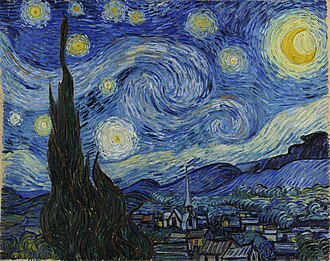 The Starry Night - Vincent van Gogh (1889)
.jpg) Café Terrace at Night - Vincent van Gogh (1888)
Café Terrace at Night - Vincent van Gogh (1888)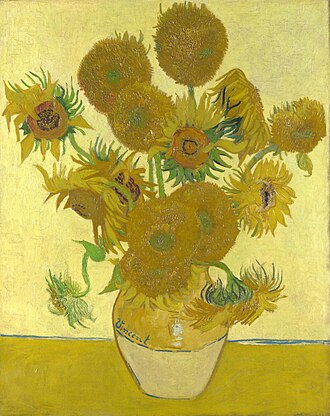 Sunflowers - Vincent van Gogh (1888)
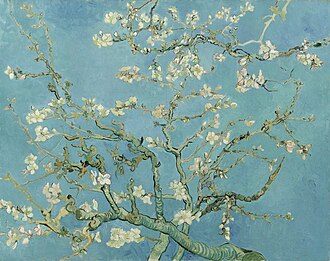 Almond Blossoms - Vincent van Gogh (1890)
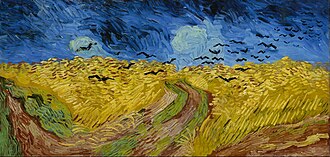 Wheatfield with Crows - Vincent van Gogh (1890)
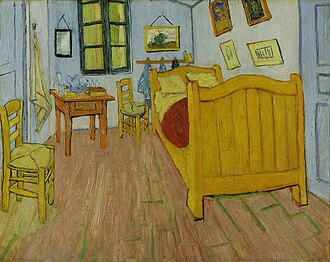 The Bedroom - Vincent van Gogh (1888)
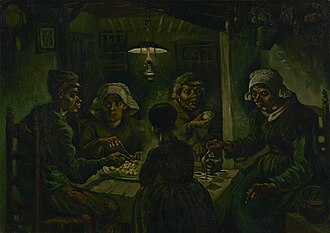 The Potato Eaters - Vincent van Gogh (1885)
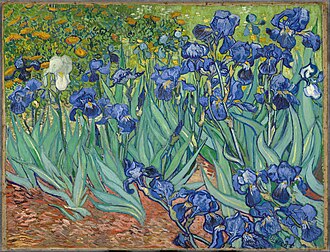 Irises - Vincent van Gogh (1889)
Dipinti di artisti collegati
 Where Do We Come From? What Are We? Where Are We Going? - Paul Gauguin (1897-1898)
%201889.jpg) Cristo giallo - Paul Gauguin (1889)
Cristo giallo - Paul Gauguin (1889) Luncheon on the Grass - Édouard Manet (1863)
 Olympia - Édouard Manet (1863)