Due granchi
Vincent van Gogh · 1889
.jpg)
Two crabs on a field of green: one stands ready, the other lies helplessly on its back. Van Gogh painted them in the fragile weeks after he left hospital, and the small drama is hard to un-see.
The story behind the painting
Two Crabs is an oil painting from 1889, the year Vincent van Gogh began after a hospital stay in Arles. The surviving sources say he is thought to have painted it after his release in January 1889, so it belongs to a moment of recovery and cautious return to work. The spark may have come from far away. In September 1888 his brother Theo had sent him the magazine Le Japon Artistique, and in it Vincent could have seen a print of a crab by the Japanese master Hokusai. Scholars treat that link as a possibility rather than a certainty, and it is honest to keep it that way. What is certain is that Van Gogh chose a humble kitchen subject, two crustaceans, and gave them a full canvas of their own, about 47 by 61 centimetres.
What to look for
Start with the pairing. One crab sits upright, legs planted, while its companion has been turned onto its back, exposing the pale underside and the jointed legs that can no longer grip anything. Then let your eye drift to the background, a broad field of green that surrounds both animals. There is no table edge, no plate, no kitchen setting described in the sources; the crabs float against colour alone, which makes them feel closer to a study from nature than a conventional dinner still life. Compare the two shells: the same creature seen from above and from below, almost like a single specimen examined from two sides. Take a moment with the overturned one. A crab on its back is a famously difficult position to escape from, and the painting lets that awkwardness sit in plain view.
Meaning and intent
Van Gogh left no explanation of this canvas in the sources used here, so any reading must be held lightly. Two ideas are well grounded. First, the Japanese connection: if he did look at Hokusai's crab in Le Japon Artistique, the painting shows how much he admired Japanese art's habit of giving full attention to small living things. Second, the timing. Painted after his release from hospital, a picture of one creature upright and one overturned invites viewers to think of vulnerability and recovery side by side. That is an interpretation, not a documented statement by the artist, but it explains why so many people pause in front of it. Even read purely as a still life, the work turns an ordinary subject into a study of shape, colour and balance between two nearly identical forms.
Legacy
Today Two Crabs can be seen at the National Gallery in London, where it hangs on loan from a private collector. It has a close relative: Crab on its Back, a still life of a single overturned crab, which belongs to the Van Gogh Museum in Amsterdam. Seeing the two works together in the mind is rewarding, because they show Van Gogh returning to the same motif and trying it with one animal and with two. The painting matters less as a famous icon than as a quiet window into a difficult year. It reminds us that, between the sunflowers and starry skies, Van Gogh kept looking hard at the most ordinary things on hand, and that his debt to Japanese prints reached even a pair of crabs bought for the table.
Lo sapevi?
- Two Crabs measures 47 by 61 centimetres, oil on canvas.
- It may have been inspired by a Hokusai crab print in Le Japon Artistique, which Theo sent Vincent in September 1888.
- It hangs at the National Gallery, London, on loan from a private collector.
- A related painting, Crab on its Back, is in the Van Gogh Museum, Amsterdam.
L'artista
Vincent van Gogh (1853-1890)
Altre opere di Vincent van Gogh
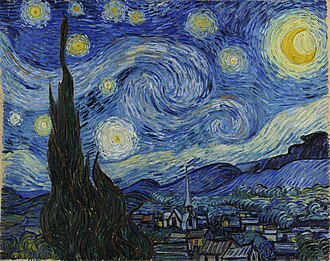 The Starry Night - Vincent van Gogh (1889)
.jpg) Café Terrace at Night - Vincent van Gogh (1888)
Café Terrace at Night - Vincent van Gogh (1888)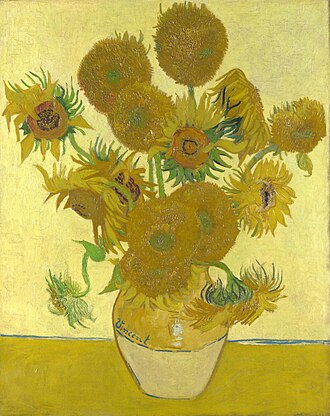 Sunflowers - Vincent van Gogh (1888)
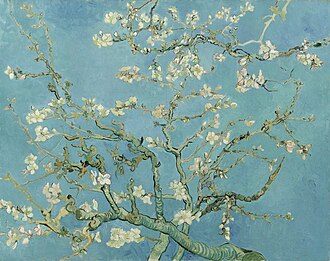 Almond Blossoms - Vincent van Gogh (1890)
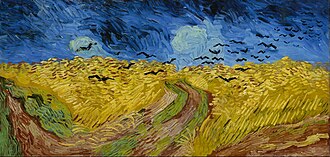 Wheatfield with Crows - Vincent van Gogh (1890)
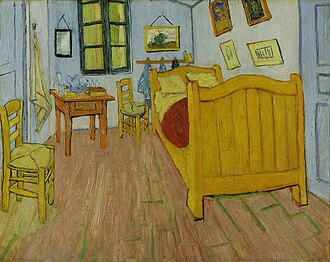 The Bedroom - Vincent van Gogh (1888)
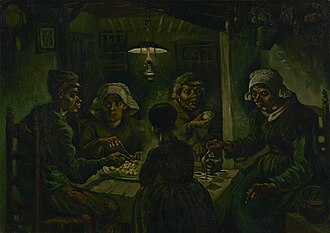 The Potato Eaters - Vincent van Gogh (1885)
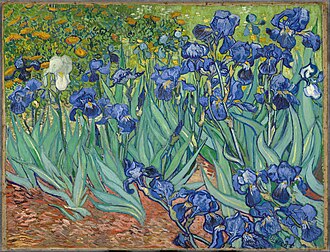 Irises - Vincent van Gogh (1889)
Dipinti di artisti collegati
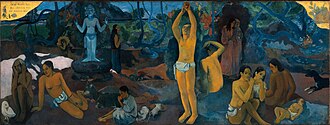 Where Do We Come From? What Are We? Where Are We Going? - Paul Gauguin (1897-1898)
%201889.jpg) Cristo giallo - Paul Gauguin (1889)
Cristo giallo - Paul Gauguin (1889) Luncheon on the Grass - Édouard Manet (1863)
 Olympia - Édouard Manet (1863)