The Bench
William Hogarth · 1758
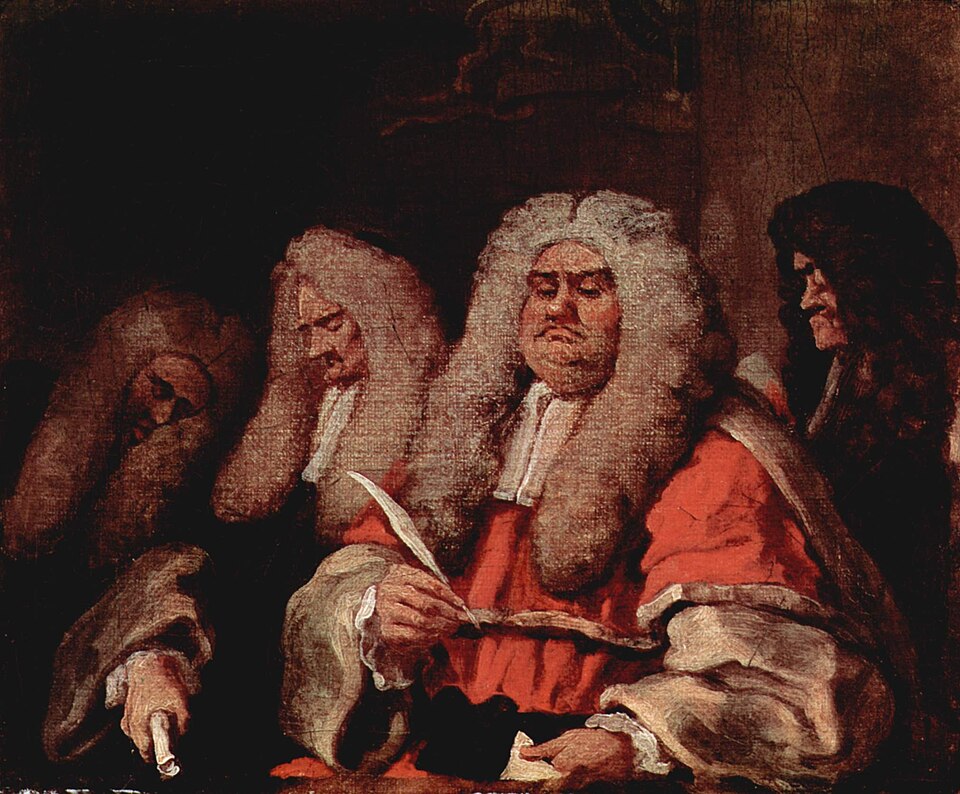
Four judges sit in court, and none of them is listening. Hogarth painted them to prove he was no mere caricaturist, then kept reworking the idea until he died.
The story behind the painting
Hogarth was often called a caricaturist and took it as a slur. In The Analysis of Beauty he complained that critics branded all his women harlots and all his men caricatures. He had answered once already in 1743 with the subscription ticket for Marriage A-la-Mode, later known as Characters and Caricaturas. In 1758 he tried again with The Bench, a small oil painting, about 14.5 by 18 cm, and a print issued the same year, meant to show the difference between character, caricature and outre. Ronald Paulson suggests Hogarth had become very sensitive to criticism and wanted to separate himself from the caricaturists once and for all.
What to look for
Four judges of the Court of Common Pleas sit beneath the King's Arms. One is busy with other business, one studies some paper unconnected to the case, and two are lost in stages of sleep. They have been identified as William Noel; the heavy Chief Justice Sir John Willes in the centre; Henry Bathurst, later Lord Chancellor; and Sir Edward Clive, dozing on Bathurst's shoulder. Look above them: the Garter motto Honi soit qui mal y pense has been cut off, leaving only Mal y pense, evil thoughts, floating over their heads.
Meaning and intent
Hogarth compared character, caricature and outre to comedy, tragedy and farce. Character, like comedy, shows nature truly; caricature heightens it; outre pushes it to absurdity. He placed caricature as far below character painting as the wild attempts of children, and hoped to stand with Renaissance painters rather than gentleman amateurs. Willes, known as a hanging judge and as a rake, is the main target. Paulson finds the picture's power in the gap between the judges' bodily and moral frailty and the authority of their robes. Hogarth's Willes has been suggested as an inspiration for Mr Justice Harbottle in Sheridan Le Fanu's In a Glass Darkly.
Legacy
Unlike many Hogarth prints, the engraving differs a good deal from the painting. Hogarth first dedicated it to the soldier and caricaturist George Townshend, then removed the dedication before issue for fear of misreading. The first state appeared on 4 September 1758, headed Character. Hogarth was unhappy that it showed only characters, so in a second, incomplete state he replaced the King's Arms with eight heads in two groups, and he kept working on the plate until his death. The painting survives in the Fitzwilliam Museum in Cambridge.
Lo sapevi?
- A small oil painting and a print, both of 1758.
- Shows four judges of the Court of Common Pleas.
- Made to separate character painting from caricature.
- Fitzwilliam Museum, Cambridge.
L'artista
William Hogarth (1697-1764)
Altre opere di William Hogarth
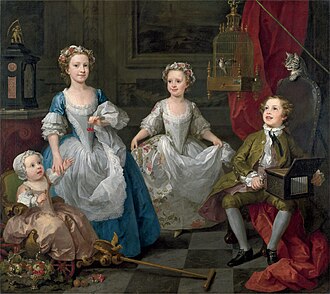 The Graham Children - William Hogarth (1742)
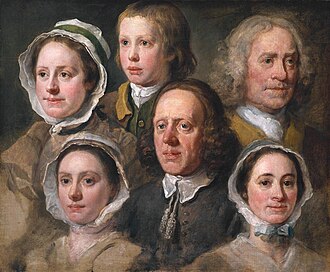 Hogarth's Servants - William Hogarth (1750s)
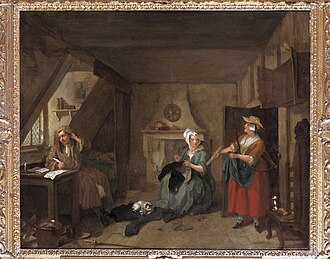 The Distrest Poet - William Hogarth (1730s)
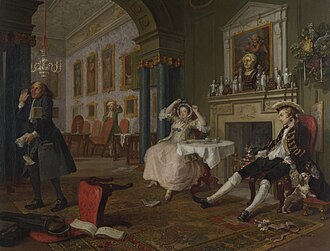 Marriage A-la-Mode: 2. The Tête à Tête - William Hogarth (1743)
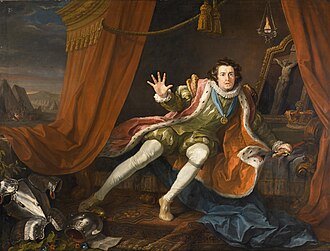 David Garrick as Richard III - William Hogarth (1745)
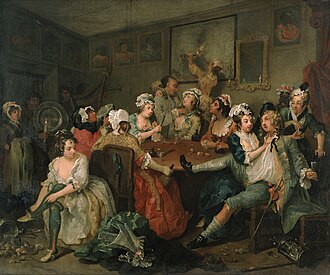 The Orgy - William Hogarth (1735)
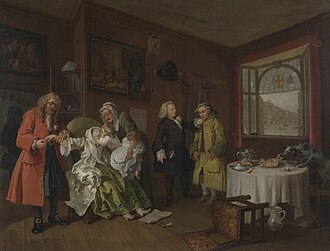 Marriage A-la-Mode: 6. The Lady's Death - William Hogarth (1743)
The Lady's Last Stake - William Hogarth (1759)