Hogarth's Servants
William Hogarth · 1750s
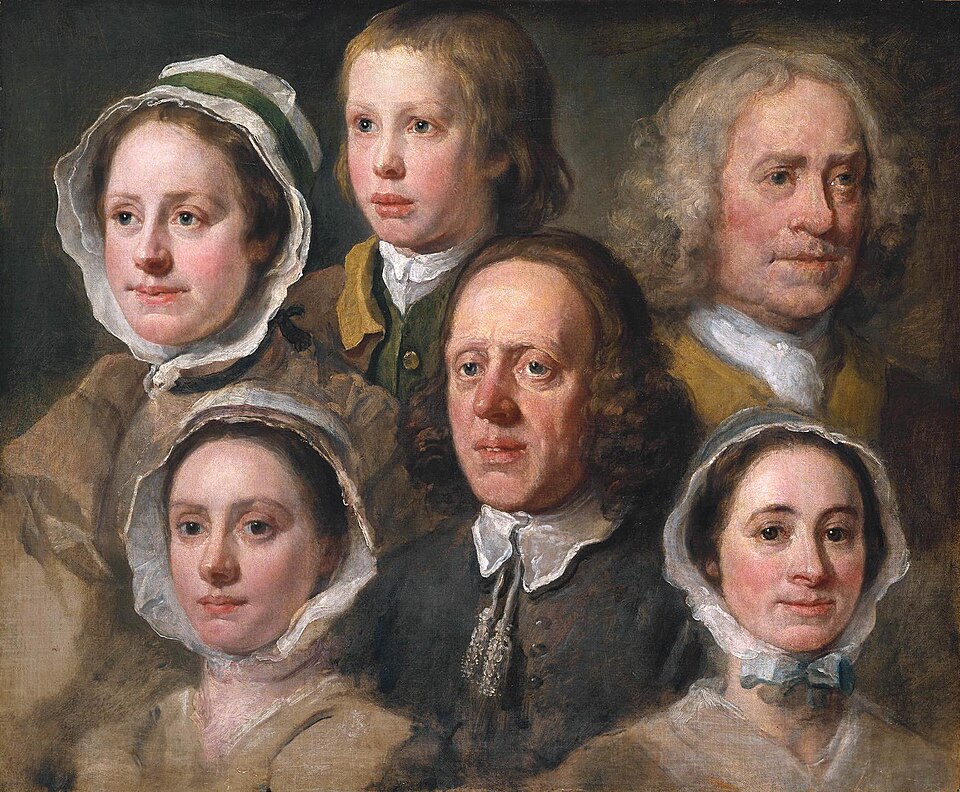
Six faces crowd a small canvas: three men, three women, young and old, each looking a different way. William Hogarth painted his own household servants, not for a patron but for himself, and the warmth still shows.
The story behind the painting
Heads of Six of Hogarth's Servants dates from about 1750 to 1755, a late work by William Hogarth. It was not commissioned but painted for his own amusement, and it may have hung in his studio to show patrons what he could do as a portraitist. The sitters are his domestic staff. The older man is possibly Ben Ives; others may be a Samuel, Mary Lewis, cousin of Hogarth's wife, and Mrs Chappel, who worked for the Hogarths in Chiswick. Ronald Paulson suggests a coachman, valet, page, housekeeper and two housemaids.
What to look for
Six heads are crammed into a small space in three pairs, all lit from the upper left. In the lower left corner, space for a seventh head was roughly marked out but never finished, and the left edge was later cut to frame the six better. The men progress in age from a boy at top centre to a mature man at bottom centre and an older man at top right; the three women look similarly youthful. Each looks a different way, no gazes meeting. Wikipedia gives the height as 63 cm, Wikidata as 62 cm.
Meaning and intent
The range of ages recalls the seven ages of man, and the varied skin tones and features show Hogarth exploring human physiognomy, as in his 1743 print Characters and Caricaturas. The servants appear as they were, in their usual work clothes, each with an individual character. It was painted with warmth and sensitivity, showing Hogarth's affection for the people who lived and worked in his house, with a lightness of touch that recalls his unfinished portrait The Shrimp Girl.
Legacy
After Hogarth's death his wife inherited the painting and left it in 1789 to Mary Lewis, possibly one of the sitters. It was sold in 1790, shown at the British Institution in 1817 and the Suffolk Street Gallery in 1833, and sold again in 1879 and 1892, when the National Gallery bought it with money from the Lewis Fund. In 1960 it was transferred to the Tate, and it is now held by Tate Britain in London.
Lo sapevi?
- Painted about 1750 to 1755 for Hogarth's own pleasure.
- Six servants, three men and three women; a seventh head was left unfinished.
- One sitter, Mary Lewis, later inherited the painting.
- Bought by the National Gallery in 1892, now at Tate Britain.
L'artista
William Hogarth (1697-1764)
portrait · National Gallery · Tate · domestic worker
Altre opere di William Hogarth
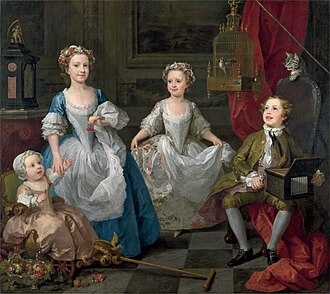 The Graham Children - William Hogarth (1742)
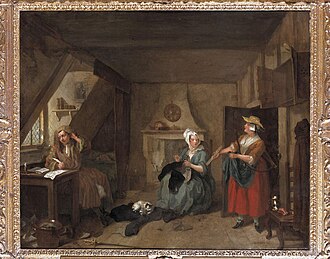 The Distrest Poet - William Hogarth (1730s)
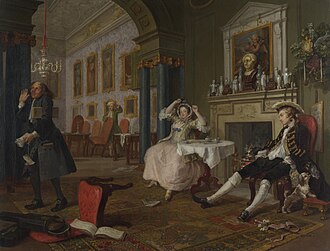 Marriage A-la-Mode: 2. The Tête à Tête - William Hogarth (1743)
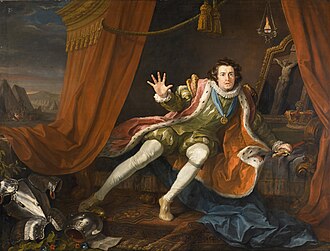 David Garrick as Richard III - William Hogarth (1745)
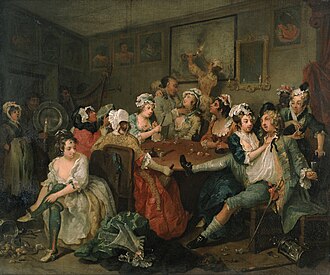 The Orgy - William Hogarth (1735)
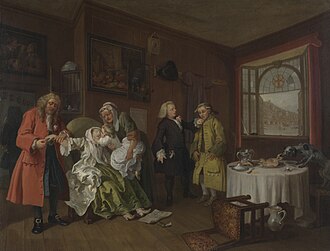 Marriage A-la-Mode: 6. The Lady's Death - William Hogarth (1743)
The Lady's Last Stake - William Hogarth (1759)
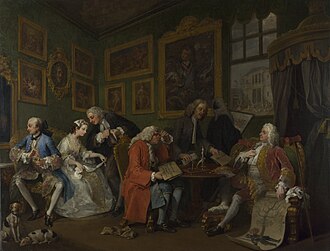 Marriage A-la-Mode: 1. The Marriage Settlement - William Hogarth (1743)