The Graham Children
William Hogarth · 1742
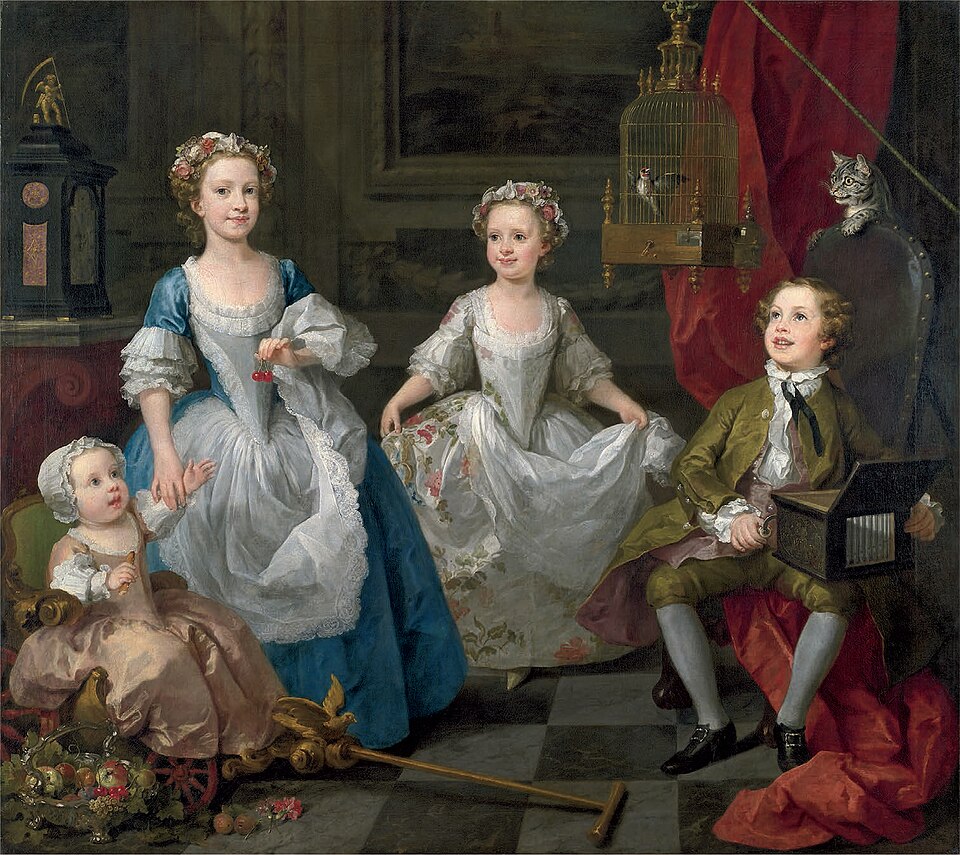
Four children play in a rich room, a cat eyes a caged bird, and the youngest smiles from his little cart. By the time William Hogarth finished the portrait in 1742, that little boy had died.
The story behind the painting
The Graham Children is a group portrait of the four children of Daniel Graham, apothecary to King George II. It is a conversation piece, an informal group portrait of a family, though larger than most works of that kind, about 160 by 181 cm, with the children shown life size. Infant mortality was high in eighteenth century Britain, even among the wealthy, and the youngest, Thomas, born in 1740, died before the painting was completed. Hogarth based his figure on a study probably made after Thomas's death. With its many references to death and passing time, the painting may be a memorial for him.
What to look for
From left to right are Thomas, dressed in skirts as small boys were until they were breeched, then Henrietta, Anna Maria and Richard. Thomas sits in an ornate baby cart with a silver fruit bowl at his feet, reaching for cherries his sister holds. Anna Maria practises dance steps, and Richard plays a bird organ that seems to make the goldfinch in its gilded cage sing. A smiling cat stares at the bird. On the clock stands a little winged figure with a scythe and hourglass. The girls' aprons form serpentine S shapes, echoed by the curtain and by the line of heads and the cat, a touch of French Rococo.
Meaning and intent
David Bindman saw in the painting a theme worthy of history painting: a parable about the passing of time and the vulnerability of innocence. The boys and animals are caught in mid movement while the girls are still. Henrietta, the eldest, holds Thomas's wrist and looks out at us, aware of the adult world she will soon join. The cherries stand for the fruit of Paradise, the goldfinch for Redemption, the figure of Time and the hungry cat for the fragility of life. Hogarth dared to put the predator in one corner and the dead child in the other. How the parents felt about this is unknown.
Legacy
The picture invited comparison with Anthony van Dyck's The Five Eldest Children of Charles I of 1637, which also used animals for comic effect. But Hogarth painted the rising middle class, not royalty, and never became a court painter, so the nod to Van Dyck may have been meant to flatter his client. The fruit bowl has been called a bravura piece of still life, unusual in his work. Richard Graham, shown at the far right, kept the painting at least until his death in 1816. After several owners, Lord Duveen presented it to the National Gallery in London in 1934.
Lo sapevi?
- Portrait of the four children of Daniel Graham, apothecary to George II.
- Completed in 1742, after the youngest child Thomas had died.
- The children are painted life size.
- Presented to the National Gallery by Lord Duveen in 1934.
L'artista
William Hogarth (1697-1764)
National Gallery · family portrait · cat
Altre opere di William Hogarth
 Hogarth's Servants - William Hogarth (1750s)
 The Distrest Poet - William Hogarth (1730s)
 Marriage A-la-Mode: 2. The Tête à Tête - William Hogarth (1743)
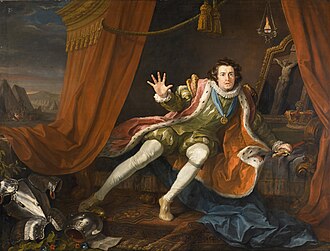 David Garrick as Richard III - William Hogarth (1745)
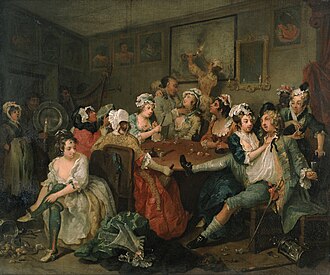 The Orgy - William Hogarth (1735)
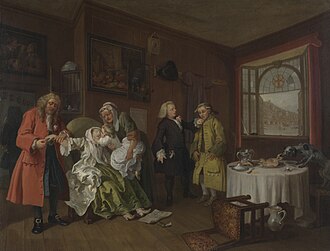 Marriage A-la-Mode: 6. The Lady's Death - William Hogarth (1743)
The Lady's Last Stake - William Hogarth (1759)
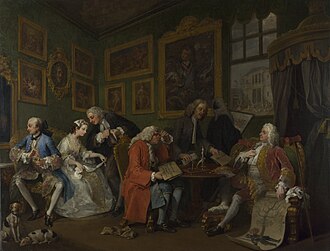 Marriage A-la-Mode: 1. The Marriage Settlement - William Hogarth (1743)