Autoritratto con l'orecchio bendato
Vincent van Gogh · 1889
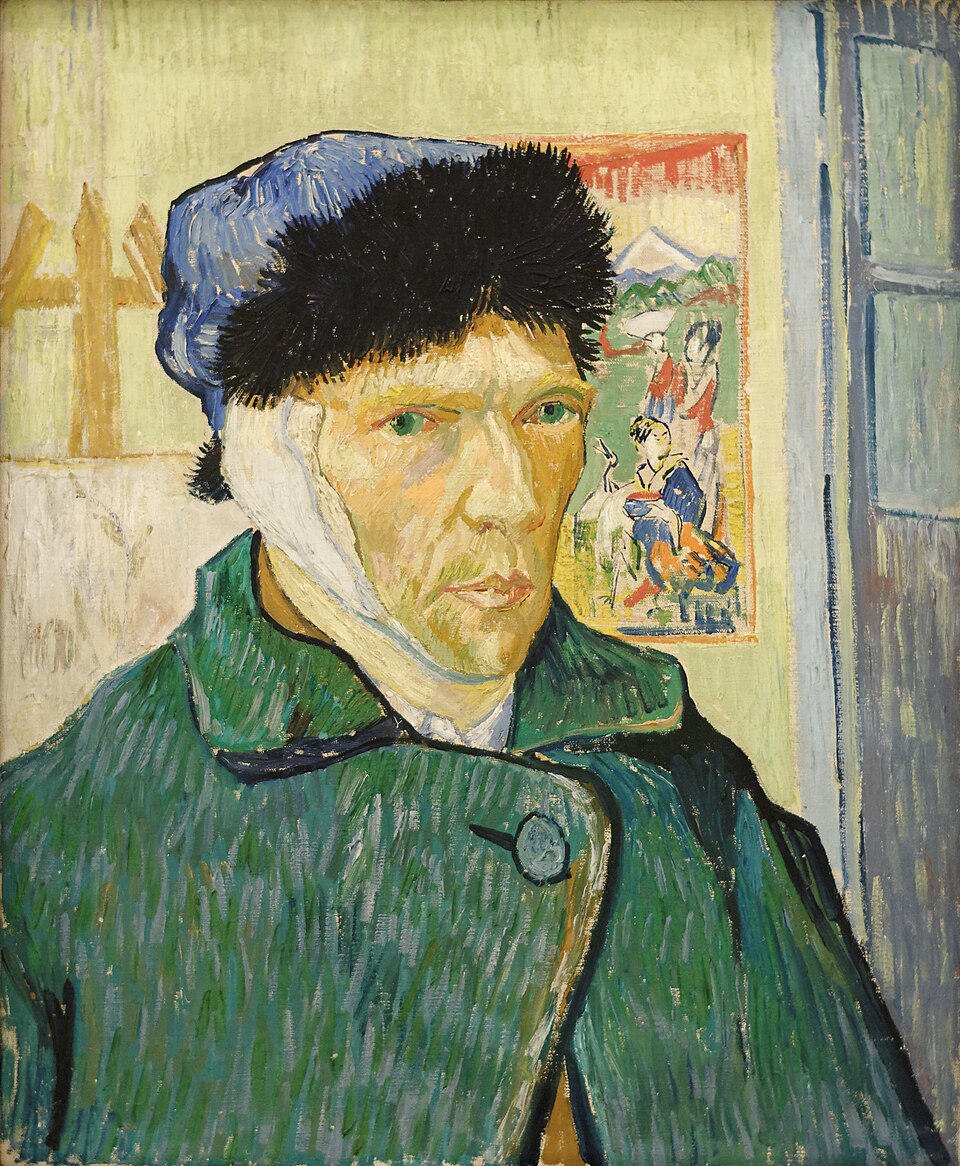
Behind the bandaged painter hangs a Japanese print and a canvas still nearly blank: a man taking stock of himself, and of his work, in the cold January after catastrophe.
The story behind the painting
Van Gogh had left Paris for Arles hoping to found a community of artists, the Studio of the South. He rented four rooms in the Yellow House and invited Paul Gauguin to join him. On the evening of 23 December 1888, Gauguin threatened to leave and Van Gogh approached him with a razor; later that night he cut off his own left ear and brought it to a woman in Arles named Rachel, who called the police. In a letter to his brother Theo dated 17 January 1889, Vincent mentioned a new self-portrait, believed to be this one. The canvas measures 60.5 by 50 cm.
What to look for
He wears a blue cap trimmed with black fur and a green overcoat, the bandage covering his ear and running under his chin. Because he painted from a mirror, it is the right ear that appears bandaged. Behind him: an open window, a canvas on an easel bearing only a few indistinct marks, and a Japanese woodblock print, Geishas in a Landscape by Satō Torakiyo from the 1870s. Look closely at the surface: Van Gogh laid the paint on thickly in impasto, so the marks of his tools stay visible and give the image its energy, a technique he admired in the work of Adolphe Monticelli.
Meaning and intent
The fur cap is a small, telling memory of hardship: he had just bought it to keep the heavy bandage in place and to protect himself from the winter cold. The objects around him read like a declaration of what still mattered. The easel speaks of work waiting to be done; the Japanese print recalls the art he collected in the hundreds and loved for its bold colours and spatial effects, which pushed him to modernise his own style. Wounded, he still shows himself surrounded by his sources and his tools.
Legacy
When Van Gogh died, the painting belonged to Julien 'Père' Tanguy, the Paris colour merchant who had posed for him twice in 1887, though how Tanguy obtained it is unclear. It was shown in Paris in 1901 and in a major retrospective in 1905. In 1928 Samuel Courtauld bought it, and it now hangs in the Courtauld Gallery at Somerset House in London. It is not the only bandaged-ear portrait: a second version with a pipe, painted the same month, has its own history.
Lo sapevi?
- The print in the background is Geishas in a Landscape by Satō Torakiyo.
- The fur cap was bought to hold the bandage in place and keep out the winter cold.
- Samuel Courtauld purchased the painting in 1928.
- It was likely the new self-portrait Van Gogh mentioned to Theo on 17 January 1889.
L'artista
Vincent van Gogh (1853-1890)
self-portrait · human · hat · Vincent van Gogh · Courtauld Gallery
Altre opere di Vincent van Gogh
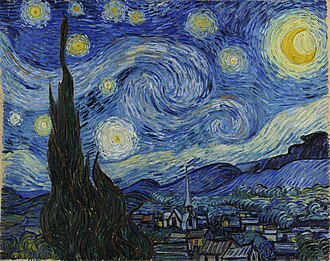 The Starry Night - Vincent van Gogh (1889)
.jpg) Café Terrace at Night - Vincent van Gogh (1888)
Café Terrace at Night - Vincent van Gogh (1888)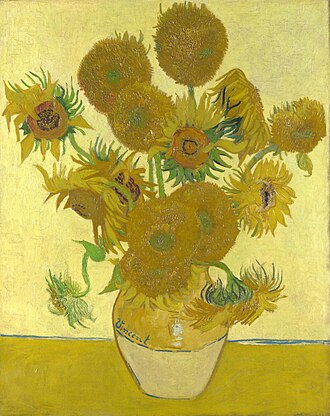 Sunflowers - Vincent van Gogh (1888)
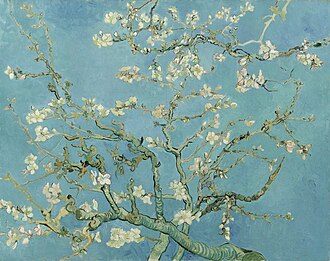 Almond Blossoms - Vincent van Gogh (1890)
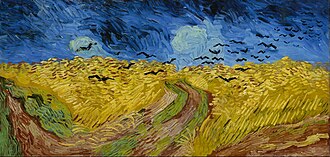 Wheatfield with Crows - Vincent van Gogh (1890)
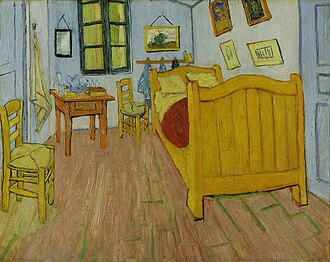 The Bedroom - Vincent van Gogh (1888)
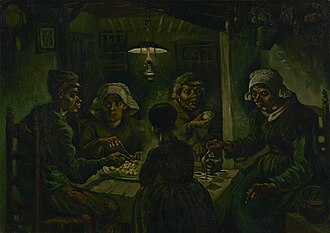 The Potato Eaters - Vincent van Gogh (1885)
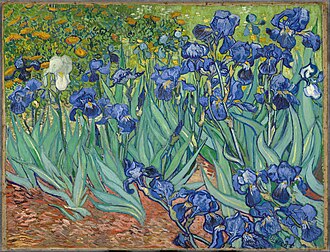 Irises - Vincent van Gogh (1889)
Dipinti di artisti collegati
 Where Do We Come From? What Are We? Where Are We Going? - Paul Gauguin (1897-1898)
%201889.jpg) Cristo giallo - Paul Gauguin (1889)
Cristo giallo - Paul Gauguin (1889) Luncheon on the Grass - Édouard Manet (1863)
 Olympia - Édouard Manet (1863)