Autoritratto con l'orecchio bendato
Vincent van Gogh · 1889
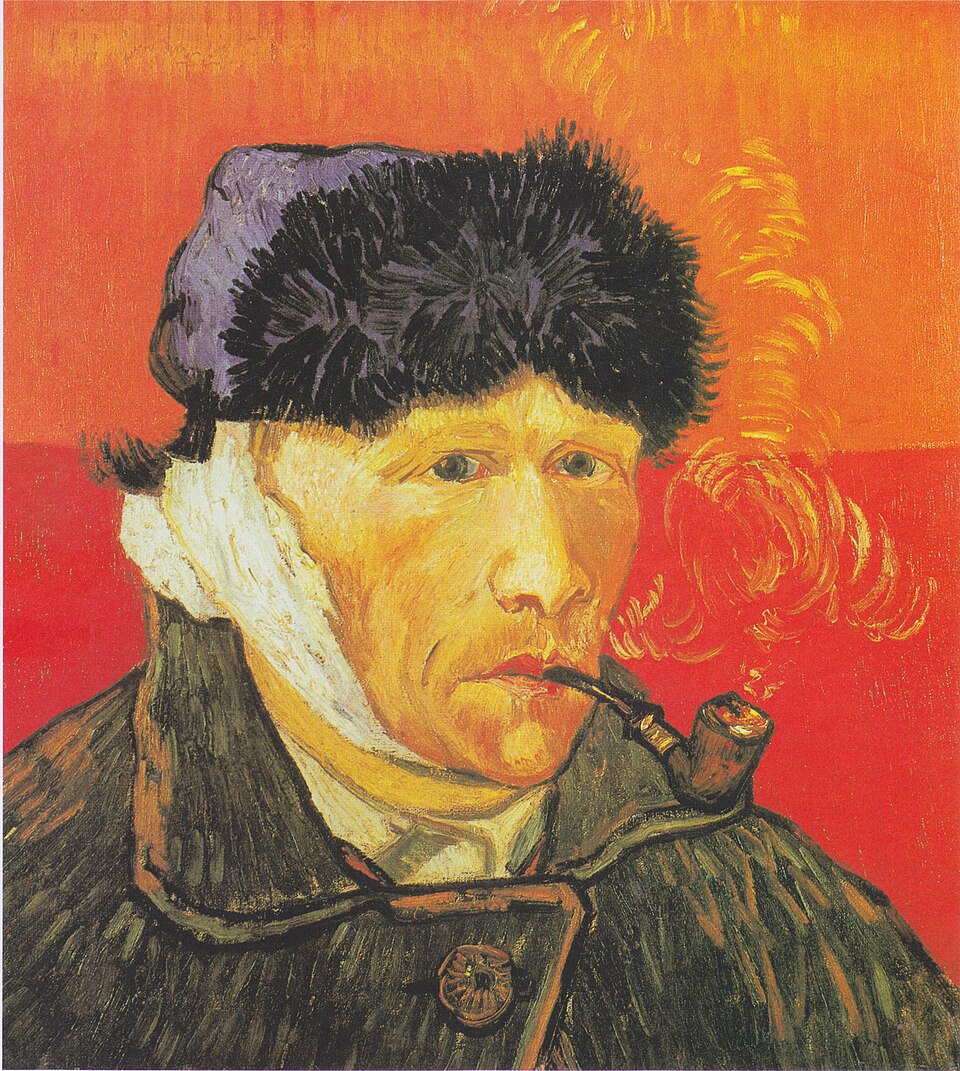
A bandaged face, a worn cap, a pipe sending up a thin curl of smoke: barely weeks after the worst night of his life, Van Gogh looked straight into the mirror and painted himself calmly smoking.
The story behind the painting
On 23 December 1888, after a quarrel with Paul Gauguin in their studio in Arles, Vincent van Gogh cut off his left ear with a razor. Gauguin, who had come to work beside him in October, decided to leave the dream of a 'studio of the South' behind, while Vincent was cared for at the Arles hospital until 7 January 1889. He recovered quickly, and by mid-January he had painted two self-portraits showing the dressing wrapped around his face. This is the version with the pipe, made in Arles in January 1889 alongside its sibling, the Self-Portrait with Bandaged Ear now in London. Wikidata lists no dimensions for this canvas, so we leave its size unstated.
What to look for
Van Gogh fills most of the canvas, his face turned slightly in three-quarter view toward the right; the mirror reverses everything. He wears a thick green jacket, a worn cap that is blue at the front and grey behind, and a white bandage circling his face. A pipe, dark brown, sends up white smoke you can actually see. Behind him the background splits into two equal bands: red below, orange above, with touches of yellow at the very top. His eyes and hair are almost black. Notice how close colours sit together, red beside orange, while complementary pairs, red against green, blue against orange, spark across the picture.
Meaning and intent
The French Wikipedia account reads both bandaged-ear portraits as Van Gogh's way of getting past a traumatic episode and accepting what he had done, by putting the wound itself on display rather than hiding it. The pipe and the drifting smoke add a note of ordinary, almost stubborn calm. Colour carries the drama: harmonies of neighbouring hues that blend without clashing are set against contrasts of complementary colours, so the picture feels both steady and charged, a self-image held together under tension.
Legacy
This canvas has had a dramatic life of its own. In 1940 it belonged to the dealer Paul Rosenberg and was stored in a bank vault in Libourne; it was looted by the Nazi ERR and passed illegally to Alois Miedl, a dealer close to Göring, who sent it to Zurich. After Miedl's arrest in late 1944 it was returned to Rosenberg. Later owned by Albert Lasker, then Mary and Leigh Block, it was acquired in the mid-1970s by Stavros Niarchos; his heirs lend it long-term to the Kunsthaus Zürich. From October 2026 to March 2027 it appears at the Fondation Louis Vuitton in Paris, its first temporary exhibition since 1990.
Lo sapevi?
- It was painted in mid-January 1889, at the same time as the Self-Portrait with Bandaged Ear in London's Courtauld.
- Van Gogh had been treated at the Arles hospital until 7 January 1889.
- Looted in 1940, the painting was returned to Paul Rosenberg after the dealer Alois Miedl was arrested in late 1944.
- One of its early owners in the early 20th century was the collector Gustave Fayet.
L'artista
Vincent van Gogh (1853-1890)
self-portrait · human · hat · Vincent van Gogh · pipe
Altre opere di Vincent van Gogh
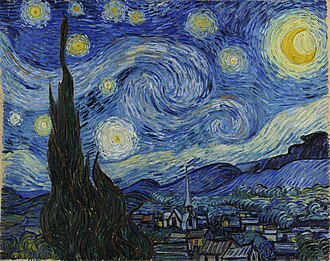 The Starry Night - Vincent van Gogh (1889)
.jpg) Café Terrace at Night - Vincent van Gogh (1888)
Café Terrace at Night - Vincent van Gogh (1888)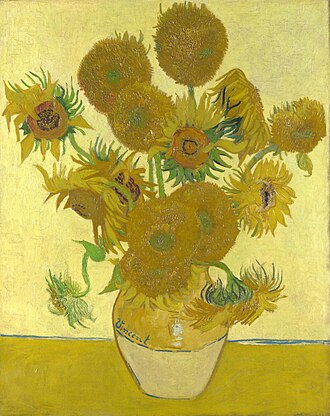 Sunflowers - Vincent van Gogh (1888)
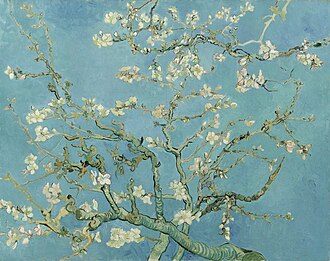 Almond Blossoms - Vincent van Gogh (1890)
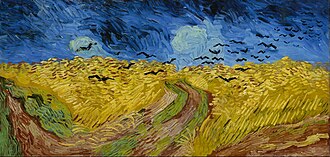 Wheatfield with Crows - Vincent van Gogh (1890)
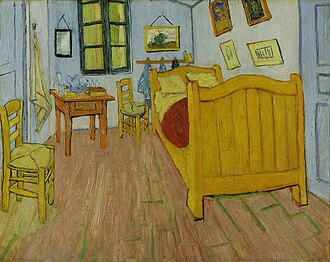 The Bedroom - Vincent van Gogh (1888)
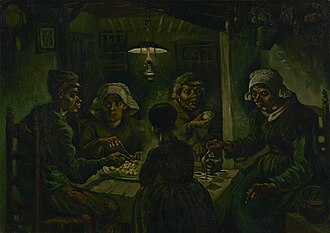 The Potato Eaters - Vincent van Gogh (1885)
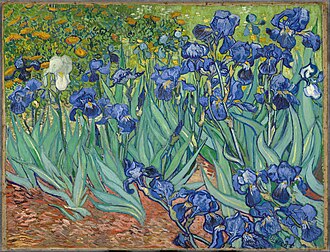 Irises - Vincent van Gogh (1889)
Dipinti di artisti collegati
 Where Do We Come From? What Are We? Where Are We Going? - Paul Gauguin (1897-1898)
%201889.jpg) Cristo giallo - Paul Gauguin (1889)
Cristo giallo - Paul Gauguin (1889) Luncheon on the Grass - Édouard Manet (1863)
 Olympia - Édouard Manet (1863)