Saint John the Baptist
Caravaggio · 1600s
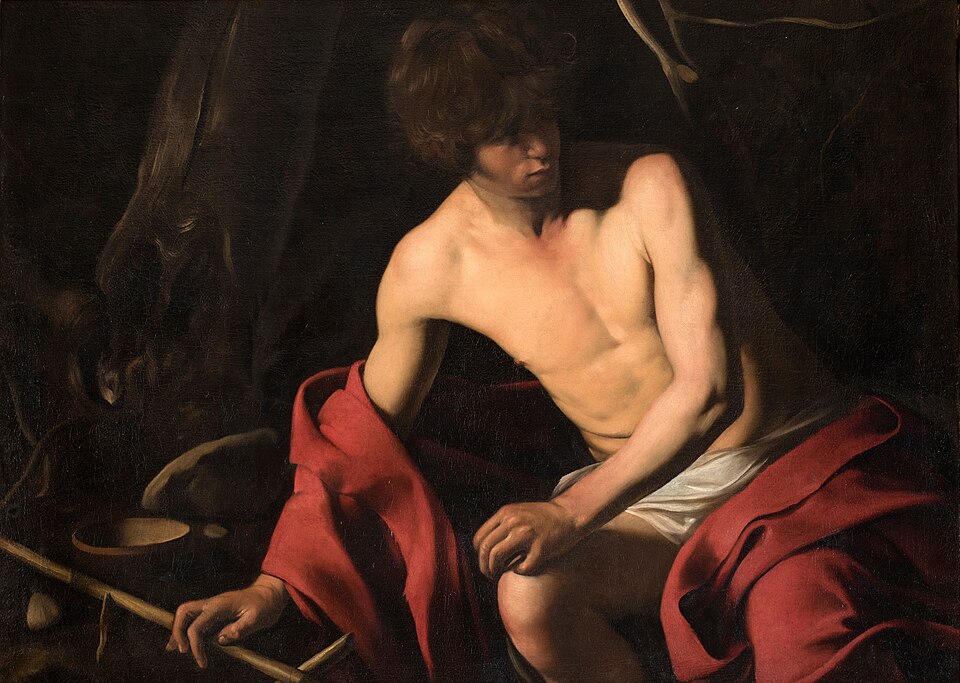
A young man with sunburnt hands and a pale chest twists on a red cloak, as if about to flee something we cannot see. Caravaggio's Corsini Baptist is a saint painted from a real boy of the people.
The story behind the painting
Caravaggio painted this Saint John the Baptist around 1605, and it is kept in the Galleria Nazionale d'Arte Antica in Rome, at Palazzo Corsini. It is one of seven versions he made of this theme, though some of them are disputed. The attribution of this canvas has varied over the centuries and became the majority view only after the work of Roberto Longhi. Its execution is unusually weak for the painter, which suggests it may have been made by an assistant under Caravaggio's supervision.
What to look for
The oil on canvas is a horizontal rectangle of 94 by 131 cm. The figure is shown almost full length: a young, beardless man with an athletic body, bare chested, with a white loincloth and a red cloak over his belly and legs. Look at the contrast between his sunburnt hands and neck, the hands of a worker, and his pale torso. On the left, a cross shaped staff and a cup lie on the ground, barely suggested. His body moves along strong diagonals.
Meaning and intent
Caravaggio was not the first to paint John as an enigmatic male nude; Leonardo da Vinci and Andrea del Sarto had done so. But he added realism and drama. His Baptist is clearly a real boy who undressed to pose, unlike Raphael's idealised Baptist. The scene shows the saint doing penance in the desert, yet his traditional attributes are pushed to the edges or left out, and his posture gives the feeling he wants to escape a danger outside the frame.
Legacy
The pose may echo ancient sculpture in mirror image, notably the Dying Gaul, a statue celebrating the victory of Attalus I over the Galatians in 237 BC, found in Rome in 1514 in the Baths of Agrippa. A few years later Caravaggio reused this pose in his Saint Jerome Writing, and the saint's attitude is also close to the version painted in 1602 to 1604 for Ottavio Costa. The painting thus links his Roman years to a long dialogue with antiquity and with his own earlier work.
Lo sapevi?
- Painted around 1605, one of seven Baptists by Caravaggio.
- Its attribution became accepted after Roberto Longhi's research.
- The pose may echo the ancient Dying Gaul in mirror image.
- Kept at the Galleria Nazionale d'Arte Antica, Palazzo Corsini, Rome.
L'artista
Caravaggio (1571-1610)
religious art · John the Baptist · Italian Baroque painting · Galleria Nazionale d'Arte Antica
Altre opere di Caravaggio
 Supper at Emmaus - Caravaggio (1601)
 La vocazione di San Matteo - Caravaggio (1609)
 Decapitazione di San Giovanni Battista - Caravaggio (1608)
 Supper at Emmaus - Caravaggio (1601)
 Testa di Medusa - Caravaggio (1597)
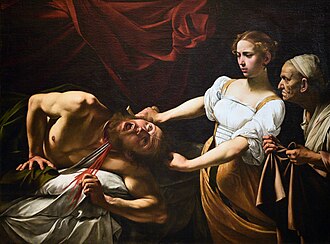 Giuditta che decapita Oloferne - Caravaggio (1598)
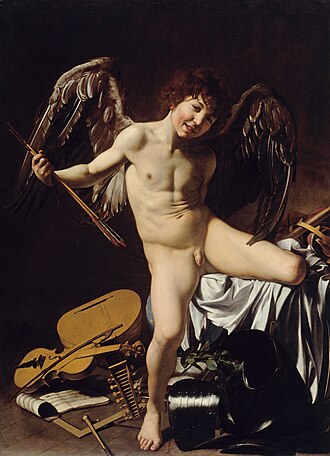 Amor Vincit Omnia - Caravaggio (1600s)
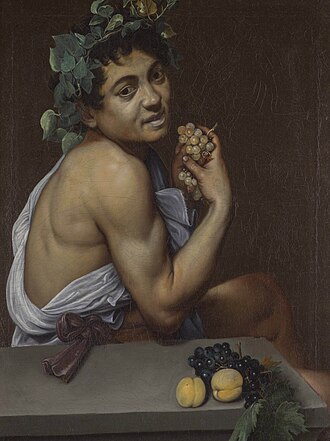 Self-Portrait as Bacchus - Caravaggio (1595)
Dipinti di artisti collegati
 Las Meninas - Diego Velázquez (1656)
 The Surrender of Brea - Diego Velázquez (1635)
 Saint Francis in Meditation - Francisco de Zurbarán (1639)
 The Immaculate Conception - Francisco de Zurbarán (1661)
 Charles I in Three Positions - Anthony van Dyck (1635)
 Charles I (1600-1649) with M. de St Antoine - Anthony van Dyck (1636)
 The Elevation of the Cross - Peter Paul Rubens (1609)
 The Rape of the Daughters of Leucippus - Peter Paul Rubens (1618)
 The Night Watch - Rembrandt van Rijn (1642)
 Self-Portrait - Rembrandt van Rijn (1659)
 A Militiaman Holding a Berkemeyer, Known as the ‘Merry Drinker’ - Frans Hals (1620s)
 Laughing Cavalier - Frans Hals (1624)