Rose rosa
Vincent van Gogh · 1890
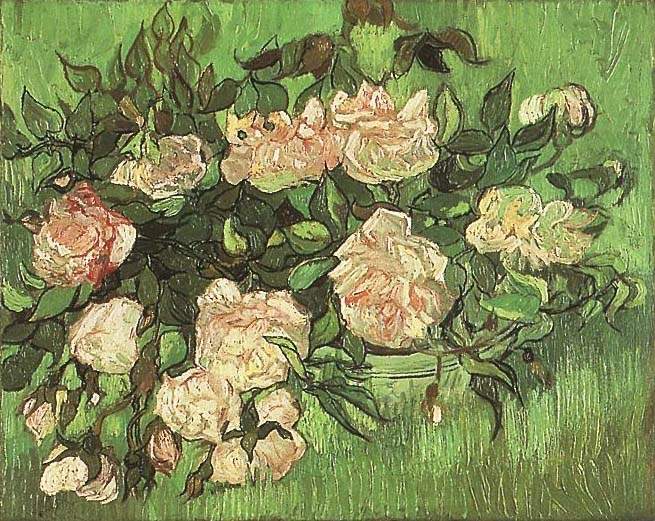
A small canvas of pink roses, painted in the final weeks of Vincent van Gogh's life. Look closely: this is one of the last bouquets he ever set down in paint.
The story behind the painting
Pink Roses belongs to the very end of Van Gogh's story. It was painted in 1890 during the last two months of his life, between May and July, which he spent in the village of Auvers-sur-Oise north of Paris. Those weeks were astonishingly productive, and this modest still life is counted among his final works. The written record about this particular canvas is brief: the sources we have note its date, its place in his last chapter, and its later journey into a museum collection, but they do not tell us the day he painted it or why he chose these flowers. That silence is worth respecting. What we can say is that, in the closing season of a short and intense career, Van Gogh still turned his attention to something as simple and fragile as a handful of roses.
What to look for
The painting is small, about 32 by 40.5 centimetres, an intimate size that invites you to step close rather than stand back. Its subject is roses, recorded in its catalogue data as a still life, and the French and German titles, Les Roses roses and Rosenbusch, hint at how the picture has been read: as pink roses, or even as a rose bush. Because the written sources describe little of the surface itself, let your own eyes do the work here. Notice how the blooms are gathered on the canvas, how the pink holds against what surrounds it, and how each mark of the brush is left visible rather than smoothed away. Ask yourself whether you are looking at cut flowers or a living shrub; the different titles suggest viewers have long wondered the same.
Meaning and intent
It is tempting to read every late Van Gogh as a farewell, and a painting of roses made weeks before his death invites that reading. But the sources do not record any statement from the artist about this picture, so its meaning must be held gently. What it clearly shows is a painter who, in his final months, kept returning to direct observation of nature, giving the same seriousness to a few flowers that he gave to fields and portraits. Roses are short-lived; they open, fade and fall within days. Whether or not Van Gogh intended it, a viewer today can hardly avoid feeling that brevity, knowing how little time remained to the man who painted them. Perhaps the truest meaning is the plainest one: attention itself, offered to something beautiful and passing.
Legacy
Today Pink Roses hangs in the Ny Carlsberg Glyptotek in Copenhagen. It entered the museum in 1923 as a gift from Helga Jacobsen, and it carries the catalogue number MIN 1843. Its presence in Denmark is a quiet reminder of how widely Van Gogh's late work travelled after his death, scattering into collections far from the French village where it was made. Though it is not among his famous blockbusters, it matters precisely because of when it was painted. Standing before it, visitors meet Van Gogh not in a dramatic landscape but in an intimate, almost private moment, a few flowers studied in the summer of 1890. For anyone tracing the final chapter of his life, this small canvas is one of the last pages.
Lo sapevi?
- Pink Roses was painted between May and July 1890, during Van Gogh's final two months in Auvers-sur-Oise.
- Helga Jacobsen donated the painting to the Ny Carlsberg Glyptotek in 1923.
- Its museum catalogue number is MIN 1843.
- Its German title, Rosenbusch, means 'rose bush'.
L'artista
Vincent van Gogh (1853-1890)
Altre opere di Vincent van Gogh
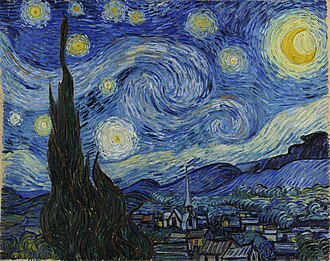 The Starry Night - Vincent van Gogh (1889)
.jpg) Café Terrace at Night - Vincent van Gogh (1888)
Café Terrace at Night - Vincent van Gogh (1888)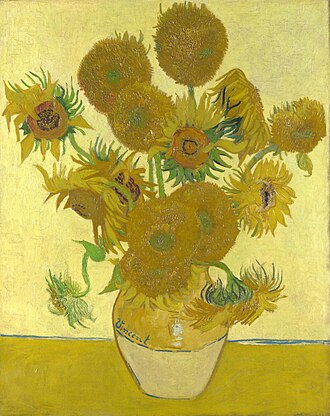 Sunflowers - Vincent van Gogh (1888)
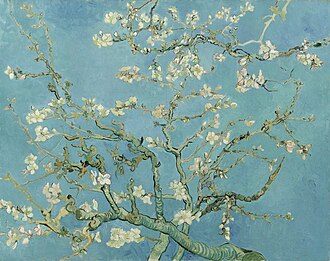 Almond Blossoms - Vincent van Gogh (1890)
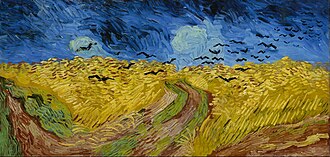 Wheatfield with Crows - Vincent van Gogh (1890)
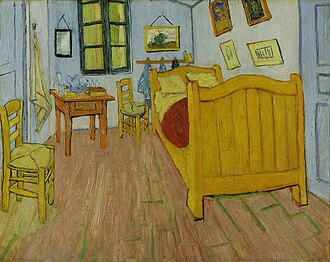 The Bedroom - Vincent van Gogh (1888)
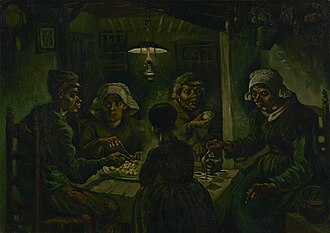 The Potato Eaters - Vincent van Gogh (1885)
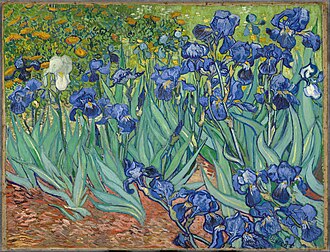 Irises - Vincent van Gogh (1889)
Dipinti di artisti collegati
 Where Do We Come From? What Are We? Where Are We Going? - Paul Gauguin (1897-1898)
%201889.jpg) Cristo giallo - Paul Gauguin (1889)
Cristo giallo - Paul Gauguin (1889) Luncheon on the Grass - Édouard Manet (1863)
 Olympia - Édouard Manet (1863)