La mezquita de El Assaneyn, las cabezas cortadas
Jean-Léon Gérôme · 1866
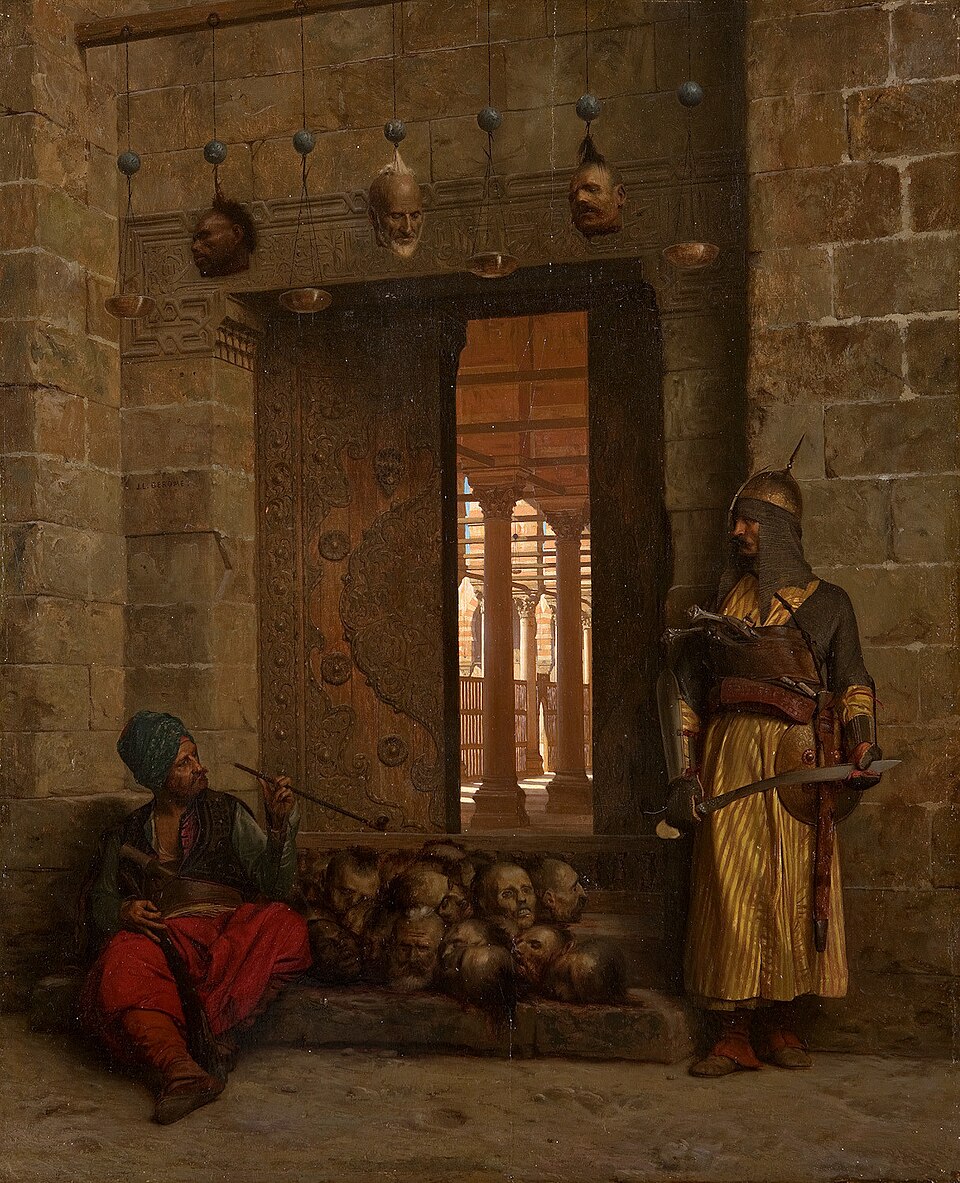
At the door of a Cairo mosque, the heads of rebel beys hang on display while a guard calmly smokes his pipe. Gérôme's small panel of 1866 was one of the most talked-about works of that year's Salon.
The story behind the painting
Jean-Léon Gérôme painted this oil on panel in 1866. It shows the door of the El Assaneyn mosque in Cairo, where the heads of rebel beys have been put on show by Salek-Kachef, with two hired killers guarding the grim trophy. Gérôme showed it at the Salon of 1866, under the title The Door of the Mosque, together with his Cleopatra before Caesar, and again at the Universal Exhibition of 1867. Before the final work he made a drawing with three standing guards and a painted study of a guard dressed in red.
What to look for
The scene is set before the mosque of Al-Hussein, where the head of the Prophet Muhammad's grandson, beheaded in 680, is said to rest. The heads above the door may echo Victor Hugo's poem The Heads of the Seraglio, published in 1826. Look at the executioner who still holds his scimitar and the Turk who smokes peacefully beside the heads. The architecture is not a faithful view of one place; it combines elements borrowed from several Cairo monuments. The vertical panel is small, about 54 by 44 cm, signed at centre left.
Meaning and intent
In the Gazette des Beaux-Arts of July 1866, Charles Blanc wrote that among small pictures perhaps none was more perfect. He counted some twenty severed heads, while the article describes three heads hanging over the door, so the sources differ on the number. Blanc praised how Gérôme rendered the ferocious good nature of the smoker, the bloodthirsty look of the fatalistic executioner, and the faces of the dead, some contracted with fear, others noble in resignation, all under a torrid Egyptian sun that seems indifferent to the horror below.
Legacy
The painting drew many critics and curious visitors and was considered one of the two major works of the Salon of 1866. It was first bought by the American collector William H. Stewart and later changed hands several times, passing through Christie's in June 2003. In 1978 its owner, the publisher Malcolm Forbes, claimed that Gérôme had given each head the features of critics who had attacked his work, a lasting revenge on behalf of wounded talent. Wikidata today lists the work with the Lusail Museum.
Lo sapevi?
- Painted in 1866, oil on panel.
- Shown at the Salon of 1866 and the Universal Exhibition of 1867.
- Charles Blanc called it perhaps the most perfect small picture of the Salon.
- The architecture combines several Cairo monuments.
L'artista
Jean-Léon Gérôme (1824-1904)
Altre opere di Jean-Léon Gérôme
 Pollice Verso - Jean-Léon Gérôme (1872)
 The Slave Market - Jean-Léon Gérôme (1866)
 Phryne before the Areopagus - Jean-Léon Gérôme (1861)
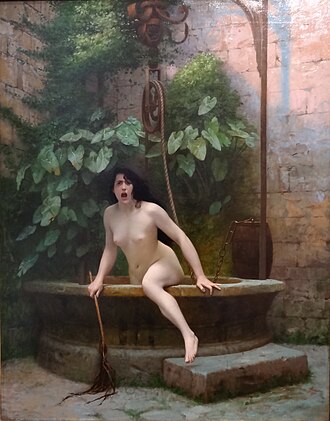 Truth Coming Out of Her Well - Jean-Léon Gérôme (1896)
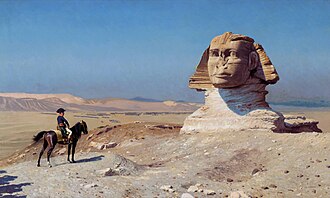 Bonaparte Before the Sphinx - Jean-Léon Gérôme (1867)
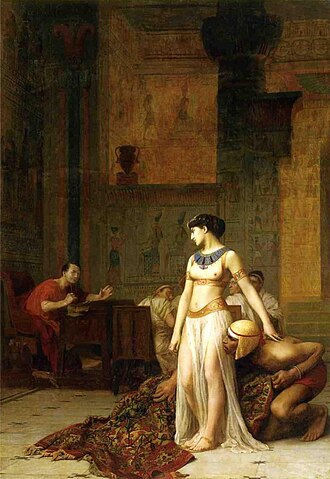 Cleopatra and Caesar - Jean-Léon Gérôme (1866)
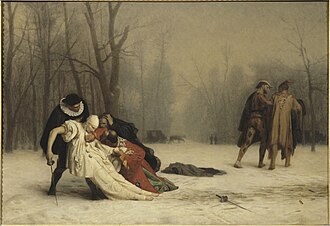 The Duel After the Masquerade - Jean-Léon Gérôme (1857)
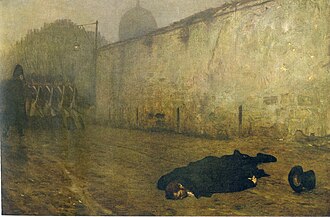 The Execution of Marshal Ney - Jean-Léon Gérôme (1868)
Dipinti di artisti collegati
 Luncheon on the Grass - Édouard Manet (1863)
 Olympia - Édouard Manet (1863)
 L'Origine du monde - Gustave Courbet (1866)
 A Burial at Ornans - Gustave Courbet (2020)
 Carnation, Lily, Lily, Rose - John Singer Sargent (1885-1886)
 Madame X - John Singer Sargent (1884)
 Liberty Leading the People - Eugène Delacroix (1830)
 Death of Sardanapalus - Eugène Delacroix (1827)
 The Death of Socrates - Jacques-Louis David (1787)
 The Oath of the Horatii - Jacques-Louis David (1784)
 The Ladies Waldegrave - Joshua Reynolds (1780)
 Captain George K. H. Coussmaker - Joshua Reynolds (1782)