Edgar Degas
1834-1917
Edgar Degas is counted among the founders of Impressionism, yet he rejected the word and called himself a realist. More than half of his works show dancers, caught backstage and in rehearsal as people doing a real job.
Origins
Degas was born in Paris on 19 July 1834, as Hilaire-Germain-Edgar De Gas, into a moderately wealthy family; as an adult he adopted the simpler spelling of the name. He was the oldest of five children of Augustin De Gas, a banker, and Celestine Musson De Gas, a Creole from New Orleans. His mother died when he was thirteen, and his father and several unmarried uncles shaped the rest of his youth. By the time he left the Lycee Louis-le-Grand in 1853 he had turned a room at home into a studio. His father wanted him to study law, and he enrolled, but put little effort into it.
Life and turning points
In 1855 he met Ingres, whose advice he never forgot: draw lines, young man, from life and from memory. That April he entered the Ecole des Beaux-Arts, and from 1856 he spent three years in Italy, where he began studies for The Bellelli Family. He first meant to be a history painter, but in his early thirties he turned to modern life, influenced above all by Manet, whom he met in 1864. In 1870 he joined the National Guard, and rifle training revealed the eye trouble that worried him for the rest of his life. After his father died in 1874, he sold his house and inherited collection to pay his brother Rene's debts, and for the first time lived from sales of his art. He helped organize the Impressionist exhibitions and showed in all but one of the eight. From 1890 his eyesight declined further; he seems to have stopped working in 1912 and died, nearly blind, in September 1917.
Style and technique
Degas did not paint outdoors and mocked those who did. He said no art was ever less spontaneous than his: it came from reflection and from studying the great masters. He admired Ingres and Delacroix, copied old masters well into middle age, and collected Japanese prints, whose composition shaped his own. Even early on he cropped figures awkwardly and chose unusual viewpoints. Later his dark, Dutch-influenced palette gave way to vivid colour and bold strokes, and works such as Place de la Concorde read like snapshots. He worked in oil, pastel, wax sculpture, prints and, from the late 1880s, photography.
Stories and anecdotes
A story, possibly apocryphal, says Degas and Manet met in the Louvre while both were copying the same Velazquez portrait. A Cotton Office in New Orleans, painted during a long stay with relatives there from 1872, was the only work of his bought by a museum in his lifetime. In The Orchestra at the Opera he painted his friend, the bassoonist Desire Dihau, among fourteen musicians, with only the legs and tutus of the dancers visible above. In old age he grew isolated; the Dreyfus Affair brought out his antisemitic views and he broke with his Jewish friends. Renoir said all his friends had to leave him in the end.
Legacy
Degas is remembered as a superb draughtsman, especially masterly at showing movement, and as a classical painter of modern life who brought a history painter's methods to everyday scenes. His portraits stand out for their psychological depth and their sense of human isolation. He also built a remarkable collection of artists he loved, from El Greco to Manet, Cassatt, Cezanne, Gauguin and Van Gogh, with Ingres, Delacroix and Daumier especially well represented. His dancers, laundresses and jockeys still feel like moments glimpsed rather than posed.
Lo sapevi?
- He exhibited at the Salon for the first time in 1865.
- His first major dance subject was Mlle. Fiocre in the Ballet La Source, shown at the Salon of 1868.
- He never married.
- He photographed friends, often by lamplight, including a double portrait of Renoir and Mallarme.
Artisti collegati
Claude Monet · Édouard Manet · Pierre-Auguste Renoir · Vincent van Gogh · J. M. W. Turner · Paul Gauguin
Dipinti di Edgar Degas
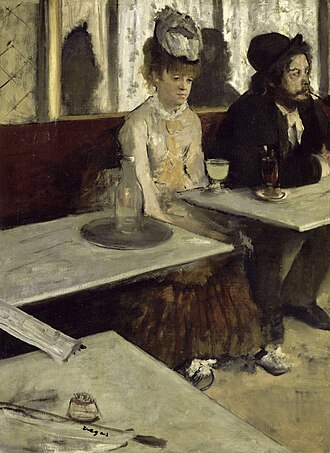 L'Absinthe - Edgar Degas (1875)
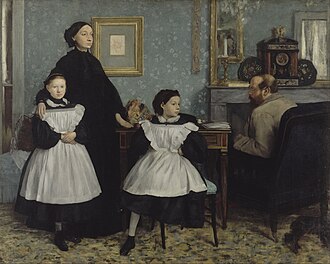 The Bellelli Family - Edgar Degas (1858)
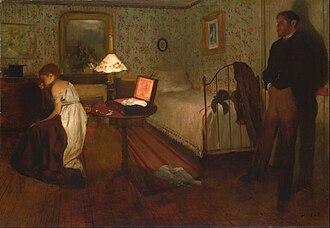 Interior - Edgar Degas (1868)
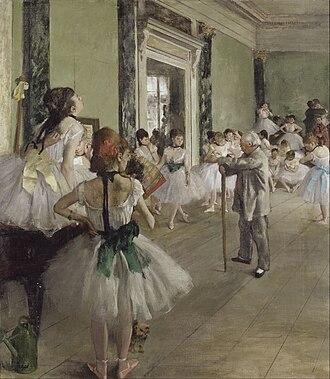 The Ballet Class - Edgar Degas (1871)
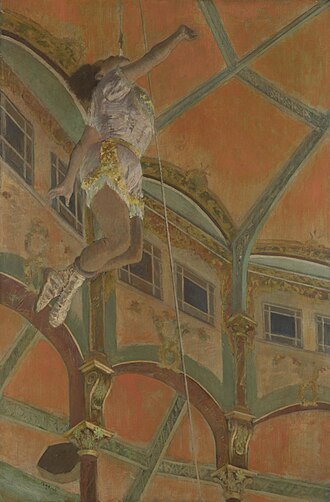 Miss La La at the Cirque Fernando - Edgar Degas (1879)
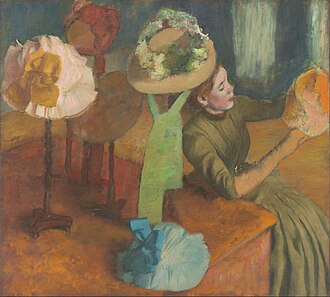 The Millinery Shop by Edgar Degas - Edgar Degas
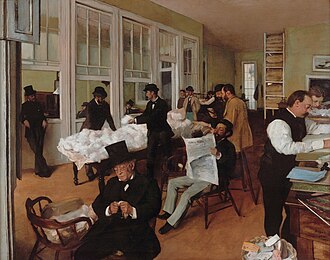 A Cotton Office in New Orleans - Edgar Degas (1873)
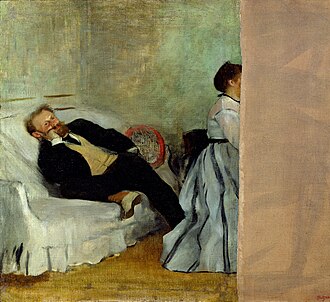 Mr. and Mrs. Édouard Manet - Edgar Degas (1868)
.jpg) The Tub - Edgar Degas (1886)
The Tub - Edgar Degas (1886)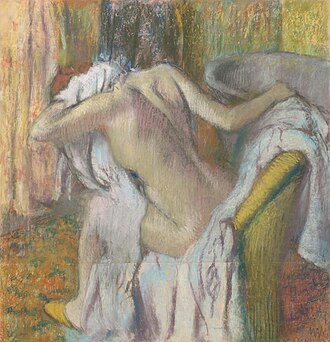 After the Bath, Woman Drying Herself - Edgar Degas (1890s)
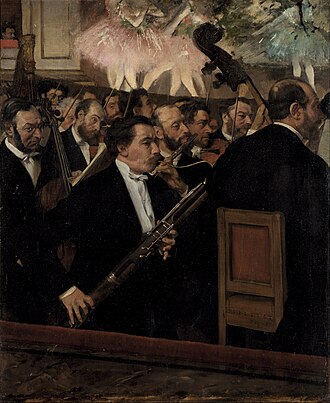 L'Orchestre de l'Opéra - Edgar Degas (1868)
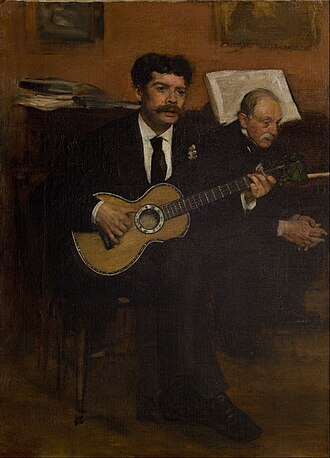 Lorenzo Pagans and Auguste de Gas - Edgar Degas (1870s)
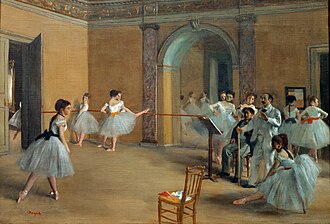 Dance Class at the Opera - Edgar Degas (1870s)
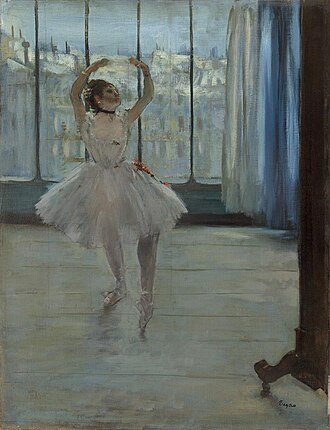 Dancer Posing for a Photographer - Edgar Degas (1875)
.jpg) A Woman Seated beside a Vase of Flowers - Edgar Degas (1865)
A Woman Seated beside a Vase of Flowers - Edgar Degas (1865)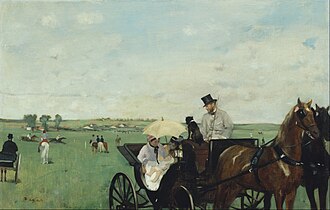 At the Races in the Countryside - Edgar Degas (1869)
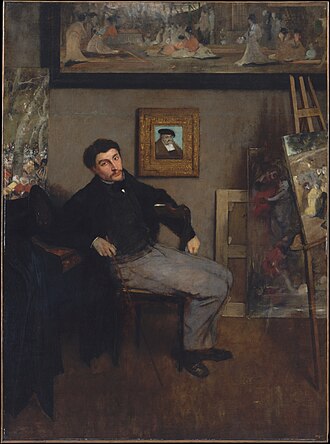 James-Jacques-Joseph Tissot - Edgar Degas (1867)
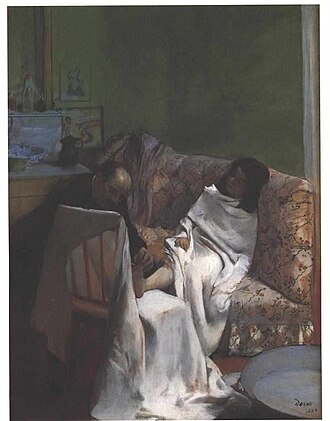 La pedicura - Edgar Degas (1873)
%20Mademoiselle%20Dihau%20au%20Piano%20-%20Edgar%20Degas%20-%20Mus%C3%A9e%20d'Orsay%2C%20Paris.jpg) Mademoiselle Dihau Playing the Piano - Edgar Degas (1869)
Mademoiselle Dihau Playing the Piano - Edgar Degas (1869)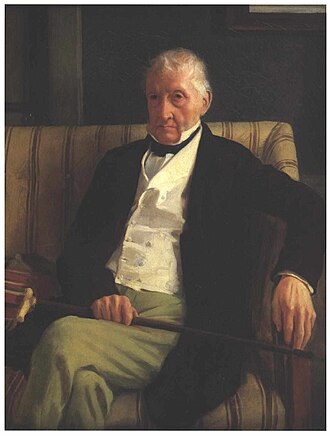 Hilaire de Gas - Edgar Degas (1857)
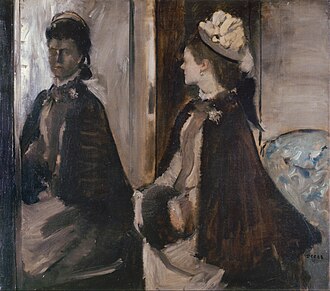 Mrs Jeantaud in the Mirror - Edgar Degas (1875)
.jpg) Die Unterhaltung - Edgar Degas (1880s)
Die Unterhaltung - Edgar Degas (1880s)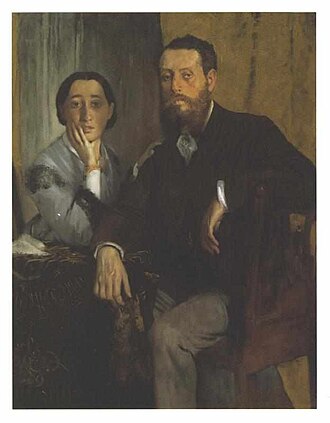 Edmondo and Thérèse Morbilli - Edgar Degas (1865)