James-Jacques-Joseph Tissot
Edgar Degas · 1867
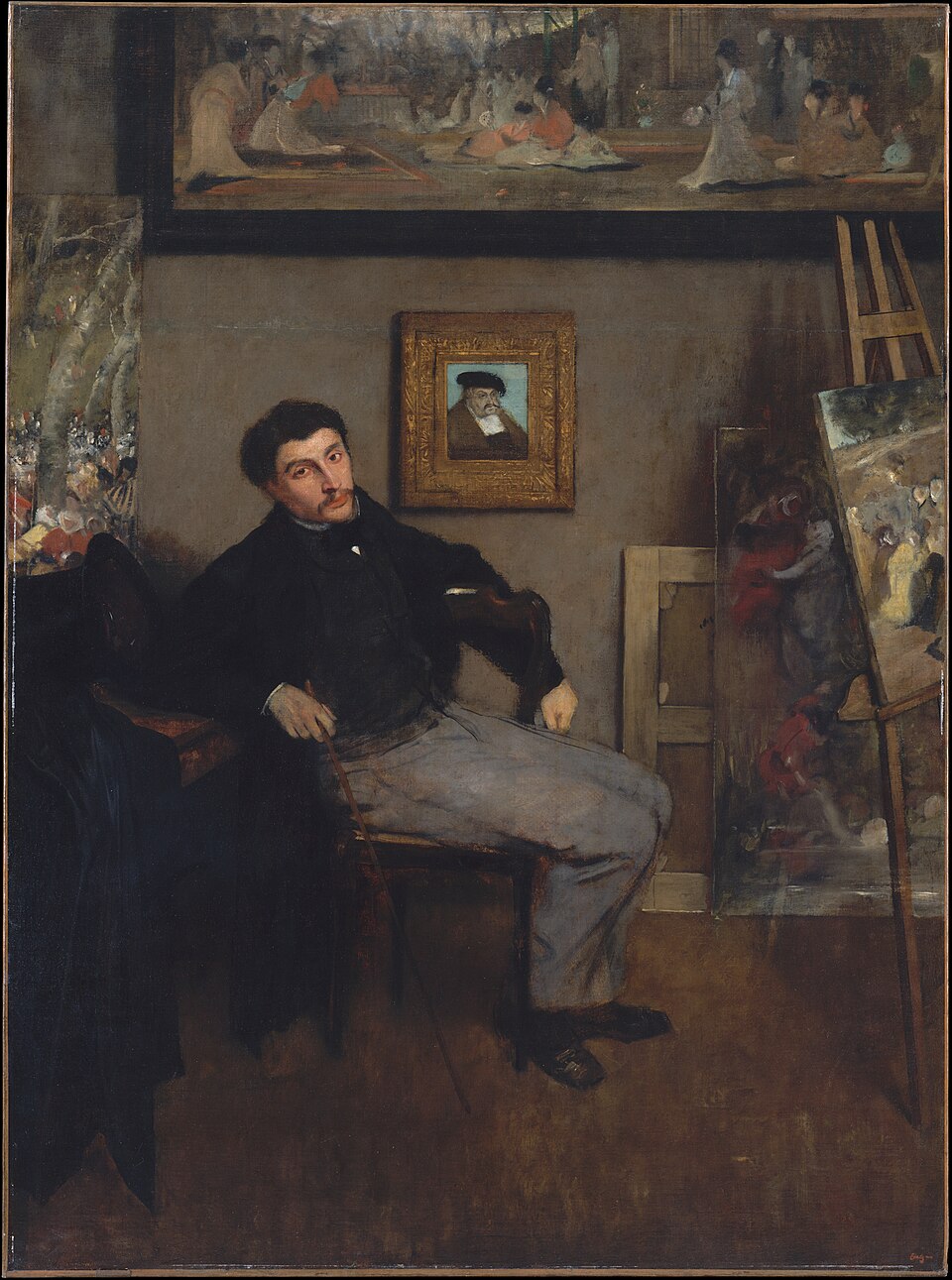
James Tissot leans on a table in a studio full of pictures, cane pointed at the floor, every inch the Parisian dandy. Degas painted his friend and fellow painter as a statement about what modern art could be.
The story behind the painting
James Tissot, a refined painter of feminine elegance, shared a fruitful friendship with Degas built on deep mutual esteem. Degas painted this portrait between 1866 and 1868, according to the French Wikipedia article, while Wikidata gives 1867. Later Degas even urged Tissot to show with him at the first Impressionist exhibition of 1874, because Tissot too preferred contemporary subjects. He wrote: come, dear Tissot, no hesitation, you must exhibit on the boulevard. Tissot never joined the Impressionist adventure.
What to look for
Tissot plays the polished Parisian dandy. He sits in a studio, one elbow on a piece of furniture, his cane pointing to the ground. The setting was arranged for the occasion. On the wall hangs a blue canvas by Lucas Cranach, and above it a monumental picture in an Eastern taste. On the right an easel holds an unfinished canvas, and behind it two more paintings rest on the floor, one turned to the wall, the other showing a Venetian subject of the fifteenth or sixteenth century.
Meaning and intent
Degas filled the portrait with objects that both he and his friend loved, so the picture becomes a declaration of intent, almost a manifesto. The props show Tissot's personality, interests and trade. The Eastern picture points to the art of the Far East, which according to the source changed Western ideas of perspective and colour and played a key role in the rise of the new Impressionist painting. Old masters and new influences share one wall, as they shared the minds of these two painters.
Legacy
The large canvas, about 151 by 112 cm, is now in the Metropolitan Museum of Art in New York. It remains a record of a friendship between two artists who took different roads. Degas became a leading figure of the Impressionist exhibitions, while Tissot stayed outside them despite his friend's letter. Here, though, they are still side by side: one painting the other, surrounded by the pictures they admired, at a moment when modern subjects and the lessons of the Far East were reshaping French art.
Lo sapevi?
- Painted about 1866-1868 (Wikidata: 1867).
- Shows Tissot in a studio with a Cranach on the wall.
- Degas invited Tissot to the 1874 Impressionist show; he declined.
- Metropolitan Museum of Art, New York.
L'artista
Edgar Degas (1834-1917)
portrait · man · Metropolitan Museum of Art · portrait · easel · walking stick · artist · frame
Altre opere di Edgar Degas
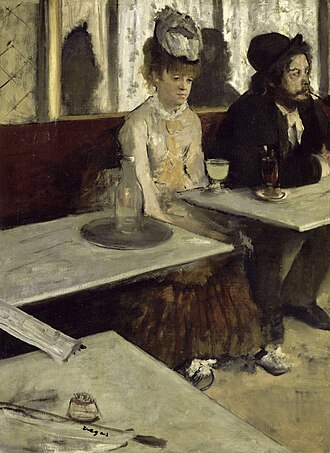 L'Absinthe - Edgar Degas (1875)
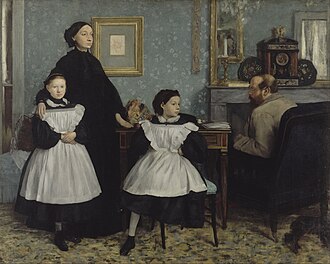 The Bellelli Family - Edgar Degas (1858)
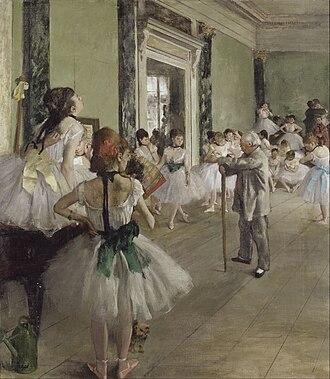 The Ballet Class - Edgar Degas (1871)
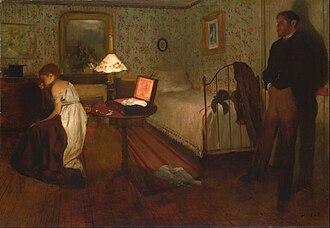 Interior - Edgar Degas (1868)
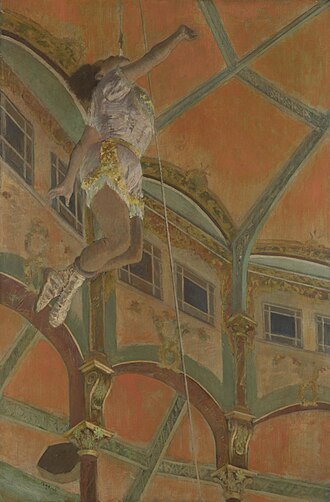 Miss La La at the Cirque Fernando - Edgar Degas (1879)
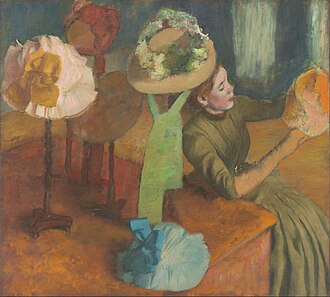 The Millinery Shop by Edgar Degas - Edgar Degas
.jpg) The Tub - Edgar Degas (1886)
The Tub - Edgar Degas (1886)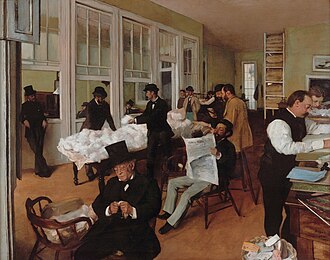 A Cotton Office in New Orleans - Edgar Degas (1873)
Dipinti di artisti collegati
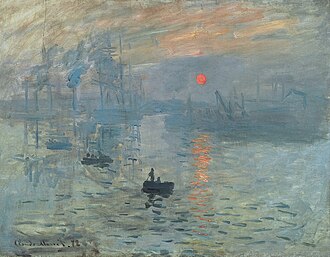 Impression, Sunrise - Claude Monet (1872)
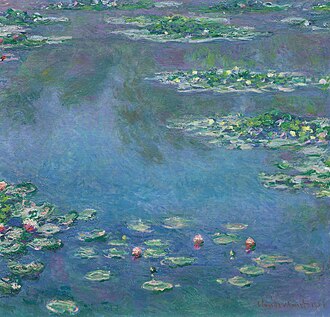 Water Lilies - Claude Monet (1906)
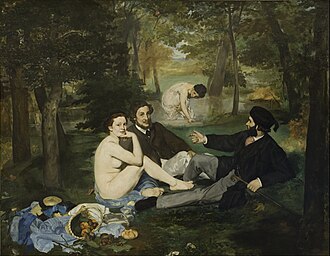 Luncheon on the Grass - Édouard Manet (1863)
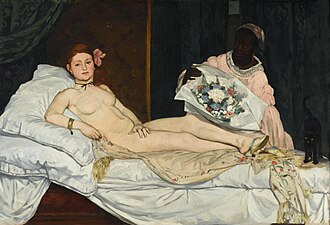 Olympia - Édouard Manet (1863)
 Dance at Le Moulin de la Galette - Pierre-Auguste Renoir (1876)
 Luncheon of the Boating Party - Pierre-Auguste Renoir (1881)
 The Starry Night - Vincent van Gogh (1889)
.jpg) Café Terrace at Night - Vincent van Gogh (1888)
Café Terrace at Night - Vincent van Gogh (1888) The Fighting Temeraire - J. M. W. Turner (1839)
 Rain, Steam and Speed - The Great Western Railway - J. M. W. Turner (1844)
 Where Do We Come From? What Are We? Where Are We Going? - Paul Gauguin (1897-1898)
%201889.jpg) Cristo giallo - Paul Gauguin (1889)
Cristo giallo - Paul Gauguin (1889)