Ulysse et les sirènes
John William Waterhouse · 1891
.jpg)
Ulysses strains against the mast while his crew row with blocked ears, and the Sirens swoop down around the ship. Waterhouse surprised Victorian viewers in 1891: his Sirens were not mermaids but birds with the heads of women.
The story behind the painting
John William Waterhouse painted this scene in 1891, taking it from the ancient Greek epic the Odyssey. On their way home, Odysseus, called Ulysses in Latin, and his crew must sail past the Sirens, whose enchanting song lures sailors toward deadly waters. Following the story, the crew have already blocked their ears to protect themselves. Odysseus, however, wants to hear the song. He orders his men to tie him to the mast, so that he can enjoy the music without risking himself or his ship. Waterhouse paints the very moment of that test.
What to look for
The canvas is wide, about 100.6 by 202 cm, giving room to the whole boat. Look at the hero bound upright to the mast, and at the oarsmen bent over their oars, refusing to listen. Around them the Sirens close in, and here is the surprise: they are bird-like creatures with the faces of women, some with blond, brown or chestnut hair, circling and perching on the ship. The sail and the mast give the composition its spine, and the crowding wings press in from every side, so that the danger feels close and physical.
Meaning and intent
The most controversial part of the painting was this vision of the Sirens. Many in Waterhouse's first audience expected the mermaid-like nymphs familiar in the Victorian era, and they were surprised to find half-bird, half-woman creatures instead. When the painting was first shown, the critic Marion H. Spielmann of The Magazine of Art pointed out that Sirens much like Waterhouse's appear on classical Greek vases. By going back to these older images, the painter made the temptation stranger and more menacing, and the hero's choice to listen even more daring.
Legacy
The painting was first exhibited at the Royal Academy in London in 1891, where critics praised its imaginative and romantic treatment of the subject. In June of that same year the painter Sir Hubert von Herkomer bought the work on behalf of the National Gallery of Victoria in Melbourne, Australia. It has remained in that museum's collection ever since, so the picture that first startled London viewers has spent nearly all its life on the other side of the world, in one of Waterhouse's best known treatments of a myth.
Le saviez-vous ?
- Painted by John William Waterhouse in 1891.
- Based on the episode of the Sirens in the Odyssey.
- Shows the Sirens as birds with women's heads, as on Greek vases.
- Bought for the National Gallery of Victoria in June 1891.
À propos de l'artiste
John William Waterhouse (1849-1917)
peinture mythologique · préraphaélisme · cheveux bruns · cheveux blonds · cheveux châtains · bateau à voiles
Autres œuvres de John William Waterhouse
 Hylas et les nymphes - John William Waterhouse (1896)
.jpg) The Lady of Shalott - John William Waterhouse (1888)
The Lady of Shalott - John William Waterhouse (1888) Écho et Narcisse - John William Waterhouse (1903)
 Circe Invidiosa - John William Waterhouse (1892)
 Sainte Eulalie - John William Waterhouse (1885)
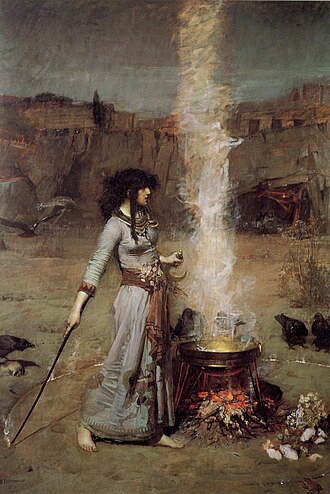 Le Cercle magique - John William Waterhouse (1886)
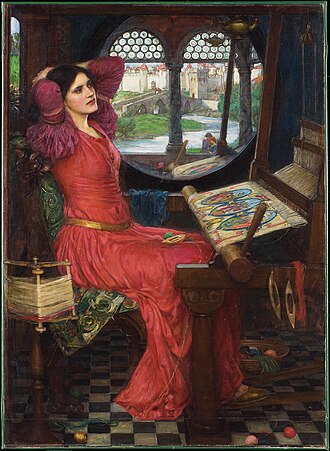 "I am half sick of shadows" said the Lady of Shalott - John William Waterhouse (1916)
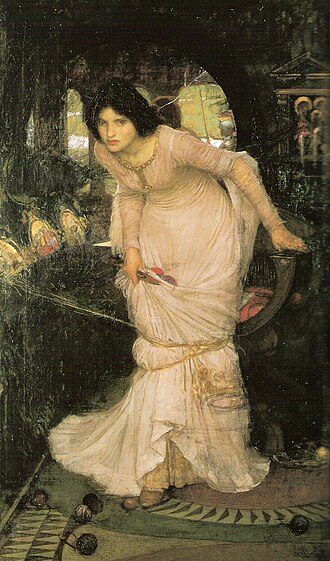 La Dame de Shalott regardant Lancelot - John William Waterhouse (1894)
Œuvres d'artistes liés
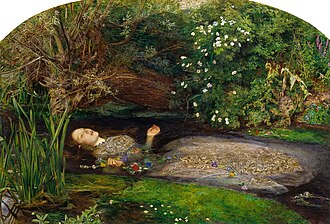 Ophélie - John Everett Millais (1851)
%20-%20Google%20Art%20Project.jpg) Le Christ dans la maison de ses parents - John Everett Millais (1849)
Le Christ dans la maison de ses parents - John Everett Millais (1849) Perséphone - Dante Gabriel Rossetti (1874)
 Bocca Baciata - Dante Gabriel Rossetti (1859)