Le Cercle magique
John William Waterhouse · 1886
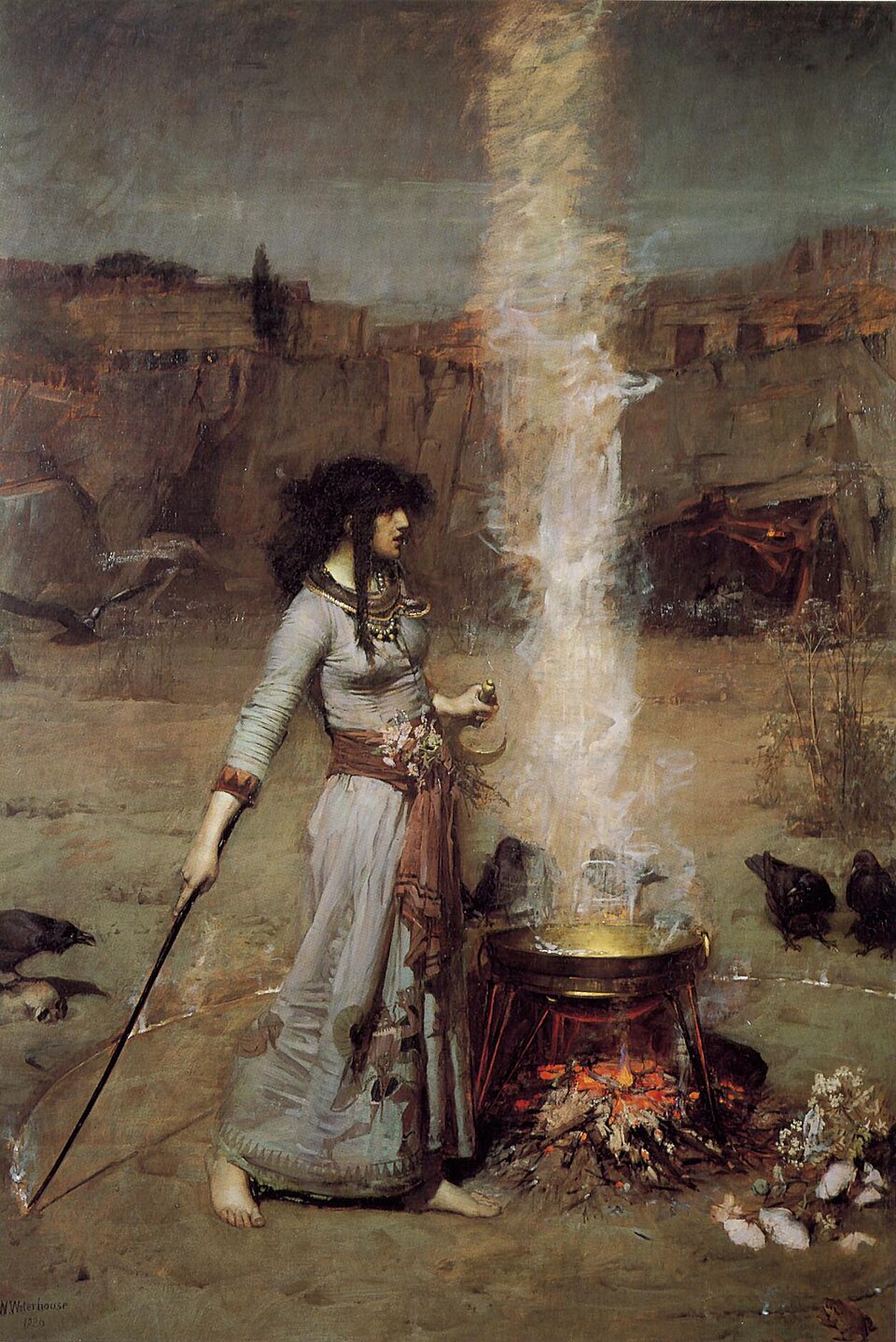
A sorceress traces a ring of fire on bare ground, a snake around her neck and ravens waiting outside the line. Waterhouse's Magic Circle charmed critics and public alike in 1886, and people are still trying to read its secrets.
The story behind the painting
The Magic Circle was shown at the Royal Academy in 1886, the year after Waterhouse was elected an Associate. Coming after Consulting the Oracle and Saint Eulalia, it was his third supernatural subject in as many years. It was a great success with critics and public, and the Tate bought it that same year through the Chantrey Bequest. As was common at the time, Waterhouse also painted a smaller version, probably for a collector, and a study; he had first sketched the composition in sepia pen and ink in 1880 to 1881.
What to look for
A lone woman stands in the foreground of a hazy, almost unreal landscape. With a wand in her right hand she draws a fiery circle around herself, her straight arm and stick held at an angle to her upright body, forming a triangle that balances the circle. A crescent sickle in her left hand links her to the moon and to Hecate. A live snake coils around her neck. The smoke from her fire rises in a straight line, untouched by wind. Outside the circle lie bare ground, ravens or rooks and a frog; inside grow flowers.
Meaning and intent
Waterhouse often returned to magic, prophecy and the woman as enchantress, later in Circe Offering the Cup to Ulysses and Hylas and the Nymphs. Here the witch's face is intent but not malevolent, unlike the sorceresses of Frederick Sandys. The ravens and frog, symbols tied to witchcraft, are shut out, while beauty stays inside her protective ring. Her dress and looks mix many sources, Middle Eastern, Anglo-Saxon, Greek or Persian, and the picture's meaning stays unclear; the Magazine of Art praised it as original in conception and pictorial in result.
Legacy
Later writers keep looking for hidden meaning. Articles in the Pre-Raphaelite Society's journal have suggested a face, perhaps the artist's own, visible only from a certain distance, and a link to Theocritus's poem The Sorceress; Guy Tal has argued the figures on the gown show Medusa, copied from a Greek vase. Harry Furniss parodied the painting in Punch. It travelled to Australia for the Love and Desire exhibition of 2018 to 2019, appeared in the British Library's Harry Potter exhibition in 2017, and reproductions have dressed television sets about witches.
Le saviez-vous ?
- Shown at the Royal Academy in 1886.
- Bought by the Tate the same year through the Chantrey Bequest.
- A smaller version and a study are in private hands.
- Shown in the British Library's Harry Potter exhibition in 2017.
À propos de l'artiste
John William Waterhouse (1849-1917)
femme · National Gallery · préraphaélisme · Tate · sorcière
Autres œuvres de John William Waterhouse
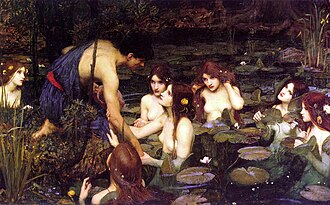 Hylas et les nymphes - John William Waterhouse (1896)
.jpg) The Lady of Shalott - John William Waterhouse (1888)
The Lady of Shalott - John William Waterhouse (1888)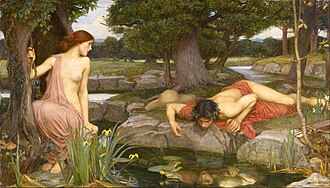 Écho et Narcisse - John William Waterhouse (1903)
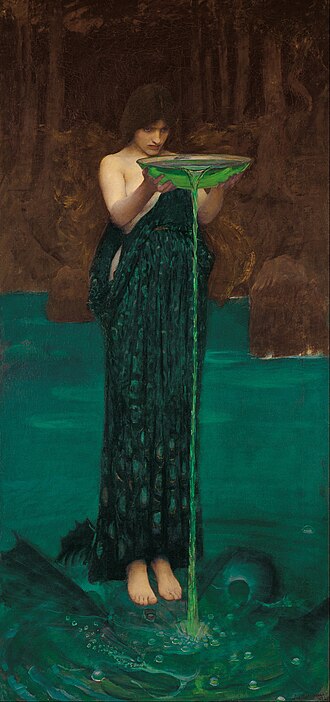 Circe Invidiosa - John William Waterhouse (1892)
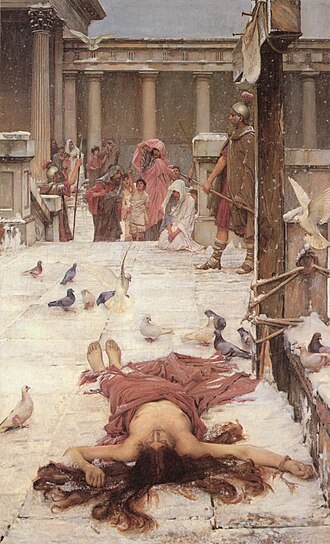 Sainte Eulalie - John William Waterhouse (1885)
.jpg) Ulysse et les sirènes - John William Waterhouse (1891)
Ulysse et les sirènes - John William Waterhouse (1891)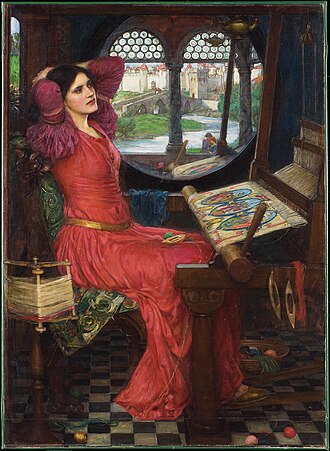 "I am half sick of shadows" said the Lady of Shalott - John William Waterhouse (1916)
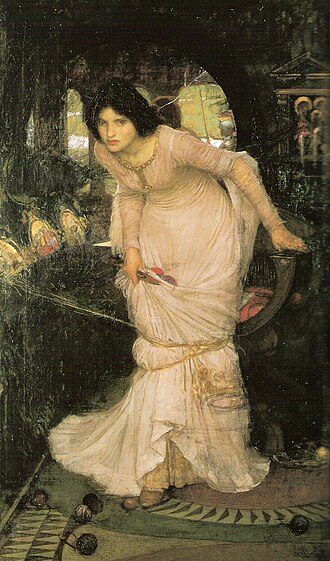 La Dame de Shalott regardant Lancelot - John William Waterhouse (1894)
Œuvres d'artistes liés
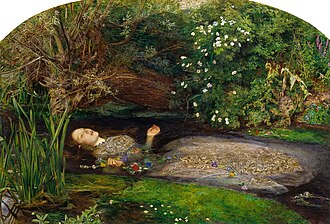 Ophélie - John Everett Millais (1851)
%20-%20Google%20Art%20Project.jpg) Le Christ dans la maison de ses parents - John Everett Millais (1849)
Le Christ dans la maison de ses parents - John Everett Millais (1849)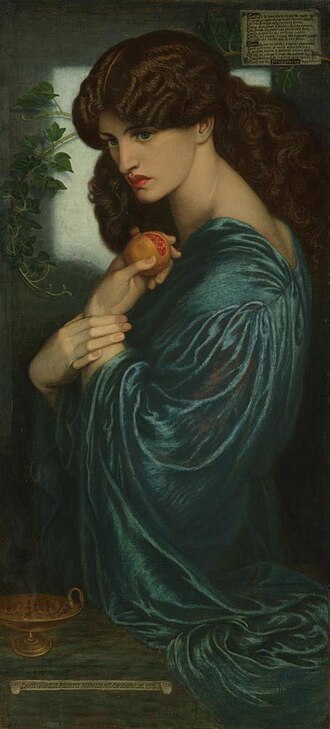 Perséphone - Dante Gabriel Rossetti (1874)
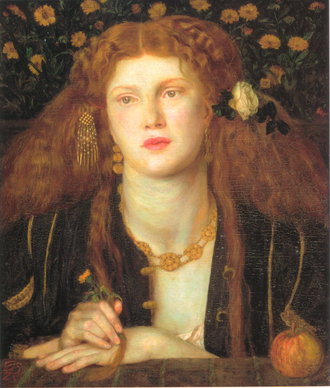 Bocca Baciata - Dante Gabriel Rossetti (1859)