Hylas et les nymphes
John William Waterhouse · 1896
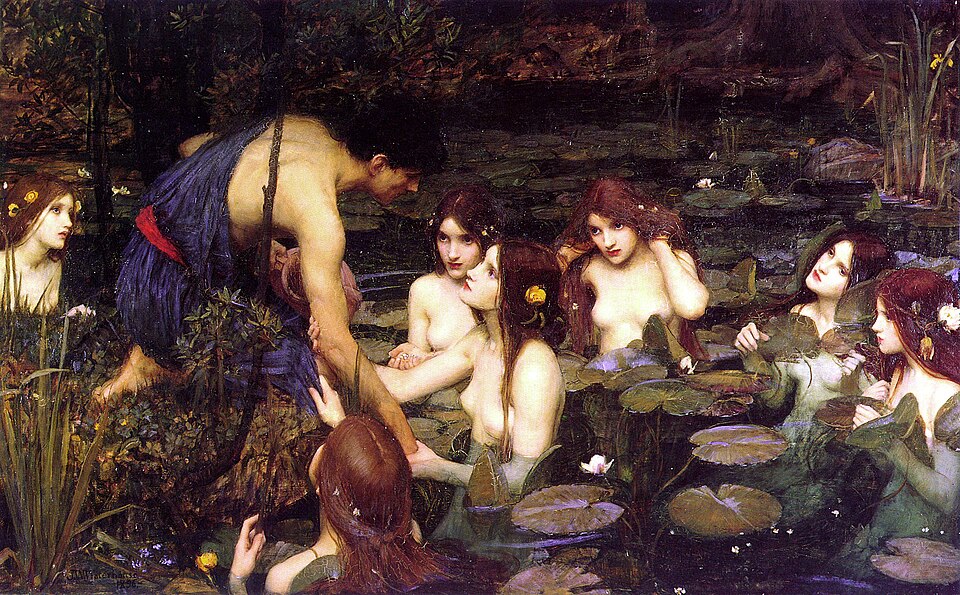
A youth bends over a dark pool to fill his jar, and seven pale nymphs rise among the water lilies to draw him in. He will not come back. Waterhouse's painting of 1896 is still one of the most debated pictures in Manchester.
The story behind the painting
In the Greek and Roman legend, told by Ovid and other ancient writers, Hylas was the son of King Theiodamas of the Dryopians. After Hercules killed his father, Hylas became Hercules' companion, and both sailed with Jason on the Argo in search of the Golden Fleece. Sent to find fresh water, Hylas came upon a pond of Naiads, female water nymphs, who lured him into the water, and he disappeared. John William Waterhouse painted that moment in oil in 1896, after an earlier version of the subject in 1893.
What to look for
Hylas wears a blue tunic with a red sash and holds a wide-necked jar. He bends beside a pond in a lush green glade, reaching toward seven young women emerging among water lilies, including an early depiction of the yellow water lily. Their skin glows in the dark, clear water, with flowers in their auburn hair; they look so alike that perhaps only two models posed. One holds his wrist and elbow, one plucks at his tunic, one offers pearls. His face is in shadow; theirs are clear. Wikipedia gives the size as 98.2 by 163.3 cm, while Wikidata gives 132.1 by 197.5 cm.
Meaning and intent
The scene is seen from slightly above, looking down at the water as Hylas does, so no sky is visible. His pose pushes our attention onto the nymphs, and the painting leaves out his bond with Hercules. The story told here is therefore less about Hylas's experience than about the sinister nature of the nymphs, who gaze at him with calm attention. Hylas was a recurring theme for British artists of the period, from William Etty in 1833 to Henrietta Rae in 1910, and Waterhouse also painted other tragic youths, such as Narcissus in Echo and Narcissus of 1903.
Legacy
Manchester Art Gallery acquired the painting from the artist in 1896, and it was shown at the Royal Academy Summer Exhibition in 1897. Some preparatory sketches are in the Ashmolean Museum in Oxford. In January 2018 a curator temporarily took it down, citing movements against the objectification of women, and invited visitors to leave notes with their views. A strong backlash followed; the art historian Elizabeth Prettejohn said removing it killed any real debate. After one week Manchester City Council put the painting back on the wall.
Le saviez-vous ?
- Painted in 1896 from the Greek legend of Hylas.
- Seven nymphs draw Hylas into a pond of water lilies.
- Sources disagree on its size.
- Removed from display for one week in 2018, then returned.
À propos de l'artiste
John William Waterhouse (1849-1917)
peinture mythologique · nymphe
Autres œuvres de John William Waterhouse
.jpg) The Lady of Shalott - John William Waterhouse (1888)
The Lady of Shalott - John William Waterhouse (1888)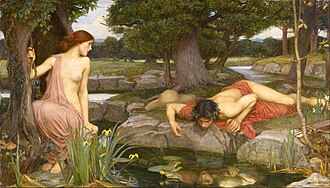 Écho et Narcisse - John William Waterhouse (1903)
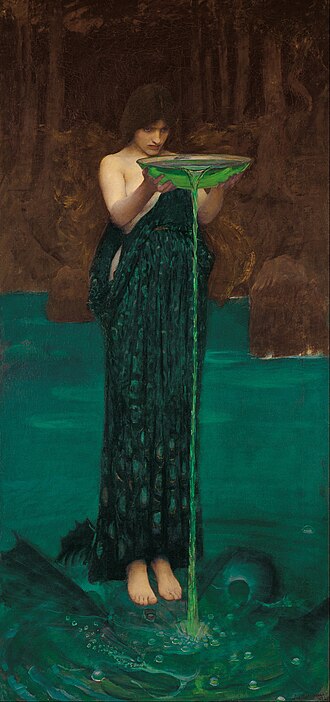 Circe Invidiosa - John William Waterhouse (1892)
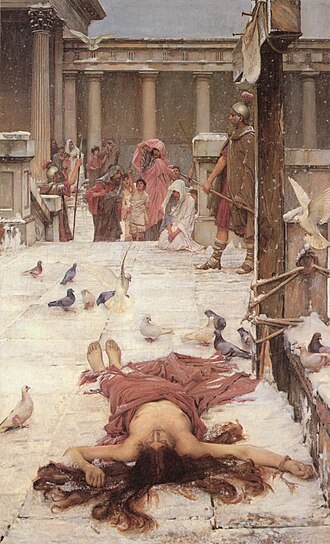 Sainte Eulalie - John William Waterhouse (1885)
.jpg) Ulysse et les sirènes - John William Waterhouse (1891)
Ulysse et les sirènes - John William Waterhouse (1891)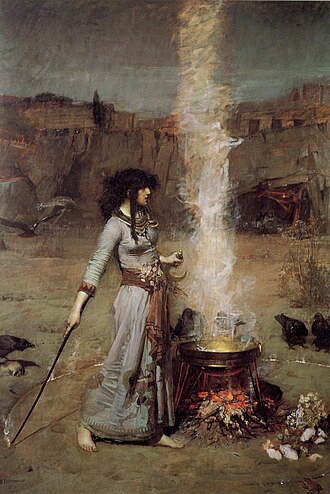 Le Cercle magique - John William Waterhouse (1886)
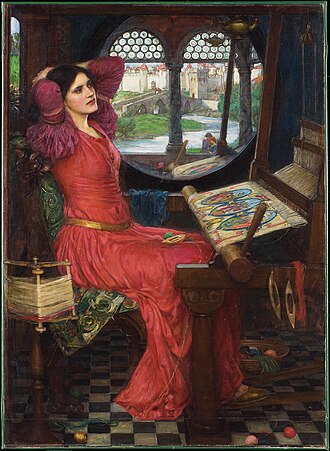 "I am half sick of shadows" said the Lady of Shalott - John William Waterhouse (1916)
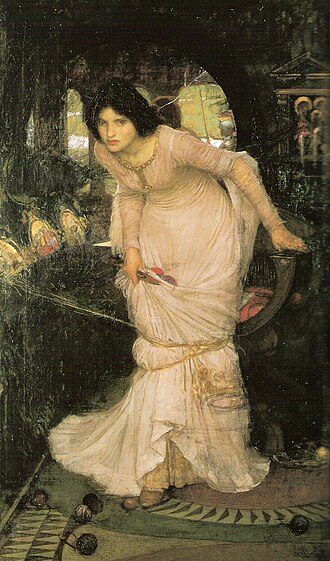 La Dame de Shalott regardant Lancelot - John William Waterhouse (1894)
Œuvres d'artistes liés
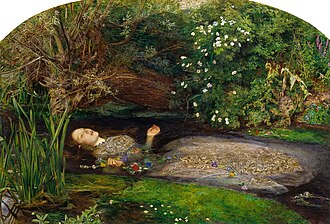 Ophélie - John Everett Millais (1851)
%20-%20Google%20Art%20Project.jpg) Le Christ dans la maison de ses parents - John Everett Millais (1849)
Le Christ dans la maison de ses parents - John Everett Millais (1849)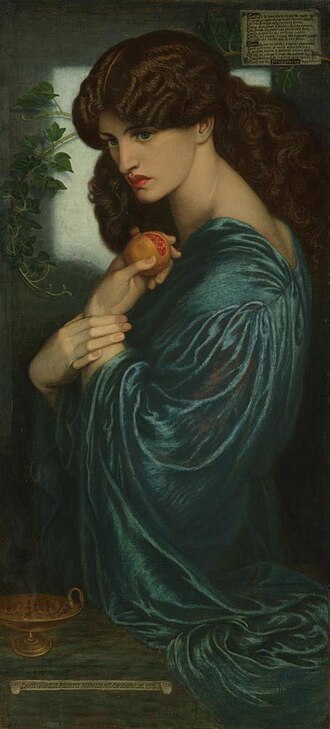 Perséphone - Dante Gabriel Rossetti (1874)
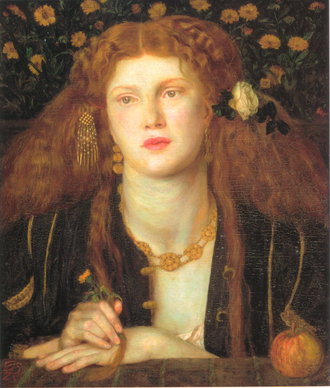 Bocca Baciata - Dante Gabriel Rossetti (1859)