The Lady of Shalott
John William Waterhouse · 1888
.jpg)
She sits in a small boat on her own woven tapestry, lips parted, two of her three candles already out. Waterhouse's 1888 Lady of Shalott catches Tennyson's heroine at the moment she drifts toward Camelot and her death.
The story behind the painting
The painting shows the ending of Alfred, Lord Tennyson's poem The Lady of Shalott, which the source dates to 1832 and also mentions in its 1842 form. In the poem a young woman, loosely based on Elaine of Astolat from Arthurian legend, lives under a curse in a tower near Camelot. She may not look out of the window and sees the world only in a mirror, weaving what she sees into a tapestry. When Sir Lancelot rides by and she turns to look at him directly, the mirror cracks. She leaves by boat, writes her name on the prow, and sings as she drifts to Camelot, dying before she arrives.
What to look for
Waterhouse paints the moment she sets off, sitting on the tapestry she has woven. A lantern hangs at the front of the boat and a crucifix stands near the bow, with three candles beside it; two have already gone out. Her stark white dress stands against the much darker background. Bright colours typical of the Pre-Raphaelites fill the canvas, which measures 153 by 200 cm. Look for the naturalistic details: two swallows, and water plants that would have grown in an English river of the time. Her face is vulnerable and wistful.
Meaning and intent
Candles were a symbol of life, so the two that have been blown out signal that her death is near. The crucifix adds a note of prayer to her last journey. Beyond the symbols, the painting is valued for Waterhouse's realism, his close attention to detail and colour, and the way he brings out the beauty of nature. Although it adopts much of the Pre-Raphaelite style, Waterhouse painted it decades after the Brotherhood had split up during his early childhood.
Legacy
It is one of Waterhouse's most famous works. Sir Henry Tate gave it to the public in 1894, and it is usually on display at Tate Britain in London. Tennyson's poem was popular with many Pre-Raphaelite artists, and was illustrated by Dante Gabriel Rossetti, William Maw Egley and William Holman Hunt. Waterhouse kept returning to it: he painted the Lady three times, in 1888, 1894 and 1915, and also drew on John Keats for La Belle Dame sans Merci in 1893.
Le saviez-vous ?
- Painted in 1888, oil on canvas, 153 by 200 cm.
- Illustrates the ending of Tennyson's poem The Lady of Shalott.
- Given to the public by Sir Henry Tate in 1894.
- First of three Waterhouse paintings of the Lady (1888, 1894, 1915).
À propos de l'artiste
John William Waterhouse (1849-1917)
National Gallery · préraphaélisme · Tate · barque · Élaine d'Astolat
Autres œuvres de John William Waterhouse
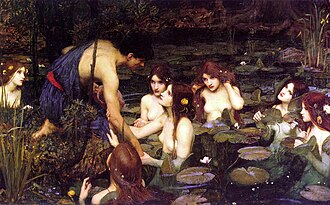 Hylas et les nymphes - John William Waterhouse (1896)
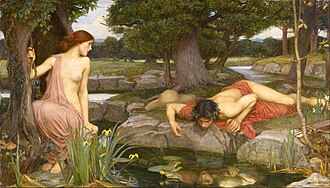 Écho et Narcisse - John William Waterhouse (1903)
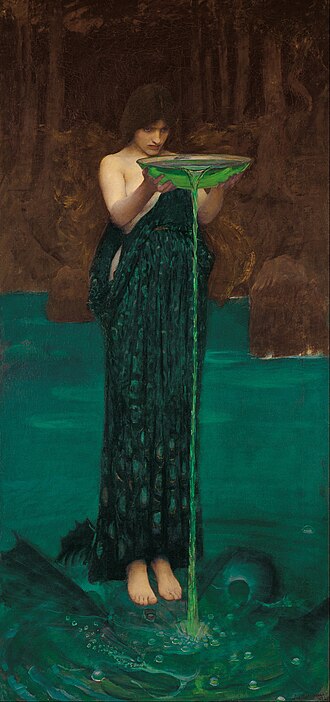 Circe Invidiosa - John William Waterhouse (1892)
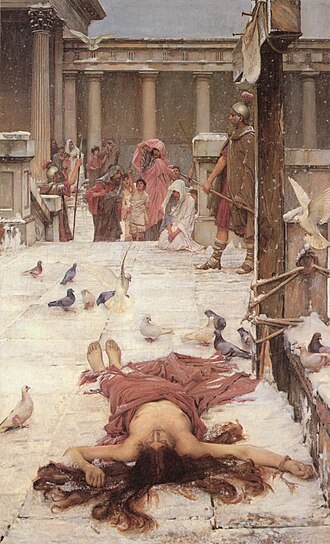 Sainte Eulalie - John William Waterhouse (1885)
.jpg) Ulysse et les sirènes - John William Waterhouse (1891)
Ulysse et les sirènes - John William Waterhouse (1891)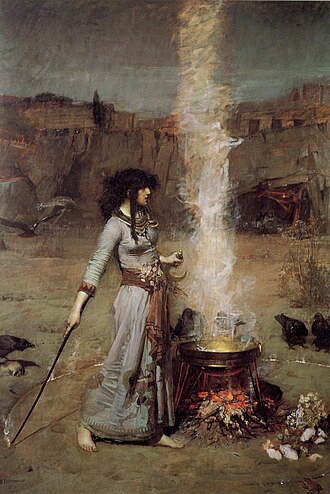 Le Cercle magique - John William Waterhouse (1886)
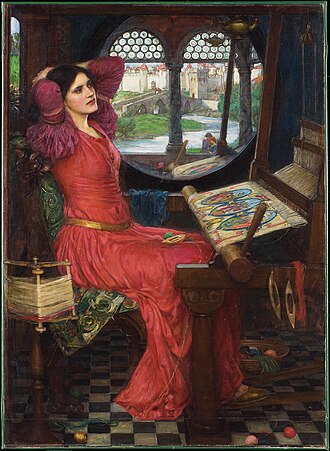 "I am half sick of shadows" said the Lady of Shalott - John William Waterhouse (1916)
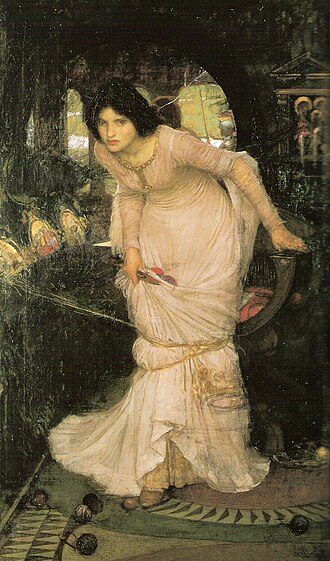 La Dame de Shalott regardant Lancelot - John William Waterhouse (1894)
Œuvres d'artistes liés
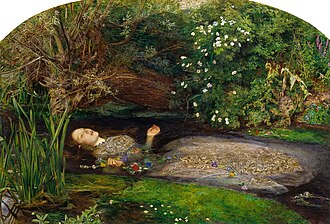 Ophélie - John Everett Millais (1851)
%20-%20Google%20Art%20Project.jpg) Le Christ dans la maison de ses parents - John Everett Millais (1849)
Le Christ dans la maison de ses parents - John Everett Millais (1849) Perséphone - Dante Gabriel Rossetti (1874)
 Bocca Baciata - Dante Gabriel Rossetti (1859)