La Dame de Shalott regardant Lancelot
John William Waterhouse · 1894
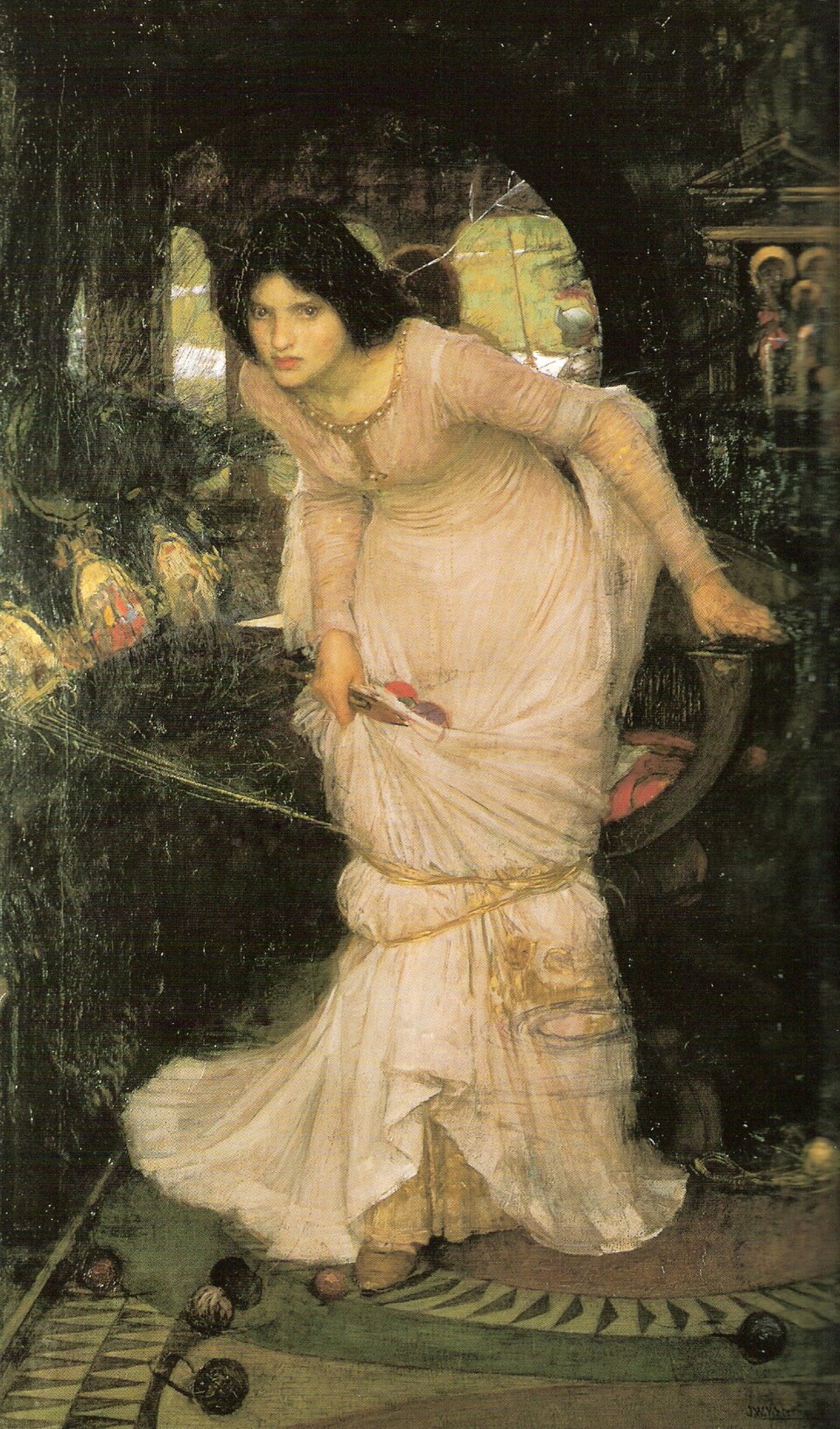
Golden yarn still wound around her knees, she rises from the loom and looks straight out of the window, and behind her the mirror cracks. Waterhouse painted the instant the curse falls.
The story behind the painting
This is the second of three major paintings by John William Waterhouse on Tennyson's 1832 poem The Lady of Shalott, coming between The Lady of Shalott of 1888 and I Am Half-Sick of Shadows, Said the Lady of Shalott of 1915. In the poem the Lady lives in a tower on an island near Camelot, cursed never to leave or look out of its windows. She weaves a tapestry and sees the outside world only in a mirror behind her. Waterhouse completed this oil on canvas, 142.2 by 86.3 cm, in 1894.
What to look for
The painting shows the turning point in the third part of the poem. The Lady has seen bold Sir Launcelot in her mirror, and the sight of the handsome knight and the sound of his singing draw her away from the loom to the window, golden yarn still clinging around her knees. She wears a white dress. Behind her the mirror has cracked from side to side, and its broken surface shows part of the scene outside, a device that echoes William Holman Hunt's The Awakening Conscience of 1853 and Hunt's own version of the Lady of Shalott.
Meaning and intent
Waterhouse chose the instant when looking becomes fatal. By turning from the reflection to the real world, the Lady brings down the curse: she will leave the tower, take a boat across the river and die before she reaches Camelot. The yarn still around her knees ties her to the life she is abandoning, while the cracked mirror shows that the safe, reflected world is already broken. The source compares the cracked mirror device directly with Hunt's paintings.
Legacy
Waterhouse gave the painting to Leeds Art Gallery in 1895. His sketchbook with preliminary drawings for the 1888 and 1894 Lady of Shalott paintings is in the Victoria and Albert Museum, and a study is at Falmouth Art Gallery. An oil sketch, sold after his death in 1917, vanished, then was found in Iceland in 2003, bought long before in London by a fisherman. Known from a photograph of Waterhouse at the National Portrait Gallery, it shows the Lady in red, the colour Waterhouse later chose for his third Lady of Shalott.
Le saviez-vous ?
- Completed in 1894, 142.2 by 86.3 cm.
- Second of Waterhouse's three paintings of the Lady of Shalott.
- Given by the artist to Leeds Art Gallery in 1895.
- A lost oil sketch was rediscovered in Iceland in 2003.
À propos de l'artiste
John William Waterhouse (1849-1917)
robe · préraphaélisme · fleur · Élaine d'Astolat
Autres œuvres de John William Waterhouse
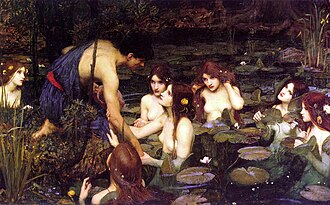 Hylas et les nymphes - John William Waterhouse (1896)
.jpg) The Lady of Shalott - John William Waterhouse (1888)
The Lady of Shalott - John William Waterhouse (1888)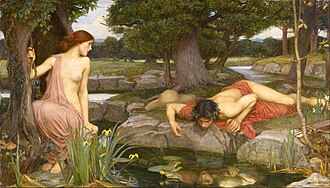 Écho et Narcisse - John William Waterhouse (1903)
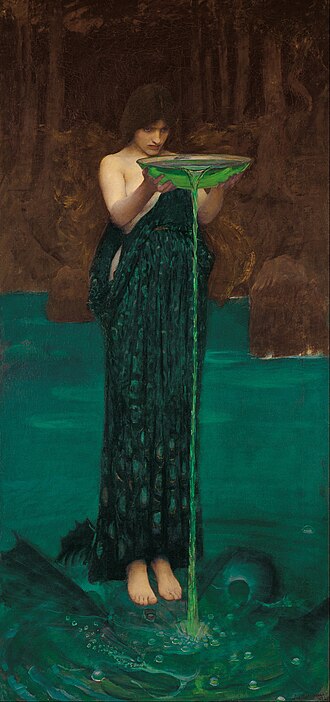 Circe Invidiosa - John William Waterhouse (1892)
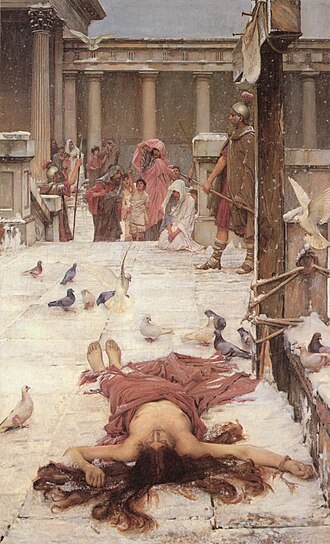 Sainte Eulalie - John William Waterhouse (1885)
.jpg) Ulysse et les sirènes - John William Waterhouse (1891)
Ulysse et les sirènes - John William Waterhouse (1891)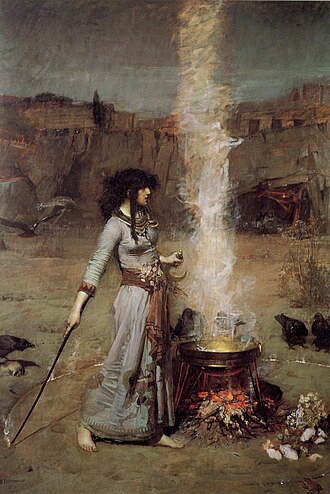 Le Cercle magique - John William Waterhouse (1886)
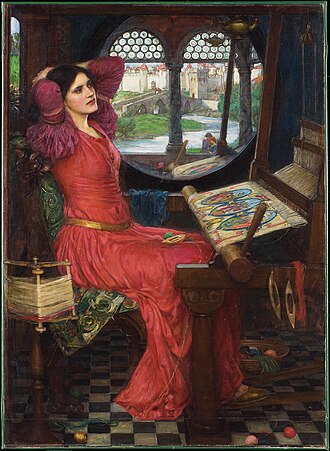 "I am half sick of shadows" said the Lady of Shalott - John William Waterhouse (1916)
Œuvres d'artistes liés
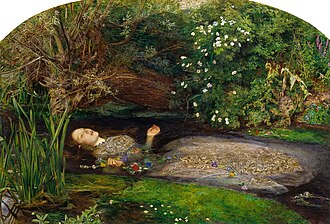 Ophélie - John Everett Millais (1851)
%20-%20Google%20Art%20Project.jpg) Le Christ dans la maison de ses parents - John Everett Millais (1849)
Le Christ dans la maison de ses parents - John Everett Millais (1849) Perséphone - Dante Gabriel Rossetti (1874)
 Bocca Baciata - Dante Gabriel Rossetti (1859)