The Jockeys
Henri de Toulouse-Lautrec · 1882
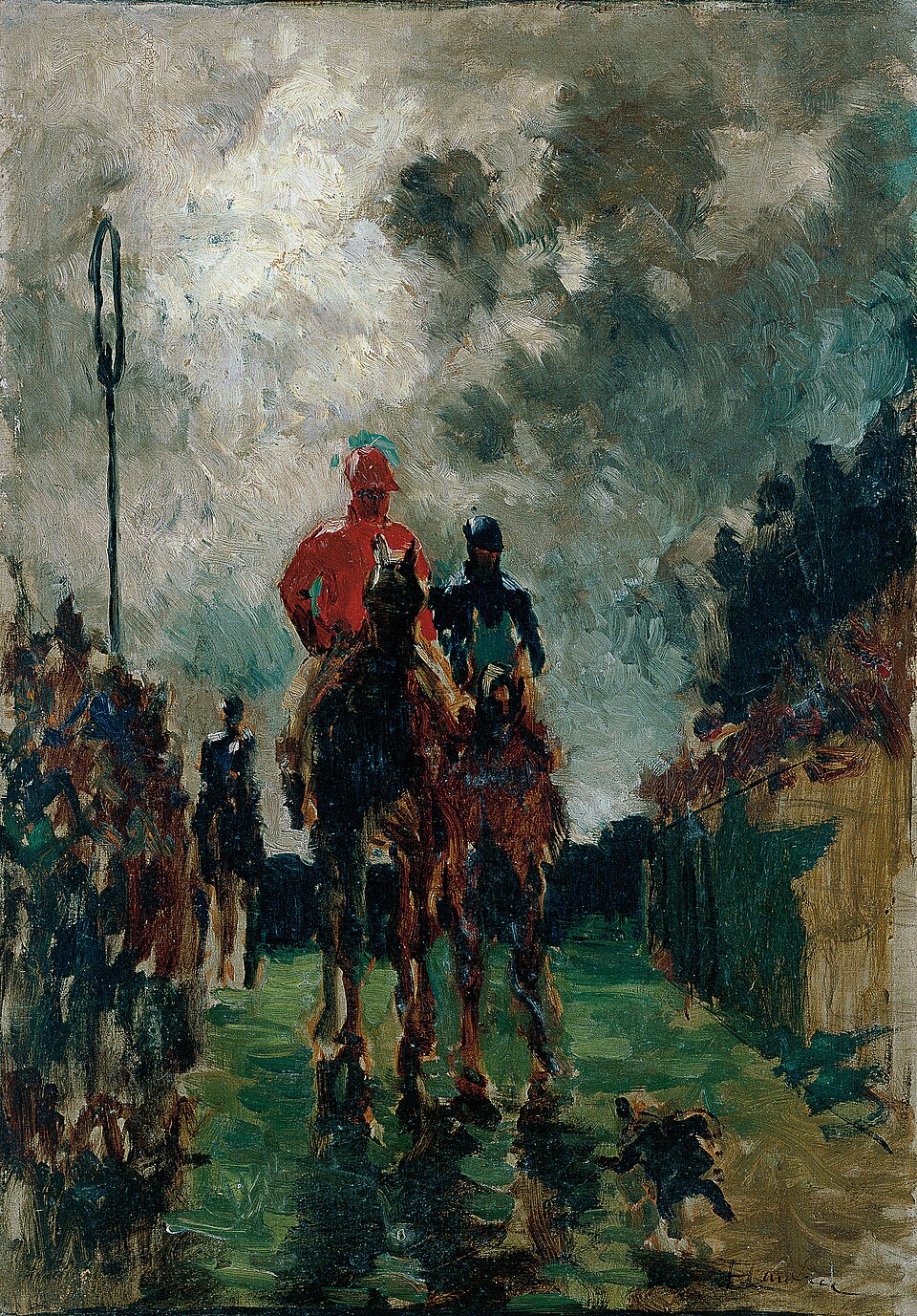
Horses thunder across the canvas, riders in red and blue bent over their necks, and a brown dog runs along at their feet. Toulouse-Lautrec painted this race around 1882, while still a teenager learning from a family friend.
The story behind the painting
Lautrec's father wanted his son to share his love of horse racing, but bone problems ended that hope. René Princeteau, a friend of his father, saw the boy's talent and gave him private lessons between 1878 and 1882. Princeteau deepened his interest in horses, taking him to the circus to draw them in motion, showing their strength and speed at the gallop. The Jockeys dates from around 1882, the end of those lessons.
What to look for
Two riders sit at the centre, one in a red jacket, the other in blue, with a third in blue a little further off. A brown dog runs at the horses' feet in the same direction. The dark horses and dog stand against a bright, cloudy sky, while the saturated red and blue catch the eye first. Rather than raw speed, the picture seems to study the shape of the horse and its shadows. Lautrec's fine, stylised signature sits in the lower right corner.
Meaning and intent
The quick, irregular strokes come from rapid notes that Lautrec later refined in the studio, which gives the work its movement. Racecourses in the 19th century were places of social prestige, where Parisians not only bet but met and showed off fashionable clothes, a pastime of British and aristocratic origin. The subject itself hints at Lautrec's wealthy family. The painting reflects the passion for racing that his father passed on, in a manner influenced by Impressionism.
Legacy
The oil on canvas, 64.5 by 45 cm, belongs to the Carmen Thyssen-Bornemisza collection at the Museo Thyssen-Bornemisza in Madrid, and is counted as a Post-Impressionist work. It belongs to the early years when horses filled almost every picture Lautrec made, before he turned to the cabarets and theatres of Montmartre. Here, a boy who could not ride as his father hoped found another way to follow the race: with a brush, fast enough to keep up.
Le saviez-vous ?
- Painted around 1882.
- Lautrec studied with René Princeteau from 1878 to 1882.
- Oil on canvas, 64.5 x 45 cm.
- In the Museo Thyssen-Bornemisza, Madrid.
À propos de l'artiste
Henri de Toulouse-Lautrec (1864-1901)
Autres œuvres de Henri de Toulouse-Lautrec
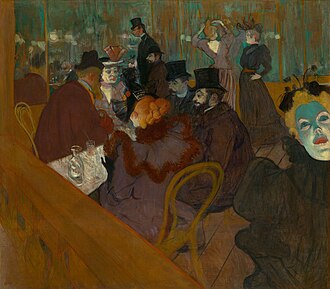 Au Moulin-Rouge - Henri de Toulouse-Lautrec (1892)
%20Rousse%20(La%20Toilette)%20-%201889%20-%20Henri%20de%20Toulouse-Lautrec%20-%20Mus%C3%A9e%20d'Orsay%2C%20Paris.jpg) La Toilette - Henri de Toulouse-Lautrec (1896)
La Toilette - Henri de Toulouse-Lautrec (1896)%2C%201887-1889%20color%20corrected.jpg) Gueule de bois - Henri de Toulouse-Lautrec (1889)
Gueule de bois - Henri de Toulouse-Lautrec (1889)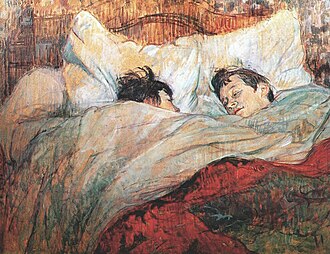 Le Lit - Henri de Toulouse-Lautrec (1890s)
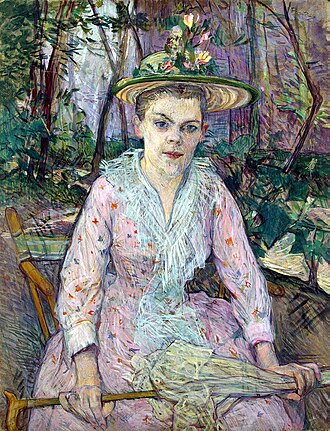 Femme à l'ombrelle, dite Berthe la Sourde, assise dans le jardin de M. Forest - Henri de Toulouse-Lautrec (1889)
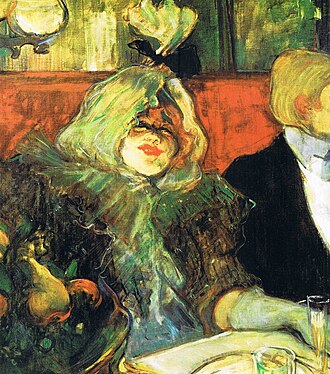 Le Salon privé - Henri de Toulouse-Lautrec (1899)
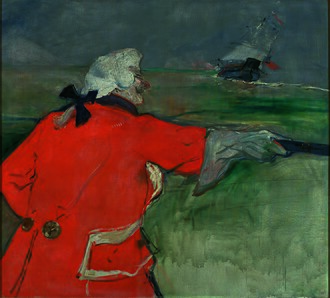 Paul Viaud en costume d'amiral du XVIIIe siècle - Henri de Toulouse-Lautrec (1901)
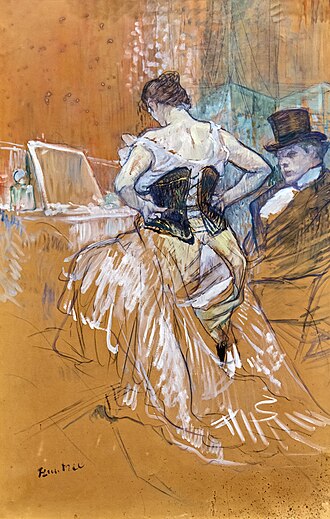 Conquête de passage - Henri de Toulouse-Lautrec (1896)
Œuvres d'artistes liés
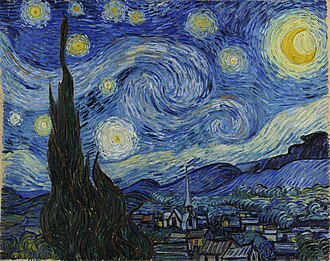 La Nuit étoilée - Vincent van Gogh (1889)
.jpg) Terrasse du café le soir - Vincent van Gogh (1888)
Terrasse du café le soir - Vincent van Gogh (1888) D'où venons-nous ? Que sommes-nous ? Où allons-nous ? - Paul Gauguin (1897-1898)
%201889.jpg) Le Christ jaune - Paul Gauguin (1889)
Le Christ jaune - Paul Gauguin (1889) Bal du moulin de la Galette - Pierre-Auguste Renoir (1876)
 Le Déjeuner des canotiers - Pierre-Auguste Renoir (1881)