Le Garçon au gilet rouge
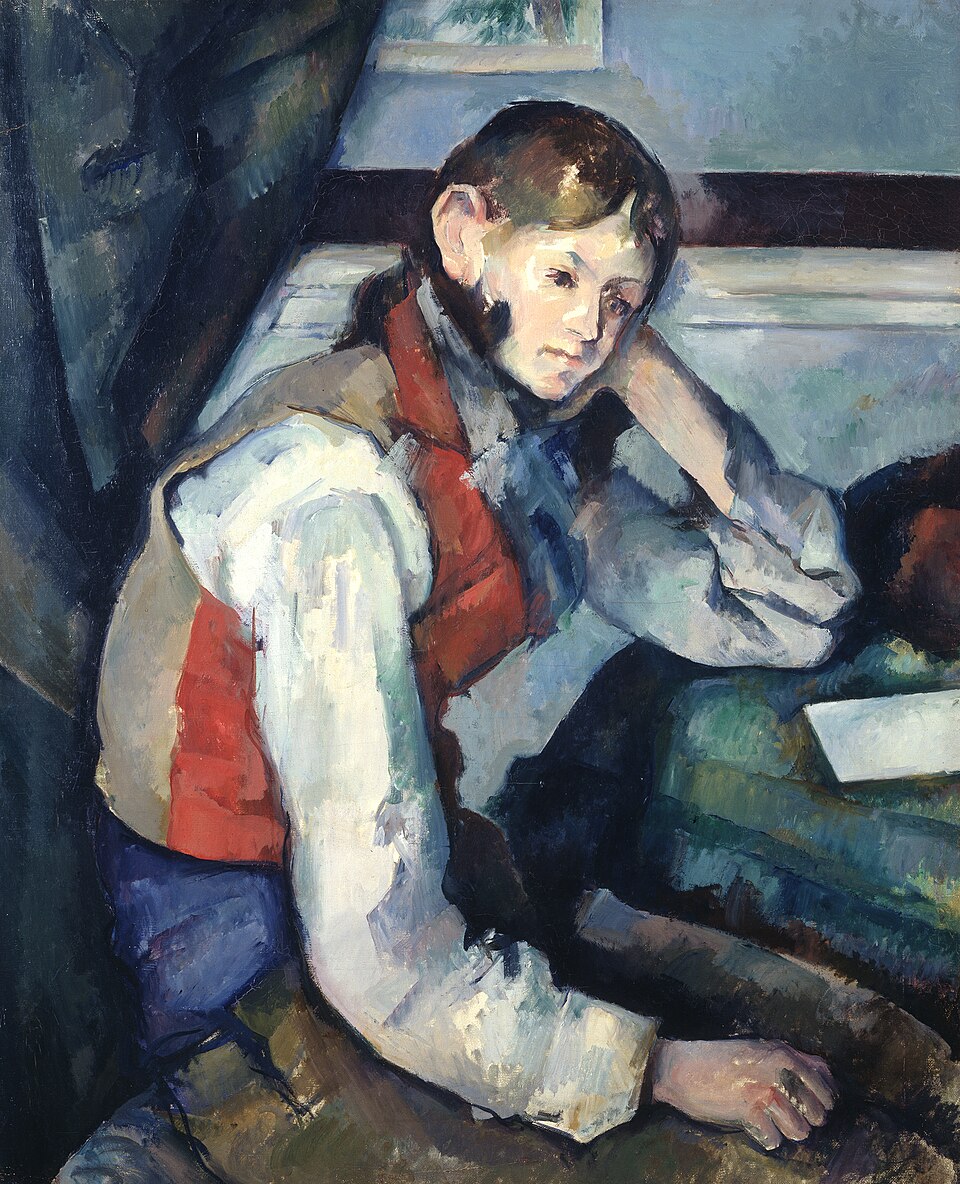
An Italian boy in a red vest sits with his elbow on a table and his head in his hand, lost in thought. Cézanne painted him four times, and this melancholic pose became the famous one, stolen in 2008 and found again four years later.
The story behind the painting
Cézanne painted four oil portraits of the same Italian boy in a red vest, each in a different pose, around 1888 to 1890. The series let him study the relationship between a figure and the space around it. This version, catalogued as Venturi 681, is the best known of the four and the one usually meant by the title. The other three are in museums in the United States. Wikipedia gives the dates 1888 to 1890, while the Wikidata record gives no year.
What to look for
The boy sits in a melancholic pose, elbow on the table, head cradled in his hand. The colours are rich, dense and festive. Three main diagonals organise the picture: the tilt of the boy's back and head, the slant of the deep green curtain behind him, and the long line of seat and table rising from the lower left. The angles of his thighs and arms answer them, building a tightly knit structure of crossing diagonals.
Meaning and intent
The painting is described as a fine example of Cézanne's skilled, nuanced and innovative mature work after 1880. The Foundation E.G. Bührle, which owns it, praises its picturesqueness and a perfect balance of high compositional intelligence and spontaneous painterly intuition. In 1895 the critic Gustave Geffroy said it could stand comparison with the finest figure paintings of the Old Masters. Behind the quiet pose lies a deliberate construction, worked out across four studies of one sitter.
Legacy
The dealer Ambroise Vollard acquired the painting from Cézanne, probably in 1895. It then passed to the collectors Marcell Nemes in 1909 and Gottlieb Reber in 1913, and Emil Georg Bührle bought it from Reber in 1948. After Bührle died in 1956, his heirs gave it to the Foundation E.G. Bührle in 1960. In February 2008 it was stolen from the foundation in Zurich, as the museum's most valuable painting. It was recovered in Serbia in April 2012.
Le saviez-vous ?
- One of four portraits Cézanne painted of the same boy.
- Catalogued as Venturi 681, painted around 1888-1890.
- Stolen in Zurich in February 2008.
- Recovered in Serbia in April 2012.
À propos de l'artiste
Paul Cézanne (1839-1906)
portrait · garçon · impressionnisme
Autres œuvres de Paul Cézanne
 Les Grandes Baigneuses - Paul Cézanne (1900s)
 La Corbeille de pommes - Paul Cézanne (1893)
%201893-94%20FWN%20854.jpg) Rideau, cruchon et compotier - Paul Cézanne (1890s)
Rideau, cruchon et compotier - Paul Cézanne (1890s) Maison devant la Sainte-Victoire près de Gardanne - Paul Cézanne (1880s)
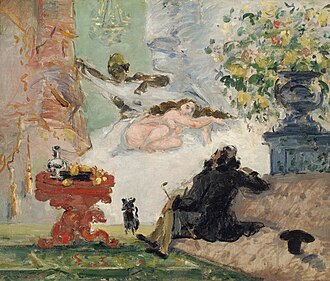 Une moderne Olympia - Paul Cézanne (1873)
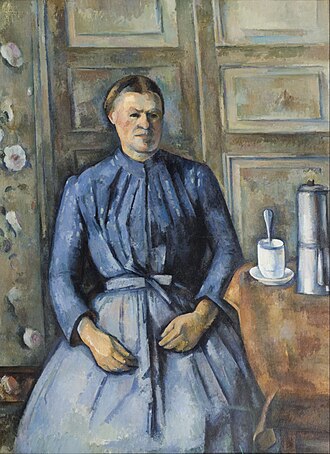 La Femme à la cafetière - Paul Cézanne (1895)
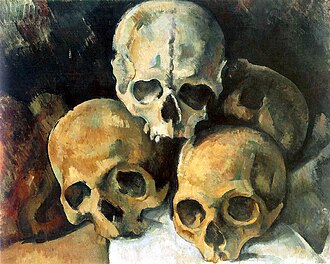 Pyramide de crânes - Paul Cézanne (1899)
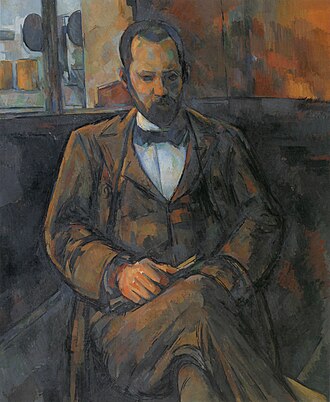 Portrait d'Ambroise Vollard - Paul Cézanne (1899)
Œuvres d'artistes liés
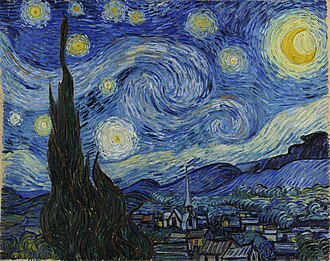 La Nuit étoilée - Vincent van Gogh (1889)
.jpg) Terrasse du café le soir - Vincent van Gogh (1888)
Terrasse du café le soir - Vincent van Gogh (1888)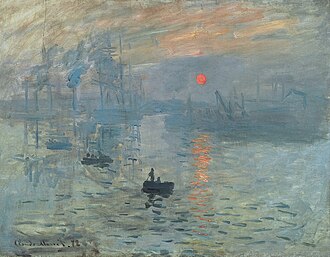 Impression, soleil levant - Claude Monet (1872)
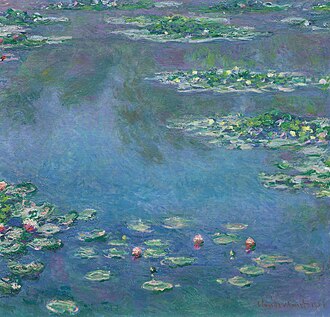 Nymphéas - Claude Monet (1906)
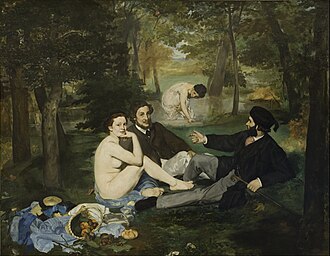 Le Déjeuner sur l'herbe - Édouard Manet (1863)
 Olympia - Édouard Manet (1863)
 Bal du moulin de la Galette - Pierre-Auguste Renoir (1876)
 Le Déjeuner des canotiers - Pierre-Auguste Renoir (1881)
 L'Absinthe - Edgar Degas (1875)
 La Famille Bellelli - Edgar Degas (1858)
 Le Dernier Voyage du Téméraire - J. M. W. Turner (1839)
 Pluie, Vapeur et Vitesse - J. M. W. Turner (1844)