Les Grandes Baigneuses
Paul Cézanne · 1900s
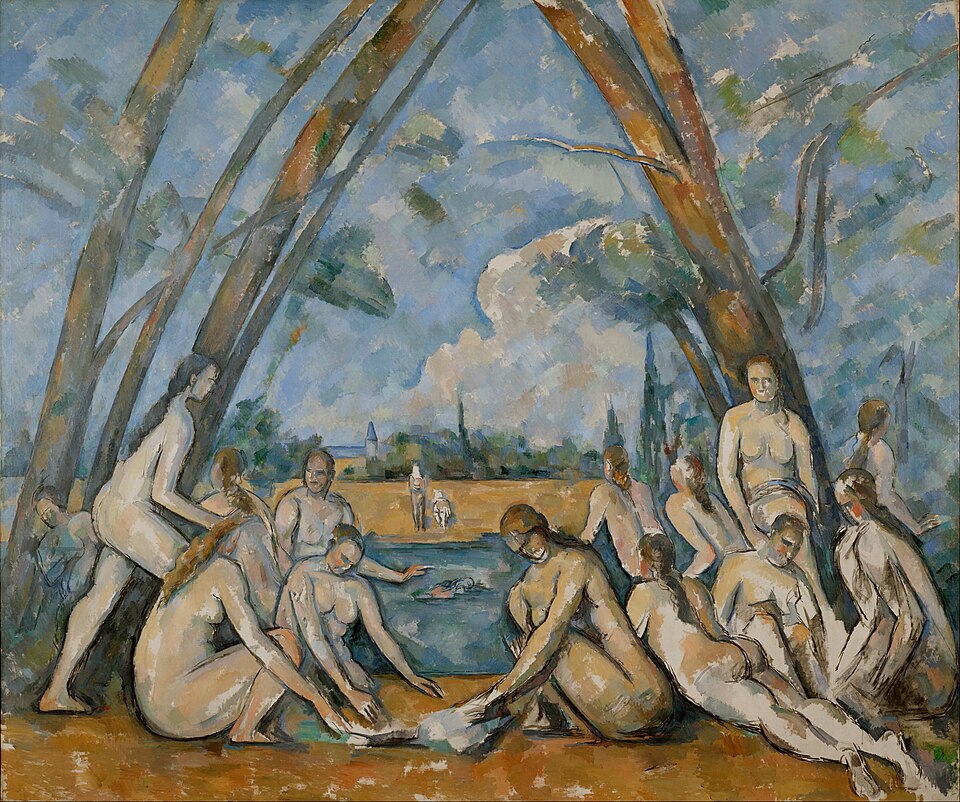
Nude women gather under trees that lean together like the arch of a cathedral. Cézanne worked on this canvas for seven years and died before he could finish it.
The story behind the painting
Les Grandes Baigneuses, also called the Large Bathers or Big Bathers, is the largest of Cézanne's series of bather paintings, about 210.5 by 250.8 cm. The others are in the Museum of Modern Art in New York, the National Gallery in London, the Barnes Foundation in Pennsylvania and the Art Institute of Chicago. Cézanne worked on this canvas for seven years, and it was still unfinished when he died in 1906, the year it was first exhibited. It is often considered his finest work and one of the masterpieces of modern art.
What to look for
Look at the triangle. The nude figures are fitted into a triangular pattern formed by the trees and the river, which makes the picture unusually symmetrical among Cézanne's works. The women are abstracted rather than portrayed, and the source says their forms give the painting tension and density. Cézanne painted them with the same technique he used for his landscapes and still lifes, so bodies, trees and water seem built from the same patches of colour. The picture recalls Titian and Peter Paul Rubens, yet it is often compared with another famous group of nude women of the same period, Picasso's Les Demoiselles d'Avignon.
Meaning and intent
With each version of the Bathers, Cézanne moved away from the traditional presentation of paintings, deliberately making works that would not please the novice viewer. He did this to avoid passing fashions and to give his work a timeless quality, and in doing so he showed later artists that they could ignore current trends. His drawing was often criticised, yet one critic said that he made the ineptly drawn Bathers a warm evocation of leisurely summer bliss. That tension, awkward and serene at once, is part of its pull.
Legacy
The painting once belonged to Leo Stein. In 1937 it was bought for the Philadelphia Museum of Art with funds from a trust set up by the museum's major benefactor, Joseph E. Widener, and it is exhibited there today. It was featured in the BBC Two series 100 Great Paintings in 1980. Unfinished as it is, the canvas stands at the doorway of modern art, a late work by a painter still searching in his last years.
Le saviez-vous ?
- The largest of Cézanne's bather paintings, about 210.5 x 250.8 cm.
- Worked on for seven years; unfinished at his death in 1906.
- Once owned by Leo Stein.
- In the Philadelphia Museum of Art since 1937.
À propos de l'artiste
Paul Cézanne (1839-1906)
scène de genre · nu · Philadelphia Museum of Art · baignade
Autres œuvres de Paul Cézanne
 Le Garçon au gilet rouge - Paul Cézanne
 La Corbeille de pommes - Paul Cézanne (1893)
%201893-94%20FWN%20854.jpg) Rideau, cruchon et compotier - Paul Cézanne (1890s)
Rideau, cruchon et compotier - Paul Cézanne (1890s) Maison devant la Sainte-Victoire près de Gardanne - Paul Cézanne (1880s)
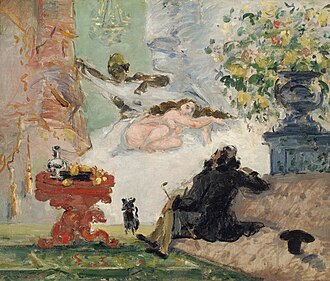 Une moderne Olympia - Paul Cézanne (1873)
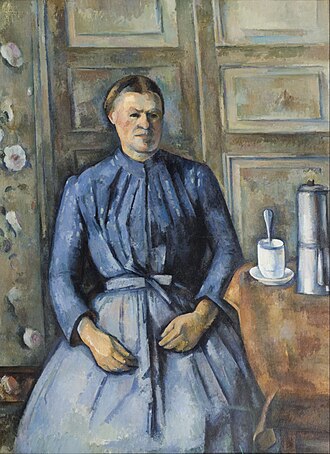 La Femme à la cafetière - Paul Cézanne (1895)
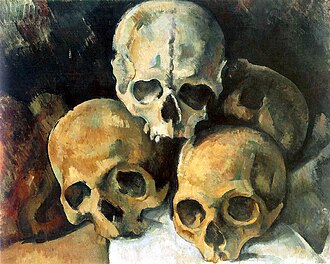 Pyramide de crânes - Paul Cézanne (1899)
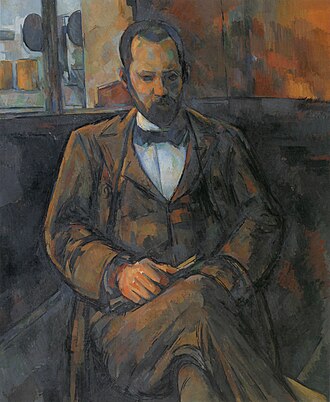 Portrait d'Ambroise Vollard - Paul Cézanne (1899)
Œuvres d'artistes liés
 La Nuit étoilée - Vincent van Gogh (1889)
.jpg) Terrasse du café le soir - Vincent van Gogh (1888)
Terrasse du café le soir - Vincent van Gogh (1888)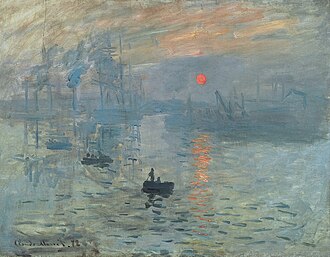 Impression, soleil levant - Claude Monet (1872)
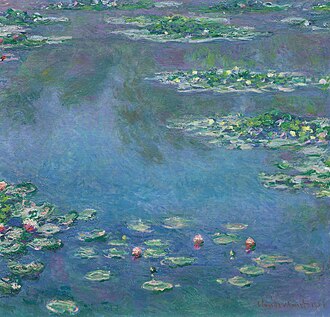 Nymphéas - Claude Monet (1906)
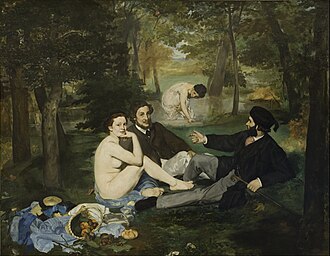 Le Déjeuner sur l'herbe - Édouard Manet (1863)
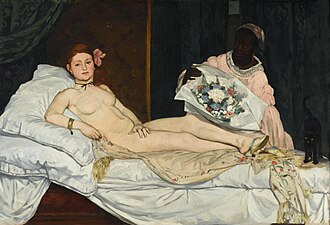 Olympia - Édouard Manet (1863)
 Bal du moulin de la Galette - Pierre-Auguste Renoir (1876)
 Le Déjeuner des canotiers - Pierre-Auguste Renoir (1881)
 L'Absinthe - Edgar Degas (1875)
 La Famille Bellelli - Edgar Degas (1858)
 Le Dernier Voyage du Téméraire - J. M. W. Turner (1839)
 Pluie, Vapeur et Vitesse - J. M. W. Turner (1844)