Paul Viaud en costume d'amiral du XVIIIe siècle
Henri de Toulouse-Lautrec · 1901
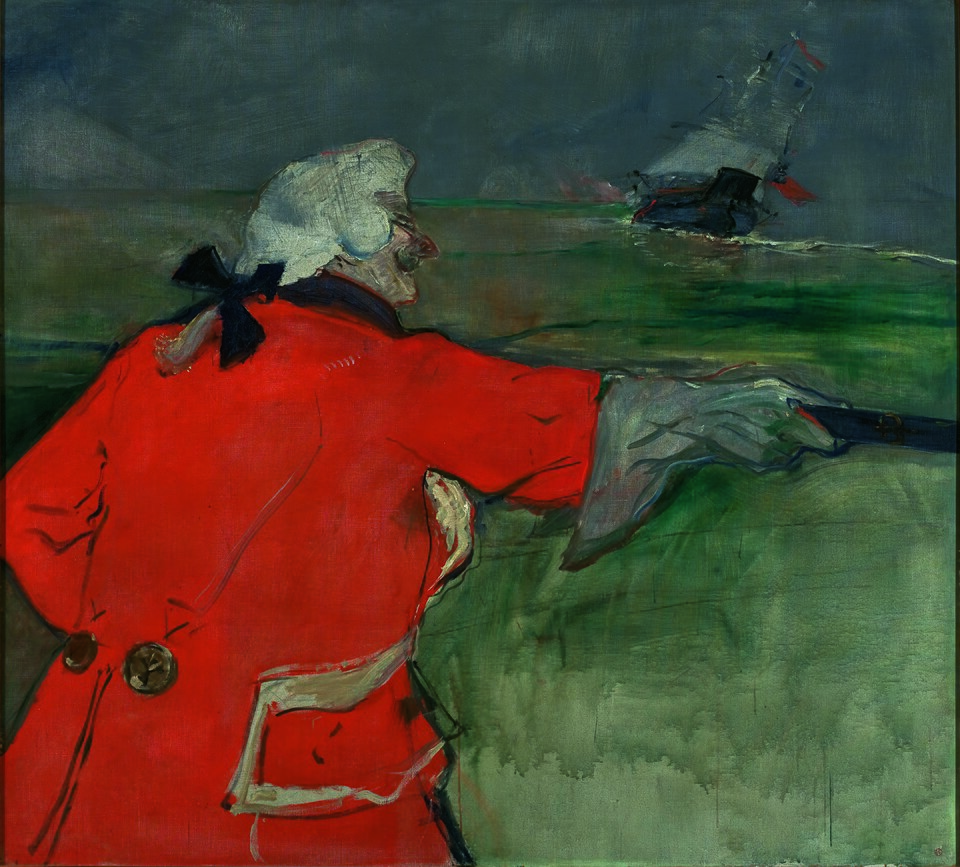
A friend dressed as an eighteenth-century admiral, painted in broad, open areas of colour. It is the last portrait Toulouse-Lautrec painted, made in 1901, the year he died, for a man who had once taken him onto his yacht to keep him away from drink.
The story behind the painting
The sitter is Paul Viaud, a friend of Toulouse-Lautrec who, according to the German Wikipedia article, was an admiral. In 1899 the painter's mother, Adèle, asked Viaud to let her son spend some time on his yacht. Toulouse-Lautrec had just been released from a psychiatric clinic in Neuilly, and his mother hoped the stay would keep him from falling back into alcoholism. The portrait was painted in 1901. The original French title is given as L'Amiral Viaud, also Paul Viaud in admiral's dress.
What to look for
The canvas is large, about 140 by 155 cm, and shows Viaud in the costume of an eighteenth-century admiral. Ettore Camesasca of the São Paulo Museum of Art drew attention to its wide, broad surfaces of paint. This is unusual for Toulouse-Lautrec, who in 1899 and 1900 still relied mostly on hatched strokes, as in his portrait of Octave Raquin. Look at how the colour lies in open areas instead of a web of short lines, and at how the old-fashioned costume turns a friend into a figure of make-believe.
Meaning and intent
All his life Toulouse-Lautrec was most interested in portraits. One of his first works was a portrait of his father on horseback, and his last was this portrait of Paul Viaud as an admiral. Art historians such as Anne Distel and Philippe Jullian stress that his portraits are not mere likenesses but psychological documents, and this one is cited for his ability to show character in all its ambivalence. Camesasca suggested the unusual handling might come from an interruption while it was being painted, or from what the work was meant for.
Legacy
The painting was shown in 1902 in a posthumous retrospective of Toulouse-Lautrec, but it stayed in the shadow of famous works such as Moulin Rouge: La Goulue and the Salon in the Rue des Moulins. Camesasca thought it first hung at Malromé, the family château, owned by the painter's mother, before passing to Raymond Adolphe Séré de Rivières. Our records place it in the São Paulo Museum of Art, while the German Wikipedia article names the Museu de Arte Assis Chateaubriand in Campina Grande, Brazil.
Le saviez-vous ?
- Painted in 1901, Toulouse-Lautrec's last portrait.
- The sitter, Paul Viaud, hosted the painter on his yacht in 1899.
- Shown in the posthumous retrospective of 1902.
- About 140 by 155 cm.
À propos de l'artiste
Henri de Toulouse-Lautrec (1864-1901)
Autres œuvres de Henri de Toulouse-Lautrec
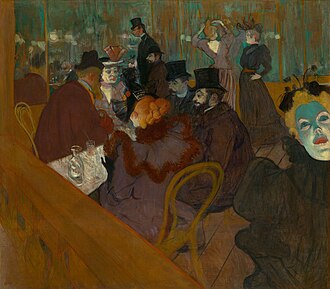 Au Moulin-Rouge - Henri de Toulouse-Lautrec (1892)
%20Rousse%20(La%20Toilette)%20-%201889%20-%20Henri%20de%20Toulouse-Lautrec%20-%20Mus%C3%A9e%20d'Orsay%2C%20Paris.jpg) La Toilette - Henri de Toulouse-Lautrec (1896)
La Toilette - Henri de Toulouse-Lautrec (1896)%2C%201887-1889%20color%20corrected.jpg) Gueule de bois - Henri de Toulouse-Lautrec (1889)
Gueule de bois - Henri de Toulouse-Lautrec (1889)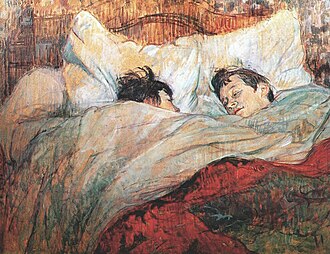 Le Lit - Henri de Toulouse-Lautrec (1890s)
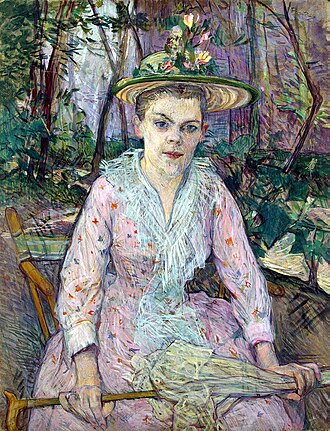 Femme à l'ombrelle, dite Berthe la Sourde, assise dans le jardin de M. Forest - Henri de Toulouse-Lautrec (1889)
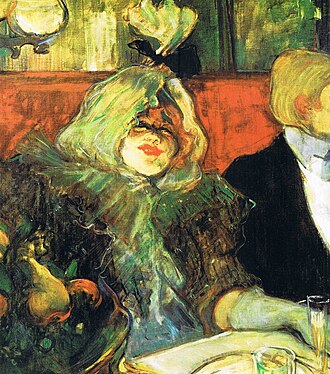 Le Salon privé - Henri de Toulouse-Lautrec (1899)
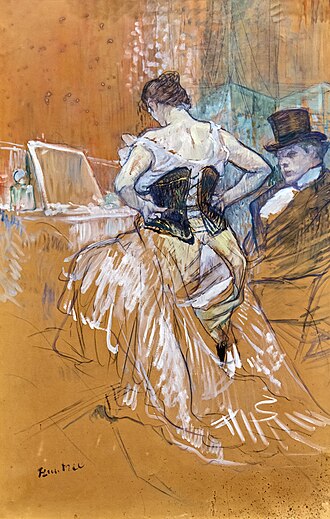 Conquête de passage - Henri de Toulouse-Lautrec (1896)
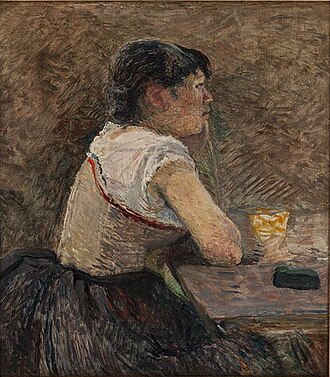 À Grenelle, buveuse d'absinthe - Henri de Toulouse-Lautrec (1886)
Œuvres d'artistes liés
 La Nuit étoilée - Vincent van Gogh (1889)
.jpg) Terrasse du café le soir - Vincent van Gogh (1888)
Terrasse du café le soir - Vincent van Gogh (1888) D'où venons-nous ? Que sommes-nous ? Où allons-nous ? - Paul Gauguin (1897-1898)
%201889.jpg) Le Christ jaune - Paul Gauguin (1889)
Le Christ jaune - Paul Gauguin (1889) Bal du moulin de la Galette - Pierre-Auguste Renoir (1876)
 Le Déjeuner des canotiers - Pierre-Auguste Renoir (1881)