The Immaculate Conception
Le Greco · 1611
.jpg)
Mary rises into a sky that takes over most of the canvas, cherubs at her feet. Late in his life El Greco painted this Immaculate Conception with his workshop and his son Jorge Manuel, and scholars have argued over whose hand is where.
The story behind the painting
The Immaculate Conception is not in the canonical gospels, though some interpreters infer it from verses in Luke. It became a dogma of the Catholic Church only in 1854, but the devotion is very old and important in Christian art. The subject is rare in El Greco's work and could be confused with the Assumption, but here the apostles of the Assumption are absent and several symbols from the Litany of Loreto confirm the theme. This canvas is considered later than the Immaculate Conception with Saint John the Evangelist and the Immaculate Conception of the Oballe Chapel.
What to look for
El Greco gives more space to the heavenly zone than in his earlier versions of the subject. Look at Mary and the cherubs at her feet, which Harold Wethey judged the best parts of the picture. Then look around them, at the flowers, the architecture, the landscape and the floating white cloth to the Virgin's right, which Wethey found of mediocre quality. According to José Gudiol, the canvas resembles the one in the Immaculate Conception altarpiece, but without the angels of the lower zone. It is oil on canvas, 108 by 82 cm according to Gudiol.
Meaning and intent
Several authors point out a difference in quality between the figures and the background. Halldor Soehner was the first to note it and attributed the landscape to Jorge Manuel. José Álvarez Lopera sees the work as an evolution of the Immaculate seen by John the Evangelist, gaining in movement and doctrinal clarity, while also noting Jorge Manuel's collaboration. Manuel Bartolomé Cossío remarked on its lack of rapture, yet recognised the technical refinement of El Greco's last period. Wethey believed the angels other than the cherubs show Jorge Manuel's hand.
Legacy
The date is uncertain: Gudiol places it in 1607 to 1610, while Wikidata gives 1611. The painting passed through a private collection in Cádiz, Miguel Borondo in Madrid, the Marqués de Casa Torres in 1902, the Marqués de la Vega Inclán and Luis de Navas in 1908, then Marcell Nemes in Budapest from 1909 to 1928. Nemes sold it in 1928 and it entered the Thyssen-Bornemisza collection in 1929. It is now in the Museo Thyssen-Bornemisza in Madrid, inventory 170, and catalogued by Gudiol as 223, by Wethey as 92 and by Tiziana Frati as 155.
Le saviez-vous ?
- Painted by El Greco with his workshop and his son Jorge Manuel.
- Dated 1607 to 1610 by Gudiol; Wikidata gives 1611.
- Measures 108 by 82 cm.
- In the Thyssen-Bornemisza collection since 1929.
À propos de l'artiste
Le Greco (1541-1614)
art religieux · Marie · maniérisme · musée Thyssen-Bornemisza · Sammlung Schloss Rohoncz
Autres œuvres de Le Greco
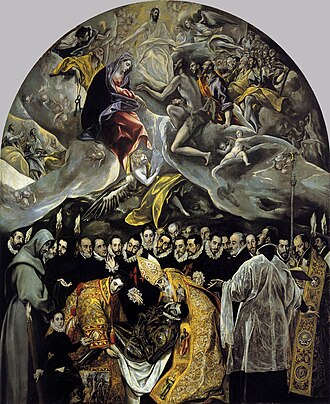 L'Enterrement du comte d'Orgaz - El Greco (1586)
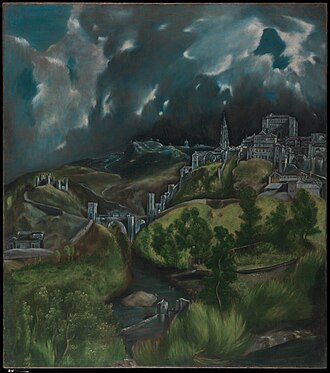 Vue de Tolède - El Greco (1596)
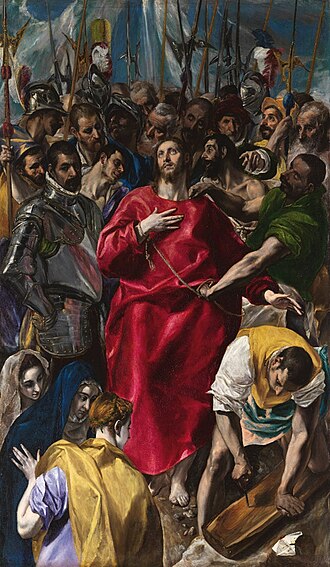 Le Dépouillement du Christ - El Greco (1570s)
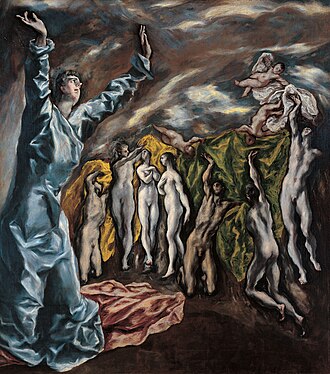 L'Ouverture du cinquième sceau - El Greco (1610)
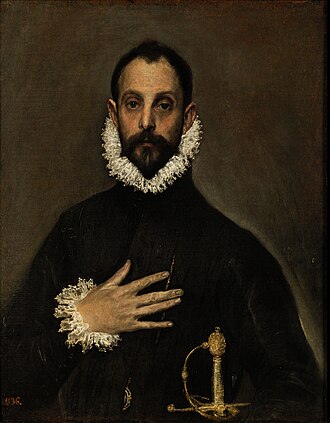 Le Gentilhomme à la main sur la poitrine - El Greco (1580)
%20-%20Laoco%C3%B6n%20-%20Google%20Art%20Project.jpg) Laocoon - El Greco (1610s)
Laocoon - El Greco (1610s)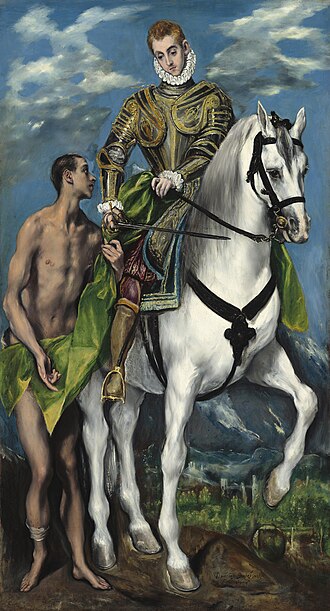 Saint Martin et le Mendiant - El Greco (1597)
.jpg) L'Adoration des bergers - El Greco (1612)
L'Adoration des bergers - El Greco (1612)
Œuvres d'artistes liés
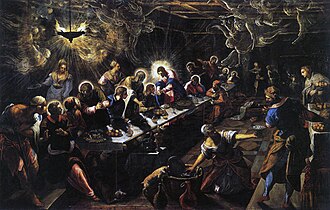 La Cène - Jacopo Tintoretto (1563)
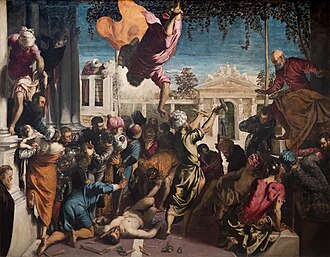 Miracle de l'esclave - Jacopo Tintoretto (1540s)
.jpg) Vénus d'Urbin - Titian (1538)
Vénus d'Urbin - Titian (1538)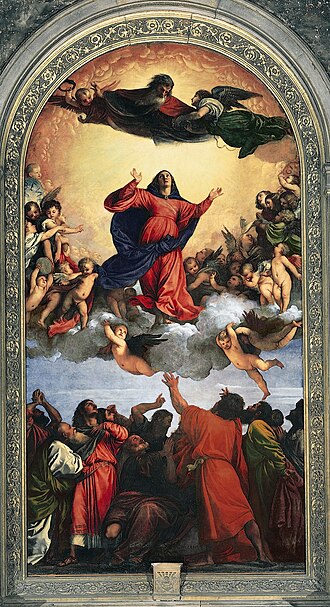 L'Assomption de la Vierge - Titian (1510s)
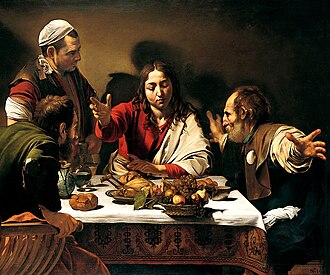 Le Souper à Emmaüs - Caravaggio (1601)
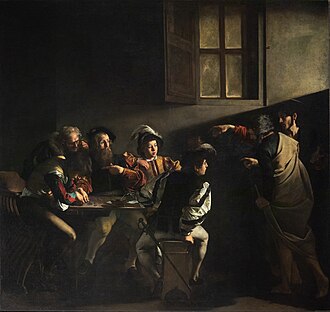 La Vocation de saint Matthieu - Caravaggio (1609)
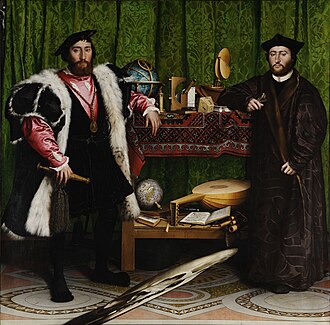 Les Ambassadeurs - Hans Holbein the Younger (1533)
 Le Christ mort - Hans Holbein the Younger (1520s)