Le Gentilhomme à la main sur la poitrine
Le Greco · 1580
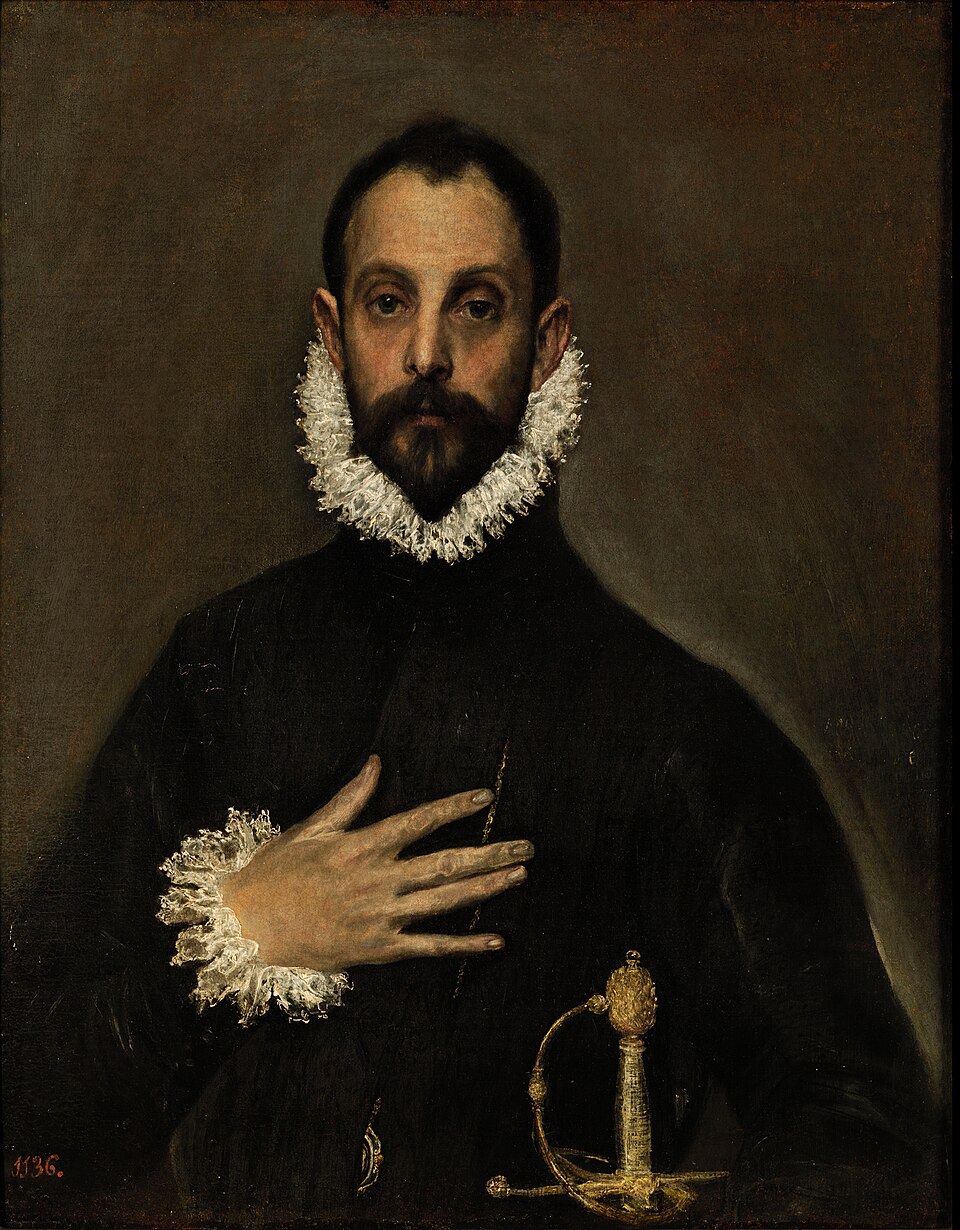
A man in black lays his right hand flat on his chest and looks straight at us. Is he swearing an oath? And who is he? Four centuries later, El Greco's gentleman still keeps his secret.
The story behind the painting
El Greco painted this portrait in Toledo around 1580, making it one of the earliest works he produced in Spain. It belongs to a series of secular portraits of unknown gentlemen, and it is the most famous of them. It hangs today in the Museo del Prado in Madrid. The canvas is modest in size, about 82 by 66 cm, an intimate format suited to a single face and a single gesture. Nothing in the surviving record names the sitter, and that silence has given the painting a long life of questions.
What to look for
Like the others in the series, the man is dressed in black and wears a white ruff, set against a dark background. Almost everything is subdued, so the eye goes to three bright points: the pale face, the white ruff and cuff, and the hand pressed to the chest with its long fingers spread. A sword hilt appears at his side. His left hand is hidden from view. The restraint of colour makes the gesture feel solemn, as if the whole picture had been built around that one movement of the hand.
Meaning and intent
Who is he? Some, including the Prado's own experts, connect him with Juan de Silva y de Ribera, Marquis of Montemayor, whom Philip II appointed military commander of the Alcázar of Toledo and Chief Notary to the Crown, a role that would explain the gesture of taking an oath. Sources differ on whether he was the second or third Marquis. Others have proposed Miguel de Cervantes, noting the matching age, the hidden left hand and Cervantes's lost use of that arm at Lepanto. Modern scholarship does not accept this. The artist Rupert Shrive and historian Alex Burghart have even suggested it may be a self-portrait.
Legacy
The painting endures partly because it refuses to answer. The Prado notes that names such as Cervantes and even El Greco himself have been proposed, while judging the Montemayor identification the most convincing. Each theory reads the same hand and the same steady eyes differently: an official's oath, a soldier's wound, a painter's self-scrutiny. Whatever the truth, the image has become the best known of El Greco's Toledo gentlemen, a model of how much a portrait can say with only black, white and a single gesture.
Le saviez-vous ?
- Painted in Toledo around 1580.
- Museo del Prado, Madrid; about 82 x 66 cm.
- Most famous of El Greco's series of portraits of unknown gentlemen.
- Sitter unidentified; Marquis of Montemayor is the leading suggestion.
À propos de l'artiste
Le Greco (1541-1614)
portrait · homme · musée du Prado · épée
Autres œuvres de Le Greco
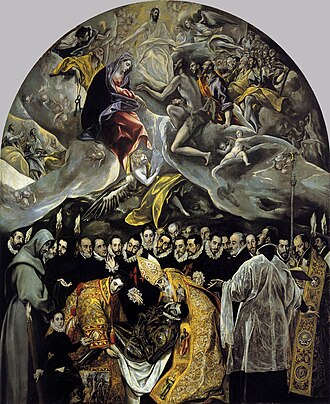 L'Enterrement du comte d'Orgaz - El Greco (1586)
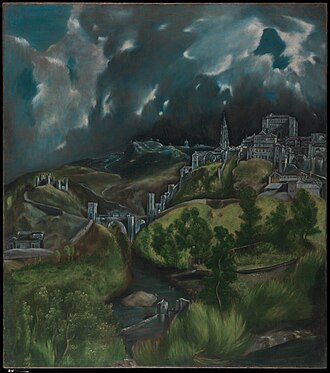 Vue de Tolède - El Greco (1596)
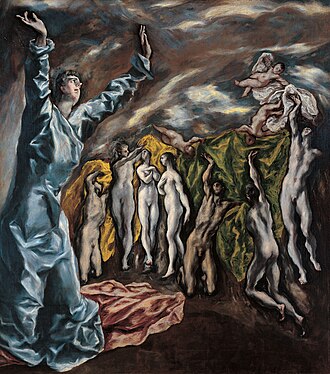 L'Ouverture du cinquième sceau - El Greco (1610)
%20-%20Laoco%C3%B6n%20-%20Google%20Art%20Project.jpg) Laocoon - El Greco (1610s)
Laocoon - El Greco (1610s)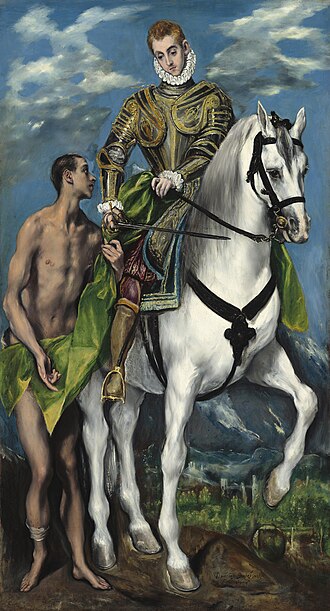 Saint Martin et le Mendiant - El Greco (1597)
.jpg) L'Adoration des bergers - El Greco (1612)
L'Adoration des bergers - El Greco (1612)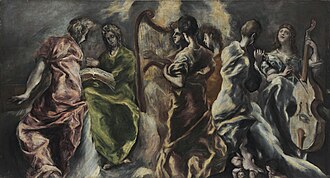 Le Concert des anges - El Greco (1600s)
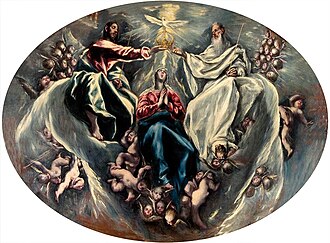 Le couronnement de la Vierge - El Greco (1597)
Œuvres d'artistes liés
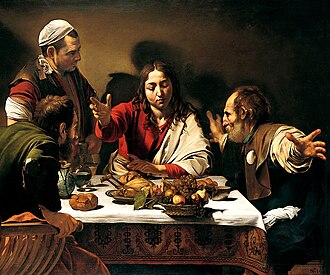 Le Souper à Emmaüs - Caravaggio (1601)
 La Vocation de saint Matthieu - Caravaggio (1609)