Laocoon
Le Greco · 1610s
%20-%20Laoco%C3%B6n%20-%20Google%20Art%20Project.jpg)
A Trojan priest who warned against the wooden horse lies dying among serpents, and behind him the horse trots toward Toledo. It is El Greco's only mythological painting.
The story behind the painting
El Greco painted Laocoön between 1610 and 1614, late in his long career in Toledo, Spain, where he had settled in 1577 as a church painter after training as an icon painter in Crete and studying in Venice and Rome. The subject comes from the story of the Trojan War. Laocoön, a Trojan priest of Poseidon, warned his people that the wooden horse was a deadly fraud. They ignored him, and the gods, who favoured the Greeks, sent sea serpents to kill him and his two sons. The tale appears in Virgil's Aeneid. It is El Greco's only painting of a mythological subject.
What to look for
In the foreground, on dark, undulating rocks, Laocoön lies in agony against the foreshortened body of one dead son while a serpent bites his head. On the left his other son stands, twisting as a serpent swoops toward him. On the right, Apollo and Artemis calmly watch, and an unfinished figure, only a head and a leg, also appears. The bodies are elongated and contorted, in murky yellows and greens. Behind them lies a gloomy Toledo under swirling grey clouds, and a small Trojan horse moves toward the city.
Meaning and intent
El Greco knew the famous ancient marble Laocoön and His Sons, unearthed in Rome in 1506 and admired for its ideal proportions. Yet he deliberately abandoned that balance. His painting belongs to Mannerism, which rejected High Renaissance harmony for elongated figures and emotional intensity. Placing Troy's tragedy before Toledo may reflect a local legend that the people of Toledo descended from the Trojans. Scholars debate his message: it may allude to local tradition or comment on the turmoil of the Reformation, but its spiritual and suffering mood is unmistakable.
Legacy
The painting is now in the National Gallery of Art in Washington, D.C., part of the Samuel H. Kress Collection, and measures about 142 by 193 cm. It is seen as a high point of Mannerism, which, according to the source, reached its height with El Greco. The pairing of intense religious feeling with Mannerist forms that it shows would become a defining part of Spanish Renaissance art. The subject is violent, but El Greco turns it less into spectacle than into a vision of a world of suffering.
Le saviez-vous ?
- Painted between 1610 and 1614 (Wikipedia).
- El Greco's only mythological painting.
- Background shows Toledo and the Trojan horse.
- National Gallery of Art, Washington, Samuel H. Kress Collection.
À propos de l'artiste
Le Greco (1541-1614)
peinture mythologique · National Gallery of Art
Autres œuvres de Le Greco
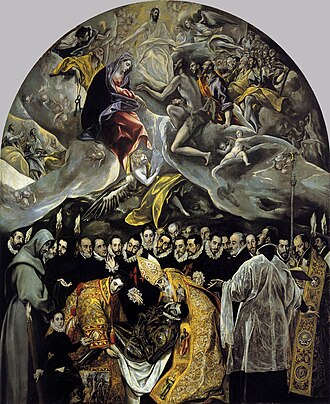 L'Enterrement du comte d'Orgaz - El Greco (1586)
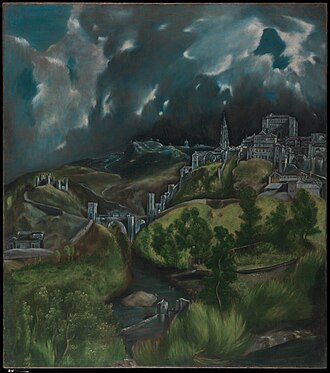 Vue de Tolède - El Greco (1596)
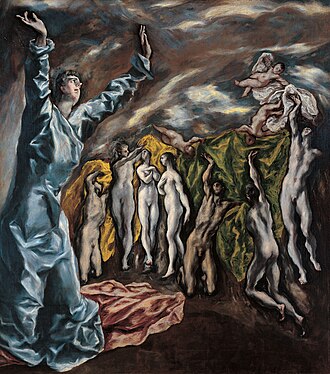 L'Ouverture du cinquième sceau - El Greco (1610)
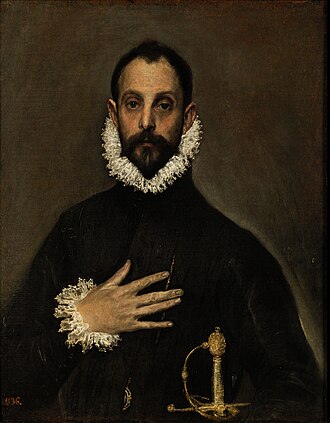 Le Gentilhomme à la main sur la poitrine - El Greco (1580)
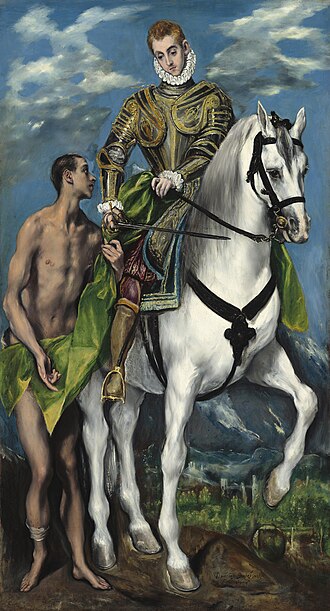 Saint Martin et le Mendiant - El Greco (1597)
.jpg) L'Adoration des bergers - El Greco (1612)
L'Adoration des bergers - El Greco (1612)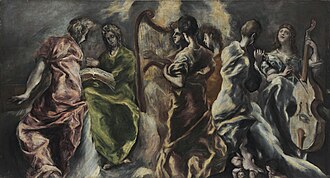 Le Concert des anges - El Greco (1600s)
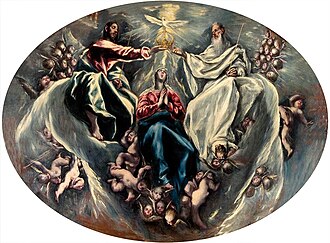 Le couronnement de la Vierge - El Greco (1597)
Œuvres d'artistes liés
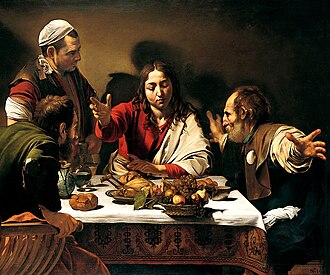 Le Souper à Emmaüs - Caravaggio (1601)
 La Vocation de saint Matthieu - Caravaggio (1609)