The Blessed Damozel
Dante Gabriel Rossetti · 1879
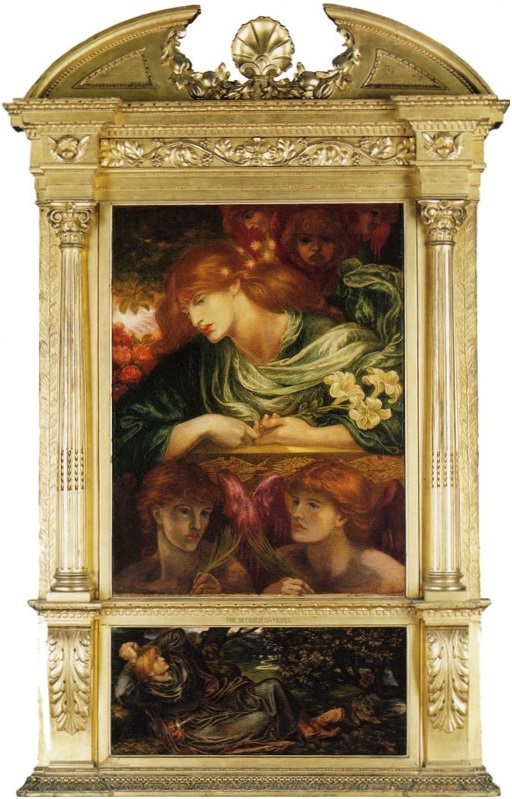
A girl leans from the gold bar of heaven, longing for the lover she left on earth. Rossetti painted her twice, and this 1879 canvas is the only replica of the original.
The story behind the painting
The Blessed Damozel is one of Rossetti's best-known poems, first published in 1850 in the Pre-Raphaelite journal The Germ. He painted the original picture between 1875 and 1878, and this smaller canvas of 1879 is its only replica. In a letter of 27 April 1879 Rossetti said he was working on three pictures, this one among them. By November he wrote anxiously to Jane Morris that it was still unsold, and it still had no buyer in June 1880. The shipping magnate Frederick Richards Leyland, building up his drawing room, first declined, then changed his mind.
What to look for
Compare it with the original to see what Rossetti changed. In the original, a group of lovers appears in the background; in the replica they are replaced by three cherubs. The original has three angels below the damozel; the replica has two. The frames differ too: the original has one set with medallions, the replica a Baroque-style frame. The first four stanzas of the poem, which inspired both versions, are inscribed on the base of the original's frame. The replica measures about 111 by 83 cm.
Meaning and intent
Both pictures are built on the words of the poem, so the painting is less an invention than a reading of Rossetti's own verse. The replica was also bound up with Rossetti's difficult relationship with his patron. At the time he was finishing La Pia de Tolomei for Leyland and could not complete a painting of a hero that Leyland had commissioned years before. Leyland agreed to take the Blessed Damozel replica in place of that unpainted hero. On 30 January 1881 Rossetti wrote to Frederic Shields that Leyland had been there again and seemed likely to buy it, and the next day the payment arrived.
Legacy
After Leyland's death the painting was sold at Christie's on 28 May 1892 to Mrs O'Brien, later Lady Inchiquin. It was shown at the Burlington Fine Arts Club in 1883, the New Gallery in 1897, the Franco-British Exhibition in Paris in 1908, Port Sunlight in 1948, Paris again in 1972, the Royal Academy in 1973, and Rotterdam and Paris in 1976. Today it hangs in the Lady Lever Art Gallery. The source is the Spanish Wikipedia article on the replica.
Le saviez-vous ?
- The only replica of Rossetti's The Blessed Damozel.
- Based on his poem first published in 1850 in The Germ.
- Three cherubs replace the lovers of the original.
- Lady Lever Art Gallery.
À propos de l'artiste
Dante Gabriel Rossetti (1828-1882)
Autres œuvres de Dante Gabriel Rossetti
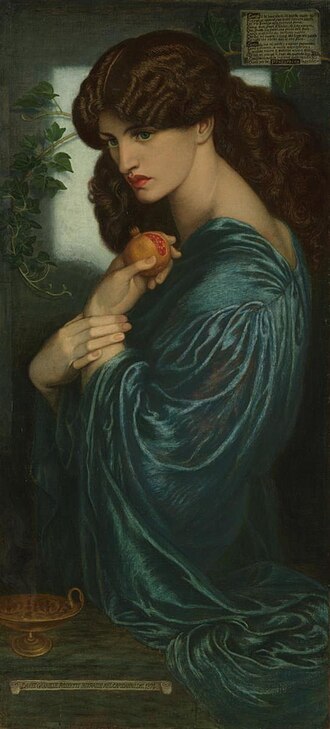 Perséphone - Dante Gabriel Rossetti (1874)
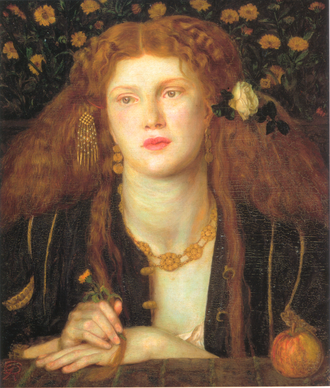 Bocca Baciata - Dante Gabriel Rossetti (1859)
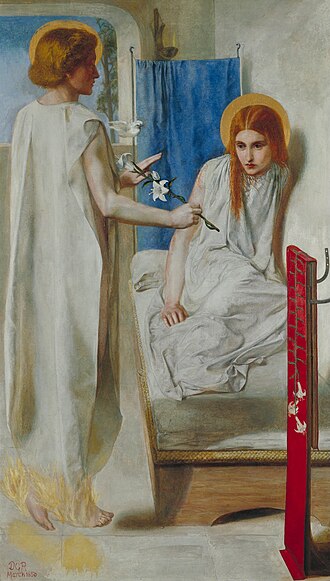 Ecce Ancilla Domini - Dante Gabriel Rossetti (1850)
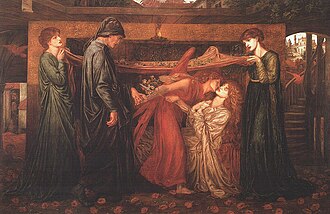 Le Rêve de Dante - Dante Gabriel Rossetti (1871)
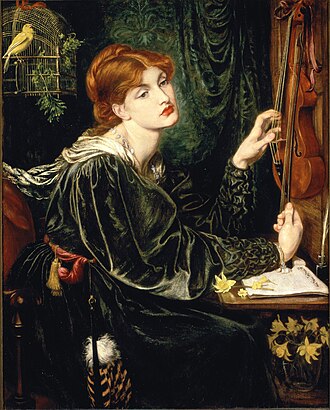 Veronica Veronese - Dante Gabriel Rossetti (1872)
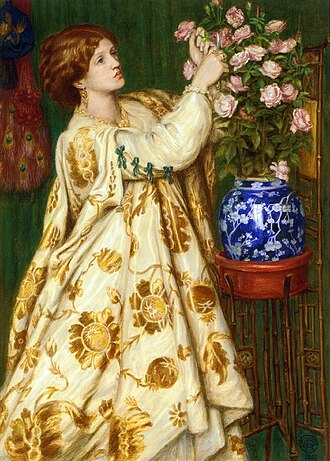 Monna Rosa - Dante Gabriel Rossetti (1867)
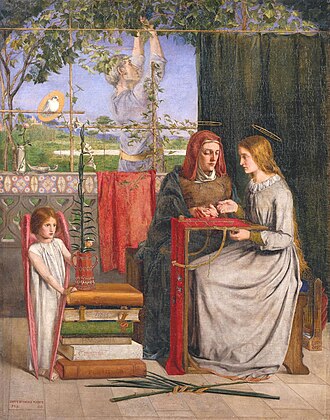 L’Enfance de la Vierge Marie - Dante Gabriel Rossetti (1840s)
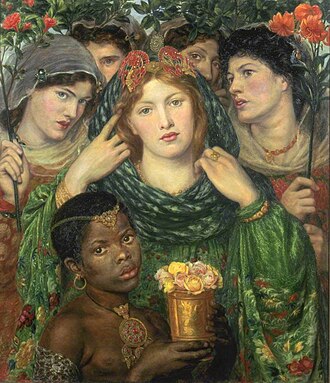 La Bien-Aimée ou La Mariée - Dante Gabriel Rossetti (1865)
Œuvres d'artistes liés
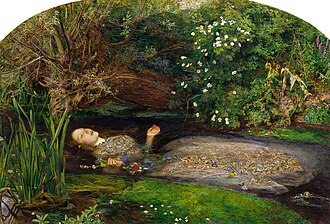 Ophélie - John Everett Millais (1851)
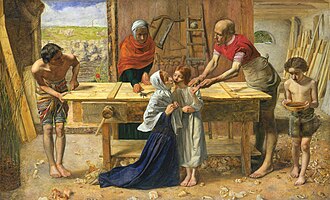 Le Christ dans la maison de ses parents - John Everett Millais (1849)
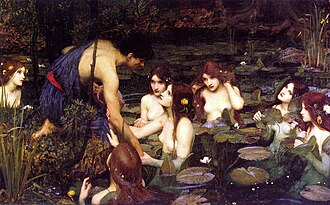 Hylas et les nymphes - John William Waterhouse (1896)
 The Lady of Shalott - John William Waterhouse (1888)