Veronica Veronese
Dante Gabriel Rossetti · 1872
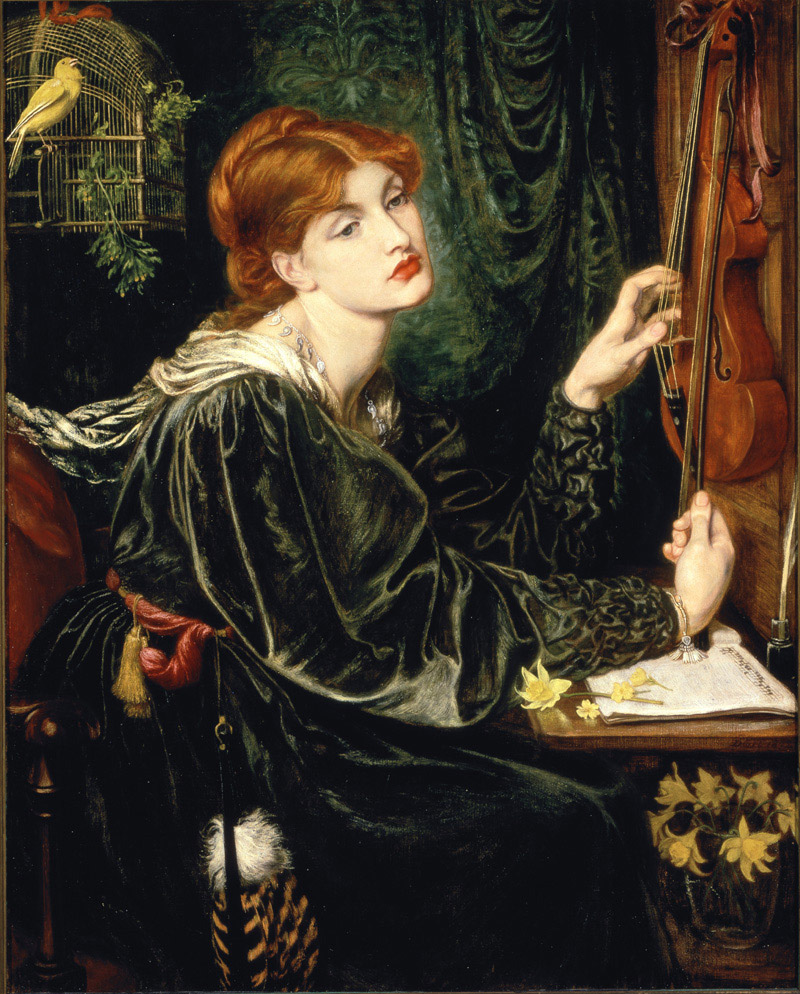
A woman in a green dress pauses with her violin, listening to a bird before she plays. Rossetti painted her in 1872 as the artistic soul in the act of creation.
The story behind the painting
Rossetti painted Veronica Veronese in 1872, with Alexa Wilding as his model. He conceived it as a companion to his earlier Lady Lilith. Like much of his work of the 1860s and 1870s, the picture was inspired by Venetian painting. Rossetti sold it to one of his best clients, the shipping magnate Frederick Richards Leyland, who hung it in his drawing room alongside five other Rossetti paintings that he called his stunners.
What to look for
Look at the left hand straying over the strings while the bow waits, and at the bird that has slipped out of its cage. Inside the cage is camomile, which may stand for energy in adversity; primroses suggest youth and daffodils reflection. The objects have their own stories. Jane Morris lent the green dress, the violin came from Rossetti's own collection of instruments, the fan also appears in his Monna Vanna, and the few bars of music on the page may have been borrowed from George Boyce.
Meaning and intent
The painting is believed to represent the artistic soul in the act of creation. A quotation on the frame tells how Lady Veronica wrote the first notes on a virgin page, then stopped to listen to the inspiring bird before playing, searching for a melody still out of reach. The frame credits the text to the Letters of Girolamo Ridolfi, but the quote is fictitious, and critics believe that Algernon Charles Swinburne or Rossetti himself wrote it. The freed bird may stand for the marriage of the voices of nature and the soul.
Legacy
After Leyland's estate sale at Christie's on 28 May 1892, the painting changed hands three times until it was bought by Charles Fairfax Murray, himself a Pre-Raphaelite artist. His son John Edward Murray sold it in 1923 to the estate of Samuel Bancroft, whose family built one of the largest Pre-Raphaelite collections outside the United Kingdom and gave it to the Delaware Art Museum in 1935. It was shown in London in 1883, and later in Washington, Richmond, London, Birmingham and Williamstown.
Le saviez-vous ?
- Painted in 1872 with Alexa Wilding as the model.
- Conceived as a companion to Lady Lilith.
- The quotation on the frame is fictitious.
- In the Delaware Art Museum since 1935.
À propos de l'artiste
Dante Gabriel Rossetti (1828-1882)
Autres œuvres de Dante Gabriel Rossetti
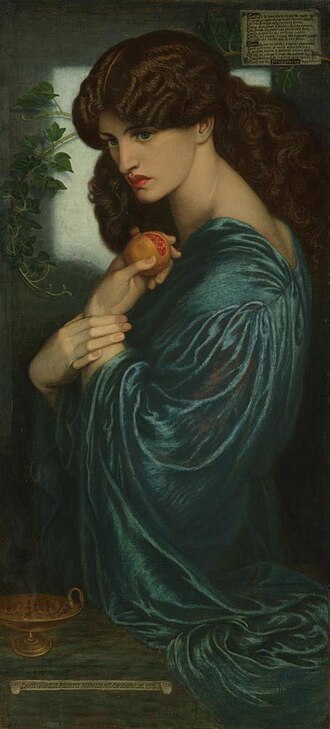 Perséphone - Dante Gabriel Rossetti (1874)
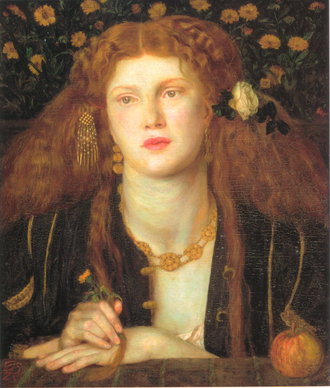 Bocca Baciata - Dante Gabriel Rossetti (1859)
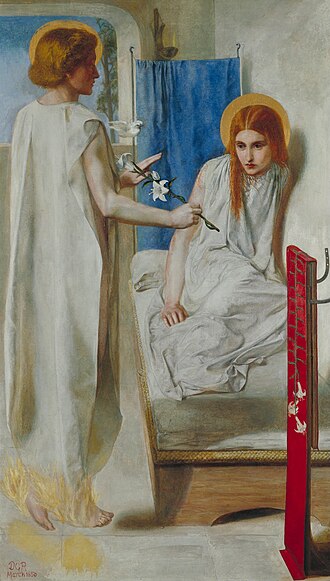 Ecce Ancilla Domini - Dante Gabriel Rossetti (1850)
.jpg) Le Rêve de Dante - Dante Gabriel Rossetti (1871)
Le Rêve de Dante - Dante Gabriel Rossetti (1871).jpg) Monna Rosa - Dante Gabriel Rossetti (1867)
Monna Rosa - Dante Gabriel Rossetti (1867)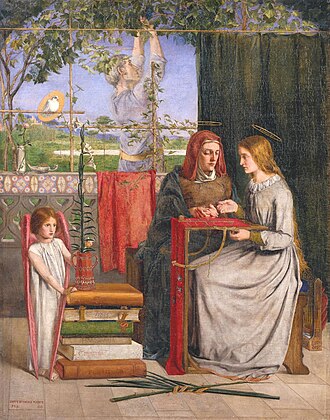 L’Enfance de la Vierge Marie - Dante Gabriel Rossetti (1840s)
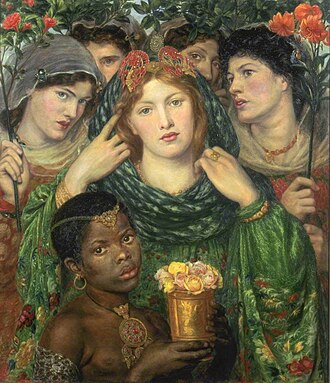 La Bien-Aimée ou La Mariée - Dante Gabriel Rossetti (1865)
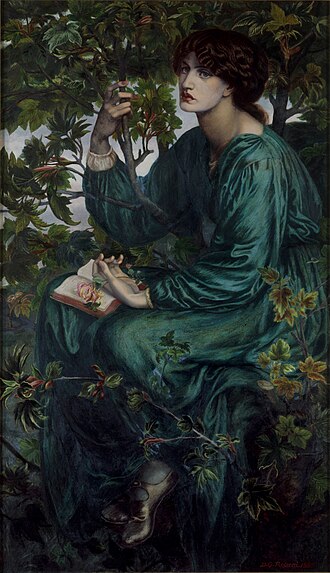 The Day Dream - Dante Gabriel Rossetti (1880)
Œuvres d'artistes liés
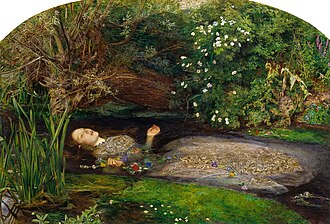 Ophélie - John Everett Millais (1851)
%20-%20Google%20Art%20Project.jpg) Le Christ dans la maison de ses parents - John Everett Millais (1849)
Le Christ dans la maison de ses parents - John Everett Millais (1849) Hylas et les nymphes - John William Waterhouse (1896)
.jpg) The Lady of Shalott - John William Waterhouse (1888)
The Lady of Shalott - John William Waterhouse (1888)