St. John the Baptist, Valencia
Le Greco · 1600
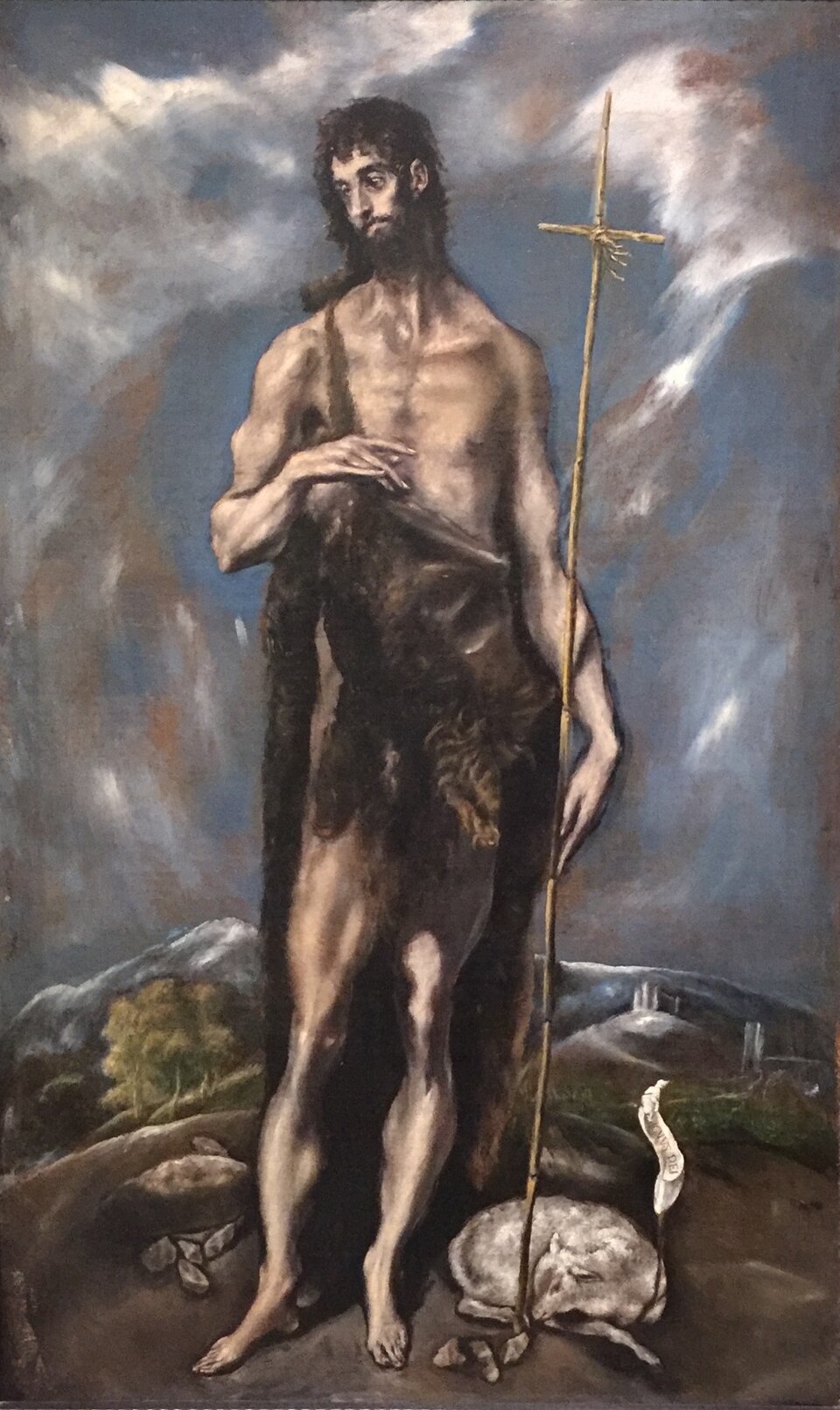
A young prophet in animal skins points down at a lamb while turning his head away, against a stormy sky. For years this canvas looked dull, until a cleaning in 1991 brought back its sparkling light.
The story behind the painting
El Greco painted Saint John the Baptist in two autograph versions that are almost identical. This one is in the Museo de Bellas Artes in Valencia, catalogue number 499; the other, larger and considered finer, is in the Fine Arts Museums of San Francisco. The theme recalls a passage from the Gospel of Luke (1:76-77), in which John is told he will be called the prophet of the Most High and will go before the Lord to prepare his way. The article dates the Valencia canvas to around 1600 to 1605, while Wikidata gives 1600.
What to look for
John is shown at about thirty years old, dressed in skins, holding in his left arm a long staff ending in a cross. In the lower right corner lies a lamb, the Agnus Dei, resting on the ground, not on a rock as in the San Francisco version. The saint points to the lamb with the ring and middle fingers of his right hand while turning his head slightly the other way. Behind him a landscape spreads under a stormy sky that sets off his silhouette. The canvas, 103 by 62 cm, is signed in large brown cursive Greek letters on the oval rock at the left.
Meaning and intent
The gesture says everything: John, the forerunner, does not look at himself but points to the lamb, the sign of Christ who is coming after him, exactly the role the verse from Luke gives him. The contrast between the dark, restless sky and the lit figure turns a quiet devotional image into something charged. After the 1991 cleaning, the painting showed what the article calls a magical sense of light, with sparkling reflections in the landscape and on the saint himself, the kind of light that makes a still figure seem alive.
Legacy
Harold Wethey, who listed the work as number 251 in his catalogue of El Greco, noted its poor range of colour and suggested heavy collaboration by a pupil. The 1991 cleaning complicated that verdict by returning the colour the canvas had lost over time. Tiziana Frati lists it as 118-b. Wethey also mentioned three copies of this subject, all of doubtful quality. Seen side by side with its twin in San Francisco, the Valencia canvas shows how El Greco repeated a successful image while changing small details, like where the lamb rests.
Le saviez-vous ?
- One of two near identical autograph versions; the other is in San Francisco.
- Measures 103 by 62 cm, signed in Greek on a rock.
- Dated about 1600 to 1605; Wikidata says 1600.
- A cleaning in 1991 restored its lost colour.
À propos de l'artiste
Le Greco (1541-1614)
art religieux · maniérisme · Jean le Baptiste · agneau
Autres œuvres de Le Greco
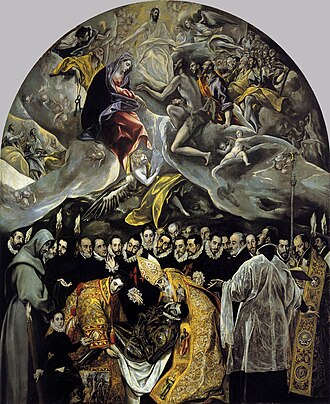 L'Enterrement du comte d'Orgaz - El Greco (1586)
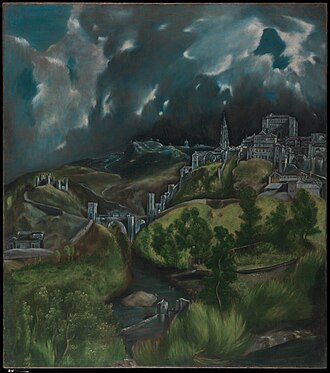 Vue de Tolède - El Greco (1596)
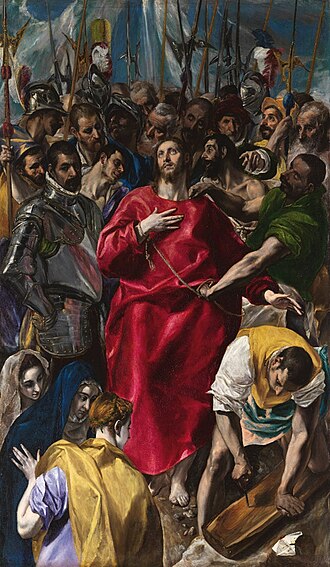 Le Dépouillement du Christ - El Greco (1570s)
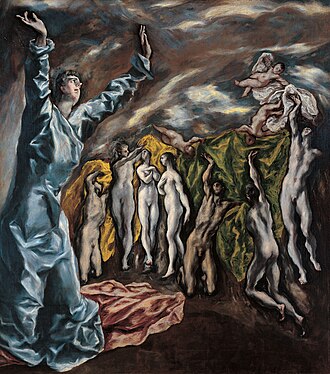 L'Ouverture du cinquième sceau - El Greco (1610)
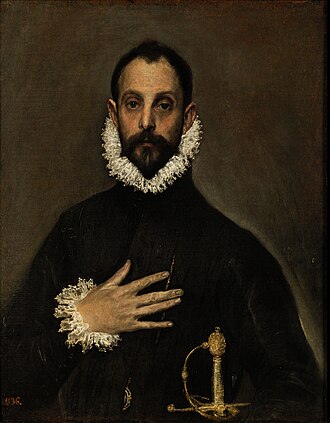 Le Gentilhomme à la main sur la poitrine - El Greco (1580)
%20-%20Laoco%C3%B6n%20-%20Google%20Art%20Project.jpg) Laocoon - El Greco (1610s)
Laocoon - El Greco (1610s)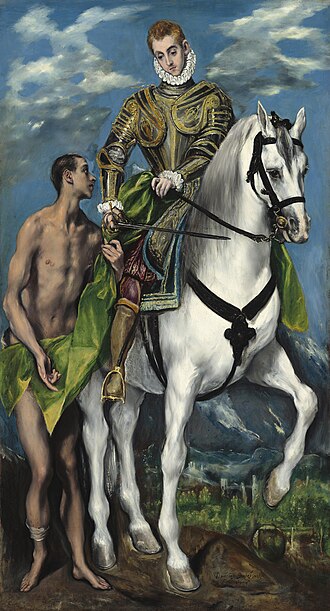 Saint Martin et le Mendiant - El Greco (1597)
.jpg) L'Adoration des bergers - El Greco (1612)
L'Adoration des bergers - El Greco (1612)
Œuvres d'artistes liés
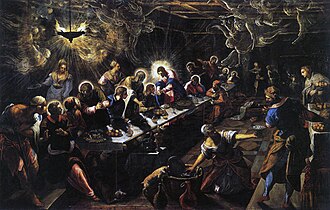 La Cène - Jacopo Tintoretto (1563)
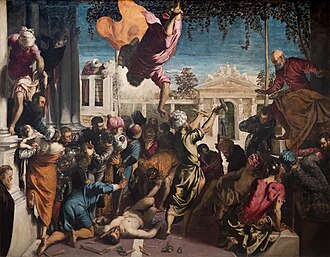 Miracle de l'esclave - Jacopo Tintoretto (1540s)
.jpg) Vénus d'Urbin - Titian (1538)
Vénus d'Urbin - Titian (1538)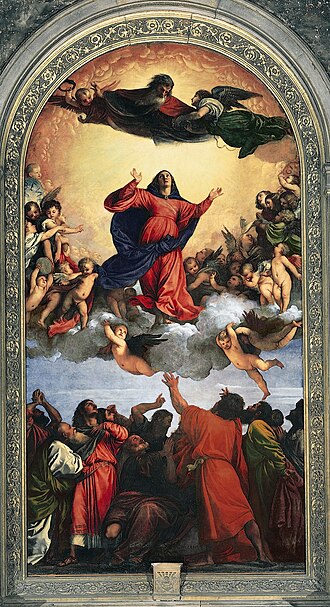 L'Assomption de la Vierge - Titian (1510s)
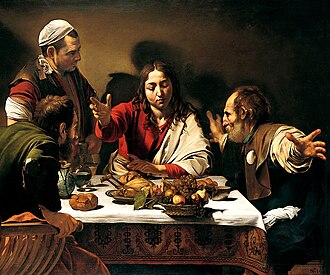 Le Souper à Emmaüs - Caravaggio (1601)
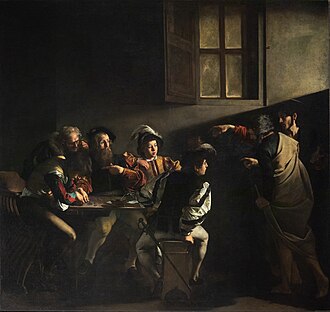 La Vocation de saint Matthieu - Caravaggio (1609)
 Les Ambassadeurs - Hans Holbein the Younger (1533)
 Le Christ mort - Hans Holbein the Younger (1520s)