Prédication de Jean-Baptiste
Paul Véronèse · 1562
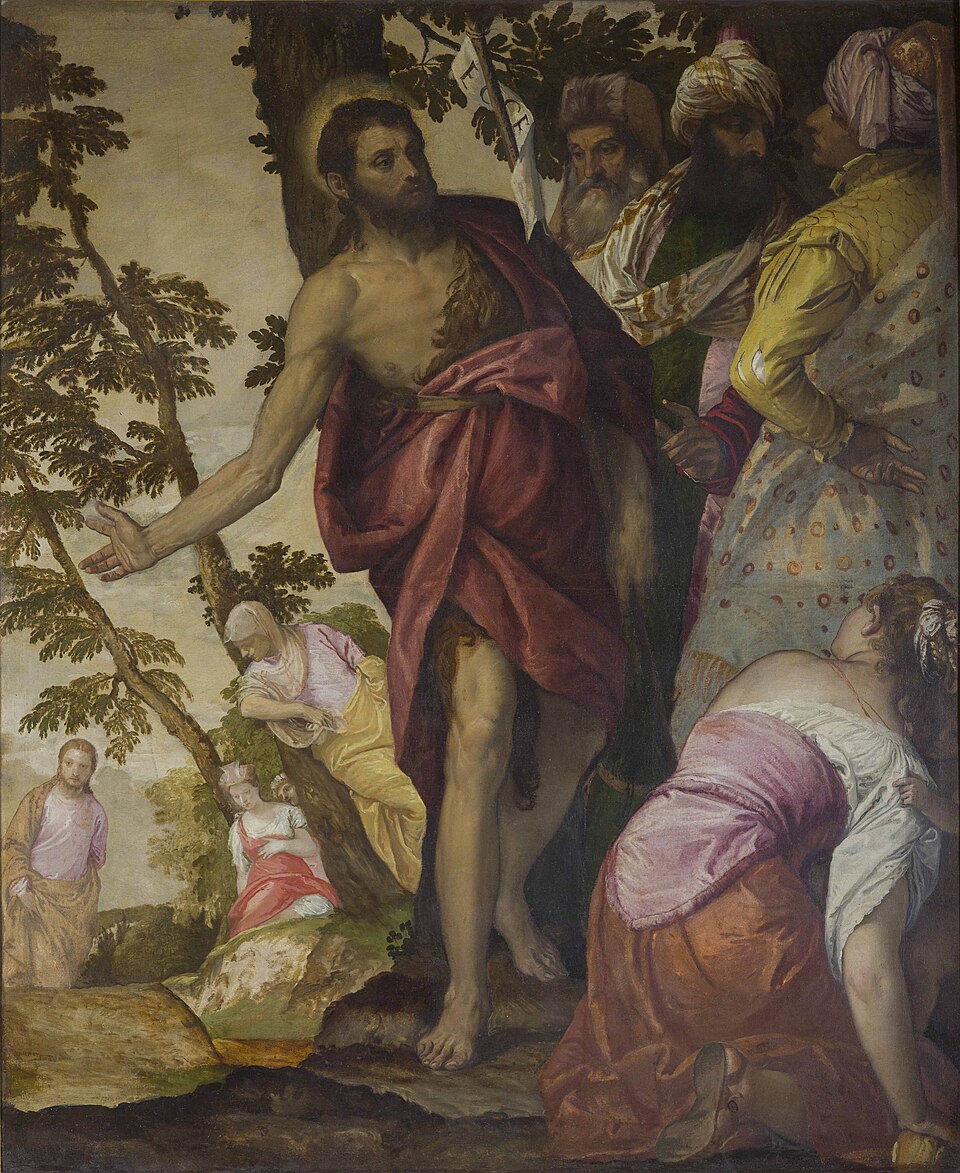
Barefoot in red robes and furs, John the Baptist points to Jesus with a banner that reads ECCE, behold. But his eyes are on three richly dressed men who answer him with doubt and contempt.
The story behind the painting
Veronese painted this sermon in 1562. In 1607 Francesco Barbaro, patriarch of Aquileia, gave it to Cardinal Scipione Borghese together with a second Veronese sermon, Saint Anthony Preaching to the Fish. Barbaro's letter mentions two paintings of sermons without much detail, and the Galleria Borghese has long owned these two. By 1613 both hung in Palazzo Torlonia, where the court poet Scipione Francucci described them in verse. In 1897 Giovanni Morelli contested the attribution to Veronese and gave the pair to Giovanni Battista Zelotti.
What to look for
John stands at the centre of a wilderness of spindly trees under a pinkish-yellow sky, as at dusk or dawn. His stick carries a white banner with the Latin word ECCE. His outstretched arm points to a bearded man in pink and gold entering from the lower left: Jesus, who looks off canvas almost as if lost. Three turbaned men fill the right third. One, head tilted back, hand on hip, wears gold and a sheer silk shawl; one interjects with thumb and finger pinched; a grey-bearded one rests his hand on his face. Below, a kneeling woman and child, and two women by the trees.
Meaning and intent
John acts here quite literally as a messenger announcing the coming of Jesus. The three turbaned figures likely represent rabbis or other Jewish elites, and their contrasting body language shows different reactions to his message: contempt and disbelief, argument, quiet thought. The kneeling woman looks up, one seated woman looks down, another looks back at Jesus. Veronese's lavish rendering of fabrics may also reflect on the quality of Venetian textiles, a theme found in the work of Palma Vecchio.
Legacy
The canvas, 205 by 169 cm, remains in the Galleria Borghese in Rome, still paired with the Saint Anthony sermon that arrived alongside it more than four centuries ago. Wikidata lists it under both the Borghese Collection and the Galleria Borghese. The doubt Morelli raised over its authorship is part of its story, but the painting remains a vivid scene of a single message received in many different ways by the people around it.
Le saviez-vous ?
- Painted by Paolo Veronese in 1562.
- Gift of Francesco Barbaro to Scipione Borghese in 1607.
- John's banner reads ECCE, Latin for behold.
- Oil on canvas, 205 by 169 cm.
À propos de l'artiste
Paul Véronèse (1528-1588)
art religieux · femme · homme · Jésus-Christ · École vénitienne · arbre · paysage · Jean le Baptiste · Galerie Borghèse · collection Borghèse
Autres œuvres de Paul Véronèse
 Les Noces de Cana - Paolo Veronese (1560s)
 Le Repas chez Levi - Paolo Veronese (1573)
 Vénus et Adonis - Paolo Veronese (1580)
 Allégorie du Vice et de la Vertu - Paolo Veronese (1565)
 Vénus et Mars - Paolo Veronese (1570s)
 La Famille de Darius devant Alexandre - Paolo Veronese (1565)
 The Conversion of Mary Magdalene - Paolo Veronese (1548)
 Bethsabée au bain - Paolo Veronese (1575)
Œuvres d'artistes liés
 L'Enterrement du comte d'Orgaz - El Greco (1586)
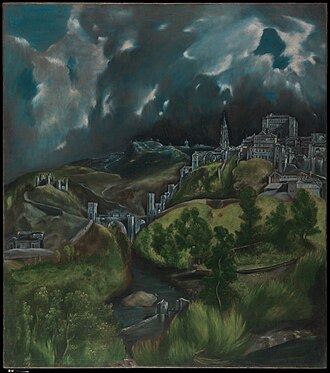 Vue de Tolède - El Greco (1596)
 La Cène - Jacopo Tintoretto (1563)
 Miracle de l'esclave - Jacopo Tintoretto (1540s)
 Vénus d'Urbin - Titian (1538)
 L'Assomption de la Vierge - Titian (1510s)
 Le Souper à Emmaüs - Caravaggio (1601)
 La Vocation de saint Matthieu - Caravaggio (1609)
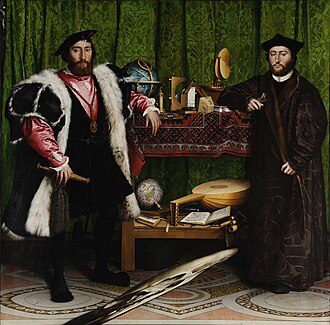 Les Ambassadeurs - Hans Holbein the Younger (1533)
 Le Christ mort - Hans Holbein the Younger (1520s)