Allégorie du Vice et de la Vertu
Paul Véronèse · 1565
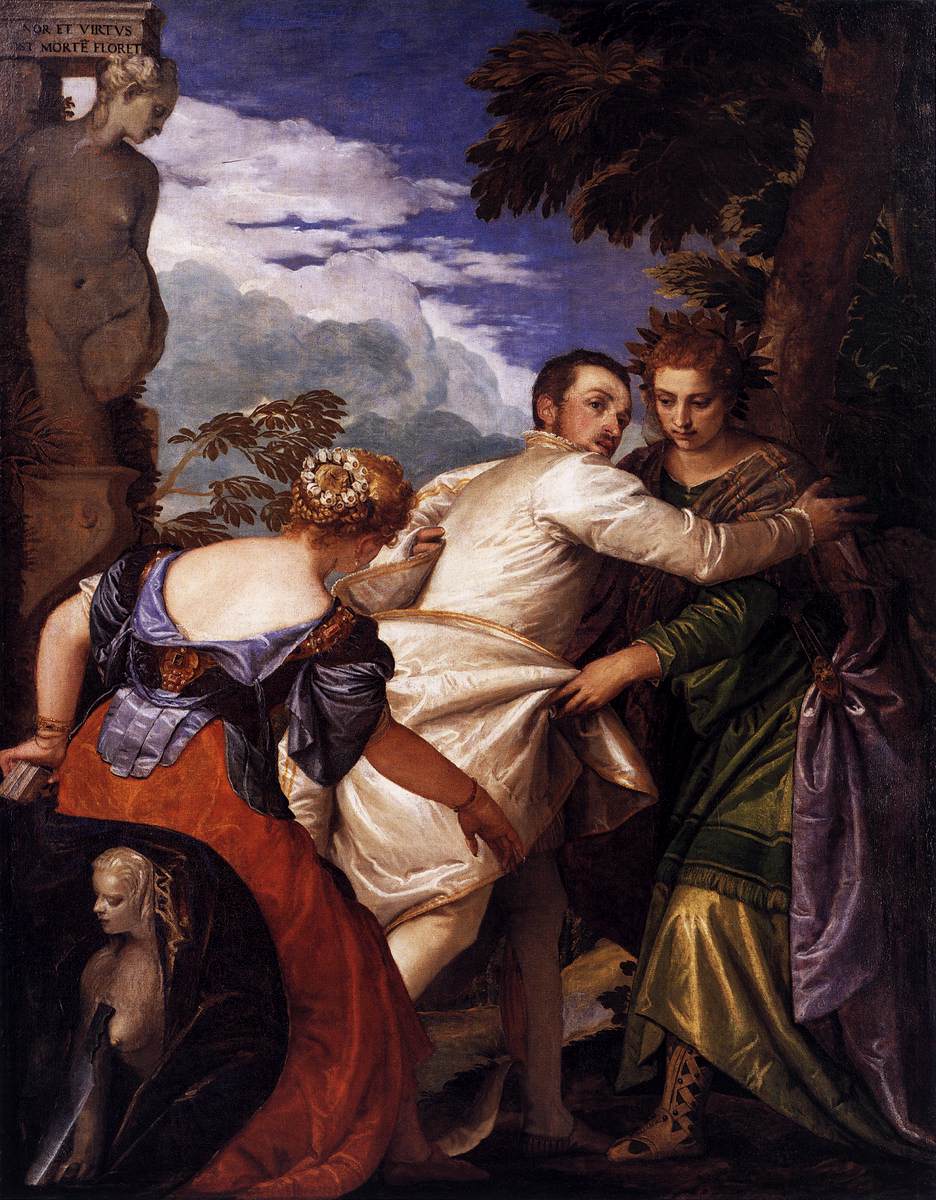
Two women pull a young Hercules in opposite directions, and one has already torn his stocking. Veronese painted this tug of war between virtue and vice in Venice around 1565.
The story behind the painting
Painted in Venice around 1565, the picture is also known as The Choice Between Virtue and Vice or The Choice of Hercules. It is a large canvas, about 219 by 170 cm, now in the Frick Collection in New York. Scholars believe that this work and Wisdom and Strength, also at the Frick, were Veronese's first allegories, a genre that sets them apart from his famous crowded biblical and historical scenes such as The Wedding at Cana, and from the less formal works of Venetian painters like Giorgione or Titian.
What to look for
Follow the hands. Hercules is caught between two women who physically drag him in different directions. Virtue seems to be winning, but Vice has torn his stocking and still reaches out for him. Look behind her skirt: a dagger is hidden there, along with a statue of a sphinx. On the stonework above the scene runs an inscription in Latin that reads, in translation, Honor and Virtue Flourish after Death. The struggle is told with bodies and fabric rather than with faces alone, so the eye keeps moving from one pull to the other.
Meaning and intent
As an allegory, the painting exists to carry a moral message: virtue is superior to vice. The hidden dagger warns that pleasure carries danger, and the torn stocking shows that the temptation leaves its mark even on a hero who chooses well. The inscription promises that the reward for choosing virtue comes after death, in honour that lasts. It is a choice every viewer is meant to recognise, staged as a physical contest so that the moral feels urgent rather than abstract.
Legacy
This canvas and Wisdom and Strength are thought to be Veronese's first works to cross the Alps, and they have travelled together ever since, through Emperor Rudolph II, Queen Christina of Sweden, the Odescalchi family and the Orleans collection of Philippe II, Duke of Orleans, then English owners and dealers, before reaching the Frick. Because they moved together, many scholars assumed they were a pair. In 1970 Edgar Munhall first suggested they were only made at the same time, and research at the Metropolitan Museum of Art in the 2000s confirmed they were painted individually.
Le saviez-vous ?
- Painted in Venice around 1565.
- Also called The Choice of Hercules.
- Owned by Rudolph II and Queen Christina of Sweden.
- Not a pendant to Wisdom and Strength, as studies in the 2000s showed.
À propos de l'artiste
Paul Véronèse (1528-1588)
maniérisme · allégorie · The Frick Collection · Héraclès
Autres œuvres de Paul Véronèse
 Les Noces de Cana - Paolo Veronese (1560s)
.jpg) Le Repas chez Levi - Paolo Veronese (1573)
Le Repas chez Levi - Paolo Veronese (1573).jpg) Vénus et Adonis - Paolo Veronese (1580)
Vénus et Adonis - Paolo Veronese (1580) Vénus et Mars - Paolo Veronese (1570s)
 La Famille de Darius devant Alexandre - Paolo Veronese (1565)
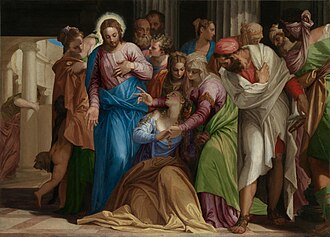 The Conversion of Mary Magdalene - Paolo Veronese (1548)
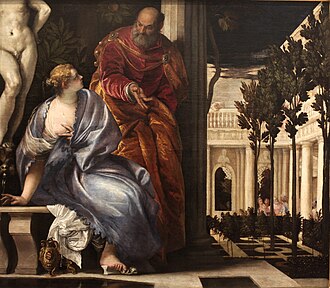 Bethsabée au bain - Paolo Veronese (1575)
%20grande.jpg) Christ Among the Doctors - Paolo Veronese (1560)
Christ Among the Doctors - Paolo Veronese (1560)
Œuvres d'artistes liés
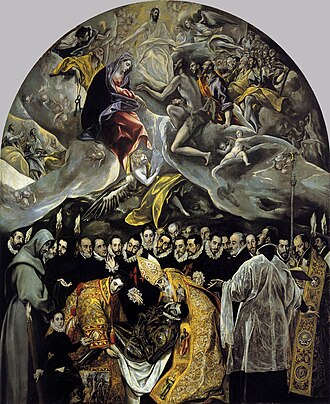 L'Enterrement du comte d'Orgaz - El Greco (1586)
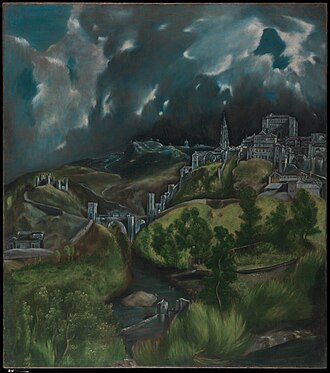 Vue de Tolède - El Greco (1596)
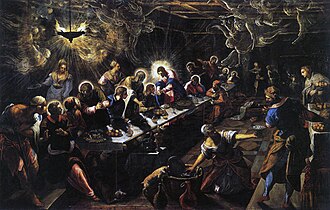 La Cène - Jacopo Tintoretto (1563)
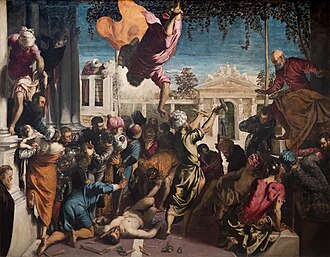 Miracle de l'esclave - Jacopo Tintoretto (1540s)
.jpg) Vénus d'Urbin - Titian (1538)
Vénus d'Urbin - Titian (1538)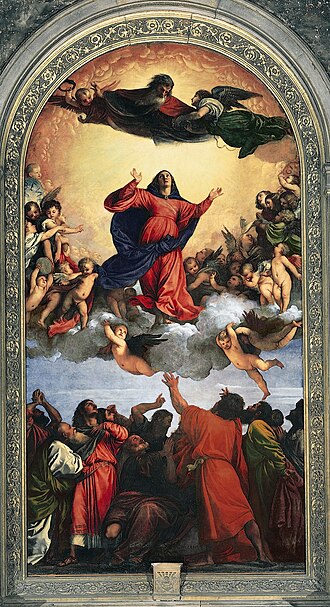 L'Assomption de la Vierge - Titian (1510s)
 Le Souper à Emmaüs - Caravaggio (1601)
 La Vocation de saint Matthieu - Caravaggio (1609)
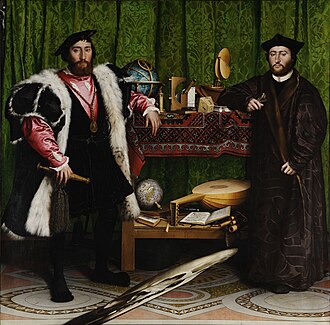 Les Ambassadeurs - Hans Holbein the Younger (1533)
 Le Christ mort - Hans Holbein the Younger (1520s)