Portrait de Don Garcia Ibañez de Mugica Bracamonte
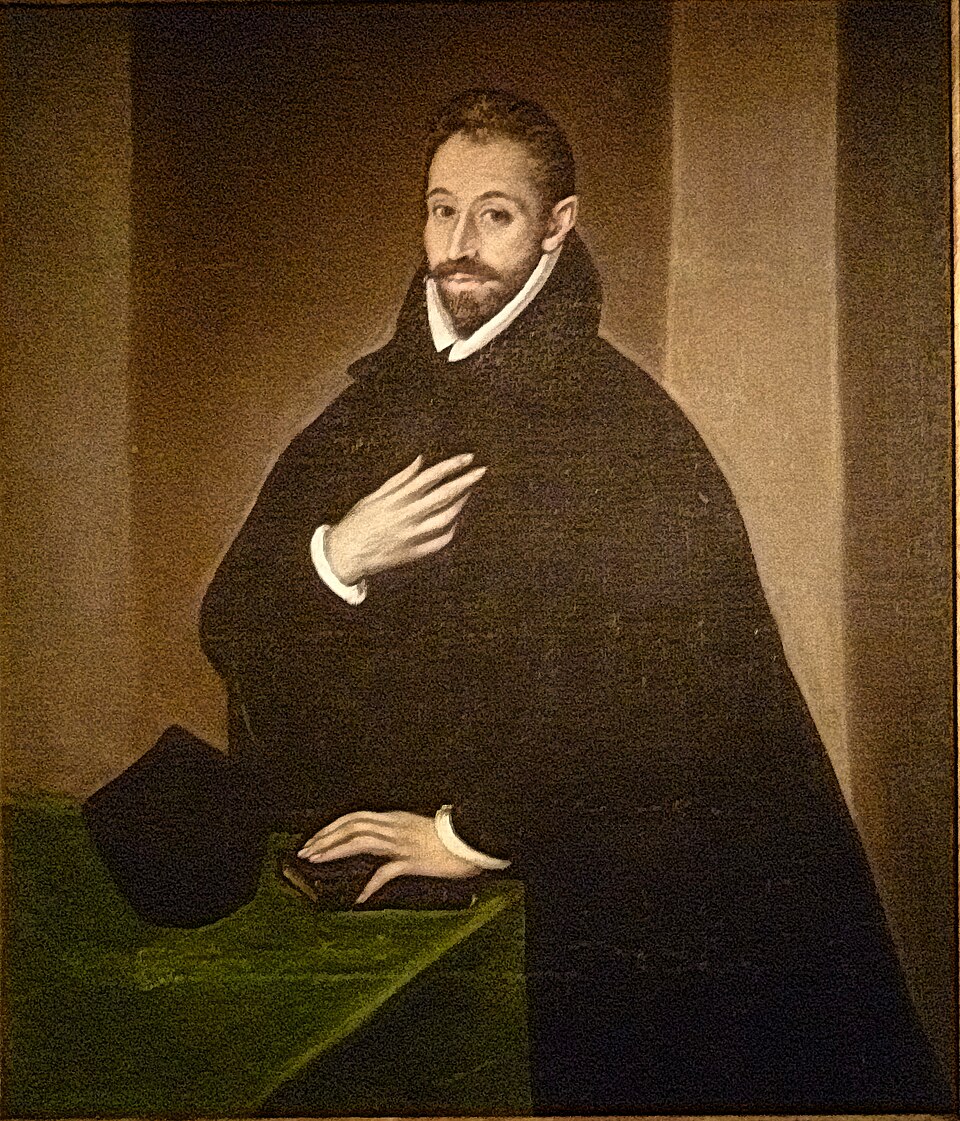
A gaunt man in black stands at a green-covered table, one hand on a closed book, the other on his chest. Some experts see El Greco's hand, others a follower's, and the soft, strange hands may point to his son.
The story behind the painting
The sitter, Don Garcia Ibanez de Mugica de Bracamonte, came from a Basque family of hidalgos who were not part of the high nobility and owned a tower house in Ordizia, in Gipuzkoa. He rose to the highest circles of power by marrying Aldonza de Bracamonte, daughter of Juan de Bracamonte, lord of Fuente el Sol, and of Teresa de Vargas, a resident of Avila. Through this marriage he joined the powerful Bracamonte family. The painting, an oil on canvas of about 120 by 100 cm, belongs to the museum of Avila Cathedral.
What to look for
He is shown at half length, standing before a table covered with a green cloth. His left hand rests on a closed book next to a biretta, while his right lies on his chest. A narrow white collar and white cuffs separate his sharp face and his hands from the black clothing, and the black figure stands out against a dark background that contrasts with the green cloth. Look at the hands: they show a softness and deformation unusual in El Greco's portraits. Note too the vertical rhythms of the background, which bring out the structure of the wall.
Meaning and intent
The painting raises the question of who really made it. Wethey judged it an early 17th-century work by a follower of El Greco, saying its colour, technique and drawing are not his, even after the canvas was cleaned in 1963. Gudiol, despite its poor condition, held it to be authentic, though without the interest in the person found in El Greco's best portraits; the right hand repeats almost exactly the gesture in the Portrait of Francisco de Pisa. The odd hands suggest the involvement of his son, Jorge Manuel Theotocopuli.
Legacy
Manuel Cossio, Elizabeth du Gue Trapier, Mayer and Camon Aznar all accepted the canvas as an authentic El Greco, while Wethey placed it among the works of his school and numbered it X-169 in his catalogue. The portrait therefore sits on the border between the master and his workshop, a good example of how hard it can be to separate the two. It remains in Avila, the city of the Bracamonte family into which its sitter married, in the museum of the cathedral.
Le saviez-vous ?
- Attributed to El Greco, catalogued by Wethey as X-169.
- Held in the museum of Avila Cathedral.
- Wethey saw a follower's work; Cossio and Gudiol saw El Greco.
- The unusual hands may show the hand of Jorge Manuel.
À propos de l'artiste
Le Greco (1541-1614)
Autres œuvres de Le Greco
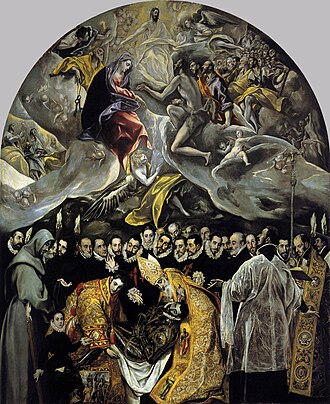 L'Enterrement du comte d'Orgaz - El Greco (1586)
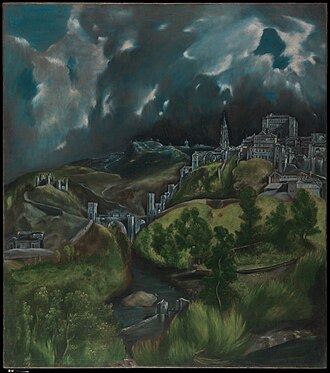 Vue de Tolède - El Greco (1596)
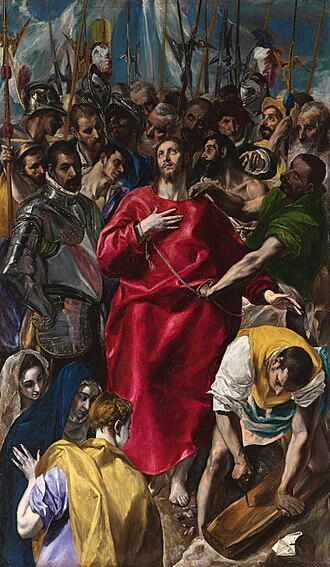 Le Dépouillement du Christ - El Greco (1570s)
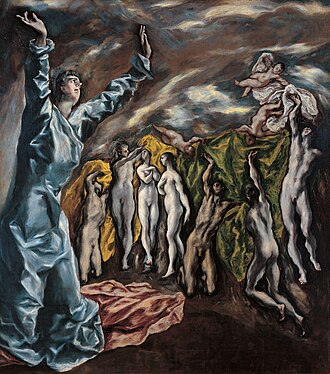 L'Ouverture du cinquième sceau - El Greco (1610)
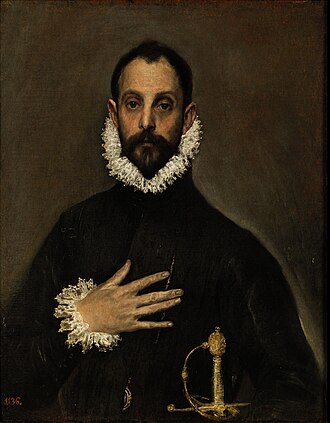 Le Gentilhomme à la main sur la poitrine - El Greco (1580)
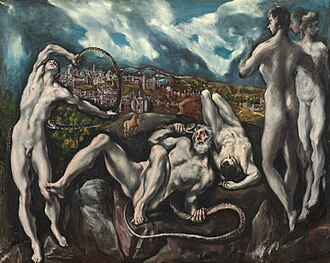 Laocoon - El Greco (1610s)
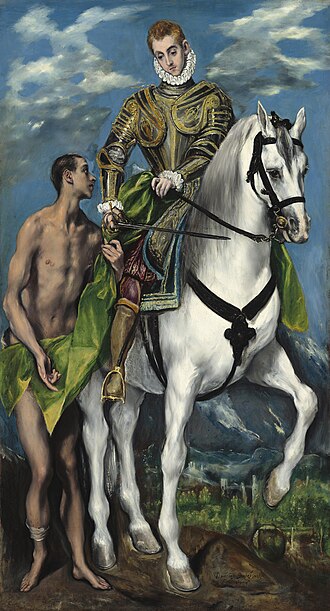 Saint Martin et le Mendiant - El Greco (1597)
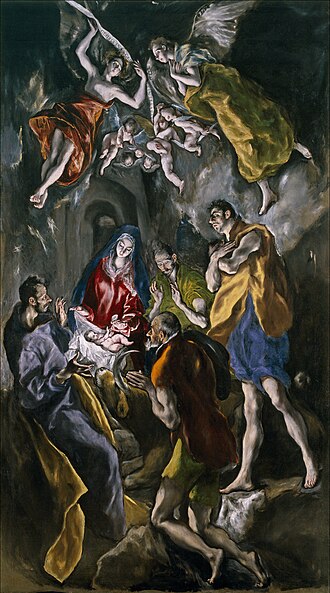 L'Adoration des bergers - El Greco (1612)
Œuvres d'artistes liés
 Les Noces de Cana - Paolo Veronese (1560s)
 Le Repas chez Levi - Paolo Veronese (1573)
 La Cène - Jacopo Tintoretto (1563)
 Miracle de l'esclave - Jacopo Tintoretto (1540s)
 Vénus d'Urbin - Titian (1538)
 L'Assomption de la Vierge - Titian (1510s)
 Le Souper à Emmaüs - Caravaggio (1601)
 La Vocation de saint Matthieu - Caravaggio (1609)
 Les Ambassadeurs - Hans Holbein the Younger (1533)
 Le Christ mort - Hans Holbein the Younger (1520s)