Portrait of a Gentleman
Le Greco · 1600s
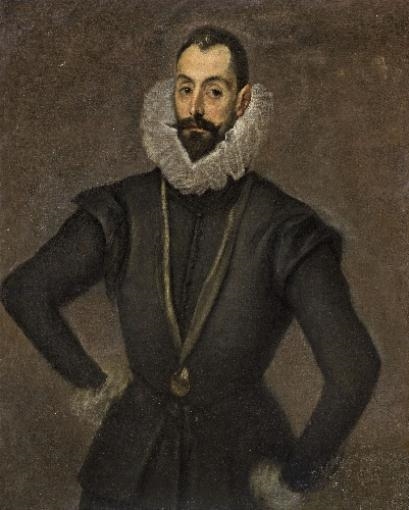
An unfinished gentleman, his hands hidden in his cuffs, his clothes only sketched in, but his face unmistakably El Greco's. Scholars still disagree whether the master painted it himself.
The story behind the painting
This portrait of a hidalgo, or gentleman, is dated to around 1607 and attributed to El Greco. It is oil on canvas, 108 by 86 cm, and appears as number X-175 in the catalogue raisonné by Harold Wethey, the historian who specialised in the artist. The painting is unfinished and in poor condition. It has been cleaned too harshly, and little of the original paint remains. Wikidata simply places it in the 1600s, so the date of about 1607 comes from the Spanish Wikipedia.
What to look for
The gentleman is shown at more than half length. His hands are not visible, hidden by his cuffs, and his costume is only summarily painted. The face, however, is typical of El Greco, both in its type and in the way it is painted. Look at that face first: it is the part where the hand of the painter is clearest. The contrast between the careful head and the sketched clothing is part of what makes an unfinished canvas so revealing.
Meaning and intent
The question of authorship divides the experts. Mayer, Gudiol and Camón Aznar consider it an authentic work. Gudiol saw in it a skill that even El Greco's best collaborators would not have reached. Wethey, on the other hand, classed it as a work of the workshop or school of El Greco. The painting therefore hangs between two judgments, and its damaged surface makes the question harder to settle, perhaps for good.
Legacy
Its history before the Minneapolis collector Herschel V. Jones bought it was reconstructed by Professor Ellis Waterhouse. It passed from Miguel Borondo in Madrid through L. Harris in London, Kleinberger in Paris, Julius Böhler in Munich, a dealer in Lucerne and Reinhart in New York. Jones owned it until 1934, and the Minneapolis Institute of Art held it from 1934 to 1957. It then went to Julius Weitzner in New York and later to a private collection in Milan.
Le saviez-vous ?
- Oil on canvas, 108 by 86 cm, about 1607.
- Unfinished and harshly cleaned.
- Wethey called it a workshop piece; Gudiol, Mayer and Camón Aznar an original.
- Held by the Minneapolis Institute of Art from 1934 to 1957.
À propos de l'artiste
Le Greco (1541-1614)
Autres œuvres de Le Greco
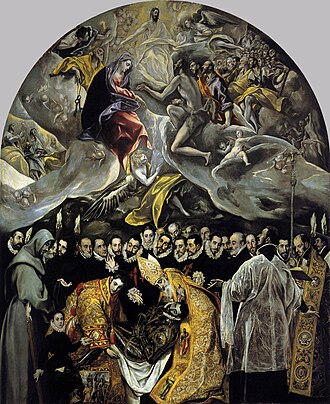 L'Enterrement du comte d'Orgaz - El Greco (1586)
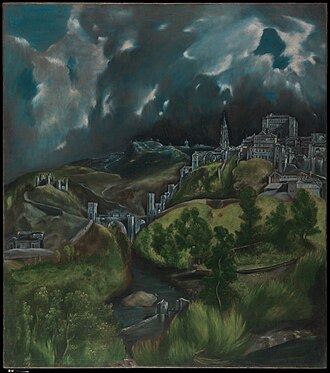 Vue de Tolède - El Greco (1596)
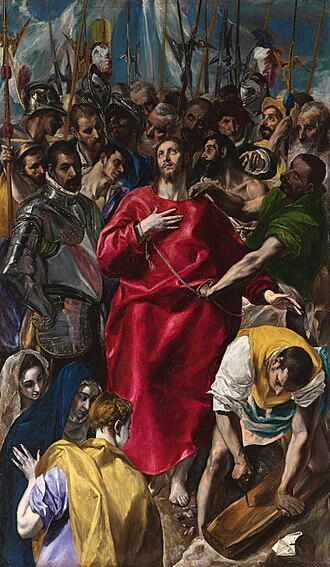 Le Dépouillement du Christ - El Greco (1570s)
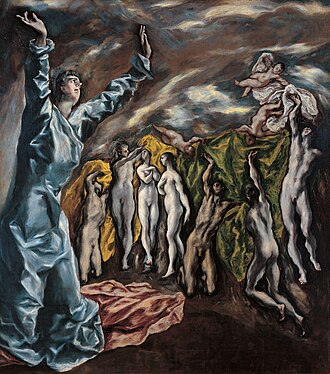 L'Ouverture du cinquième sceau - El Greco (1610)
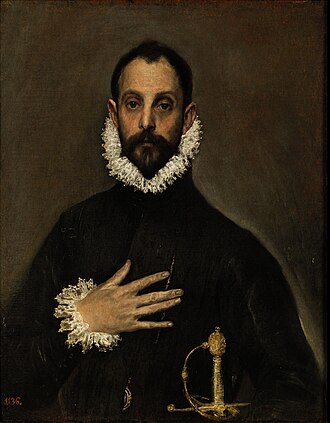 Le Gentilhomme à la main sur la poitrine - El Greco (1580)
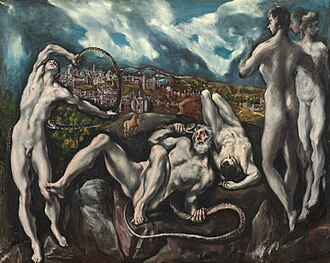 Laocoon - El Greco (1610s)
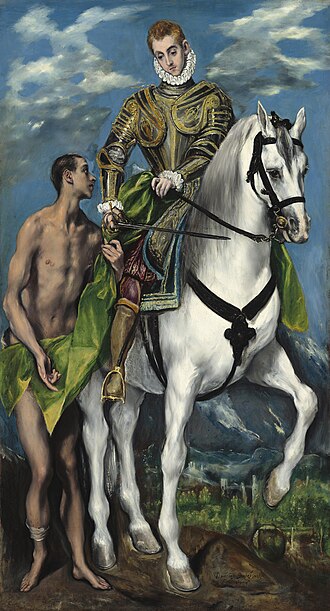 Saint Martin et le Mendiant - El Greco (1597)
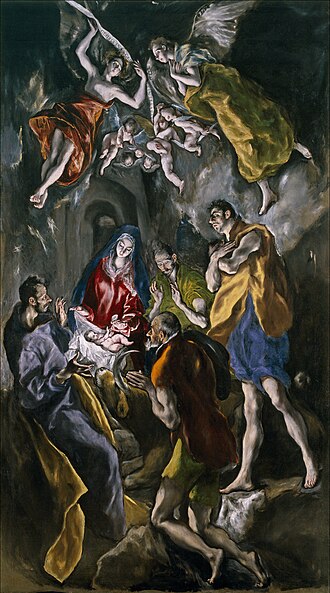 L'Adoration des bergers - El Greco (1612)
Œuvres d'artistes liés
 Les Noces de Cana - Paolo Veronese (1560s)
 Le Repas chez Levi - Paolo Veronese (1573)
 La Cène - Jacopo Tintoretto (1563)
 Miracle de l'esclave - Jacopo Tintoretto (1540s)
 Vénus d'Urbin - Titian (1538)
 L'Assomption de la Vierge - Titian (1510s)
 Le Souper à Emmaüs - Caravaggio (1601)
 La Vocation de saint Matthieu - Caravaggio (1609)
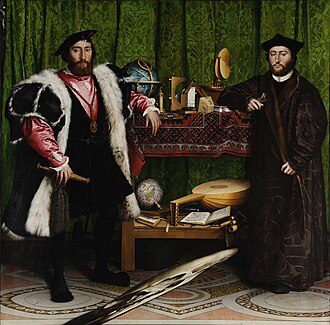 Les Ambassadeurs - Hans Holbein the Younger (1533)
 Le Christ mort - Hans Holbein the Younger (1520s)