Penitent Mary Magdalena
Le Greco · 1590s
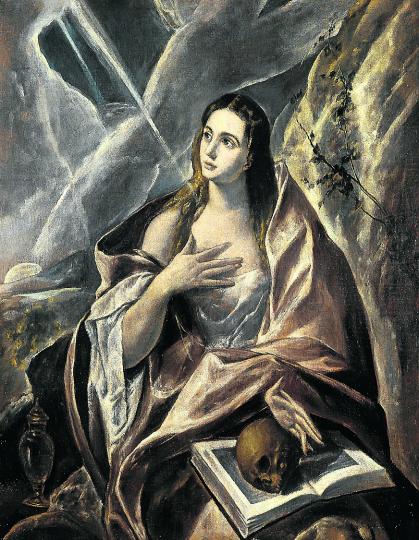
A small Magdalene at Montserrat lifts her eyes to heaven, yet her bare shoulder hints at a world she has not quite left behind. Even the museum that owns it has doubts about who painted it.
The story behind the painting
This small Penitent Magdalene, about 60 by 45 cm according to Harold Wethey and 57 by 44 cm according to the Museum of Montserrat, is attributed to El Greco. Wethey distinguished five models of the subject in the painter's work and considered this canvas an autograph copy of the Penitent Magdalene in Budapest, the prototype of model III. The dates disagree: Wethey placed it around 1578 to 1580, the museum around 1576 to 1577, and Wikidata gives the 1590s. Spanish Wikipedia sums it up as around 1578. Wethey catalogued it as number 262, Tiziana Frati as 38-b.
What to look for
Wethey judged the painting a minor but interesting version of the Budapest Magdalene. Look at the direction of her gaze: Mary Magdalene raises her eyes to heaven, the source of salvation. Then look at her right shoulder and breast, which are uncovered. That contrast is the heart of the picture. According to the Spanish Wikipedia article, this third type of the subject, together with the first two versions of the Expulsion of the Merchants from the Temple, holds the only examples of female eroticism in El Greco's entire painted work. The small format makes it an intimate image, meant to be seen up close.
Meaning and intent
The painting stages a conflict. Her upward look speaks of repentance and the hope of salvation, but her bare shoulder and breast leave doubts, as the source puts it, about her sincerity and her resolve to rise above worldly desires. Rather than a calm saint already at peace, this Magdalene seems caught in the middle of her conversion, pulled between heaven and the world. That tension, rare in El Greco, is what makes even a small version of the theme worth looking at closely, and it explains why scholars single out this type of Magdalene within his work.
Legacy
Doubts surround the attribution. Although Wethey listed the painting among the authentic works, it was not selected for the 2014 exhibition El Greco. La mirada de Rusiñol, which brought together most of the El Greco paintings in Catalan museums, and the press reported that the museum's own management had some doubts about its authenticity. The work belonged to Alejandro Gallart Folch, who bought it at a second-hand market in Madrid to decorate his Palau de les Heures. Gallart later exchanged it with Josep Sala i Ardiz for Picasso's portrait of Lola Ruiz Picasso, and Sala left his collection to the Museum of Montserrat.
Le saviez-vous ?
- Attributed to El Greco; the museum itself has doubts.
- Wethey saw it as an autograph copy of the Budapest Magdalene.
- Dates given range from about 1576 to the 1590s.
- Now in the Museum of Montserrat.
À propos de l'artiste
Le Greco (1541-1614)
art religieux · Marie de Magdala
Autres œuvres de Le Greco
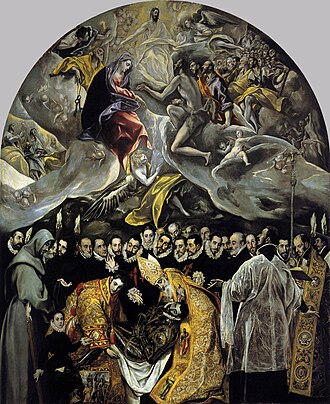 L'Enterrement du comte d'Orgaz - El Greco (1586)
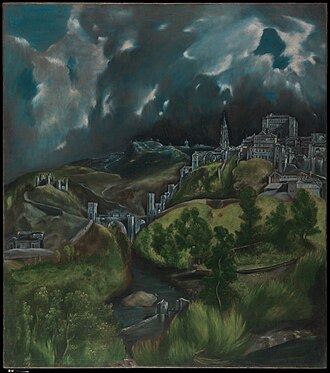 Vue de Tolède - El Greco (1596)
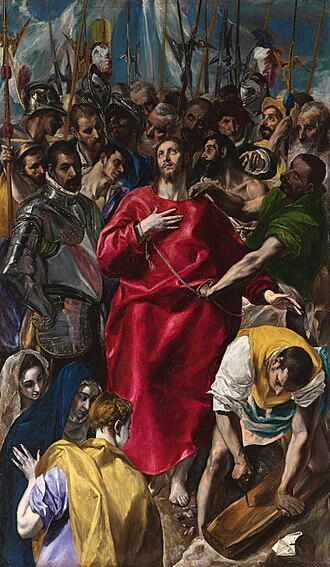 Le Dépouillement du Christ - El Greco (1570s)
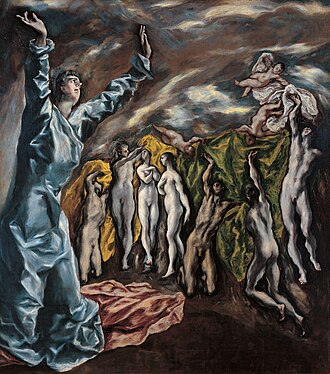 L'Ouverture du cinquième sceau - El Greco (1610)
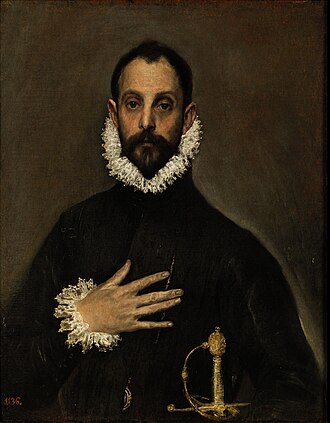 Le Gentilhomme à la main sur la poitrine - El Greco (1580)
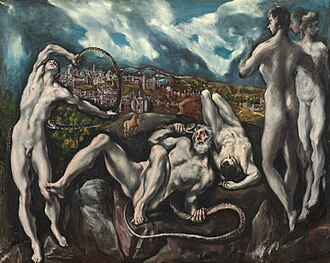 Laocoon - El Greco (1610s)
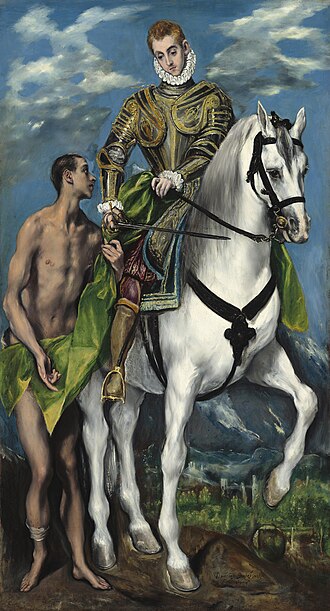 Saint Martin et le Mendiant - El Greco (1597)
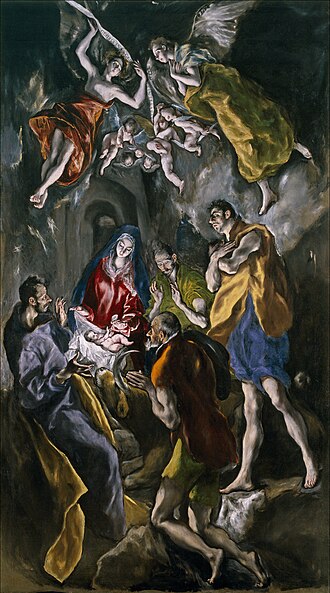 L'Adoration des bergers - El Greco (1612)
Œuvres d'artistes liés
 Les Noces de Cana - Paolo Veronese (1560s)
 Le Repas chez Levi - Paolo Veronese (1573)
 La Cène - Jacopo Tintoretto (1563)
 Miracle de l'esclave - Jacopo Tintoretto (1540s)
 Vénus d'Urbin - Titian (1538)
 L'Assomption de la Vierge - Titian (1510s)
 Le Souper à Emmaüs - Caravaggio (1601)
 La Vocation de saint Matthieu - Caravaggio (1609)
 Les Ambassadeurs - Hans Holbein the Younger (1533)
 Le Christ mort - Hans Holbein the Younger (1520s)