La Sainte Famille.
Le Greco · 1582
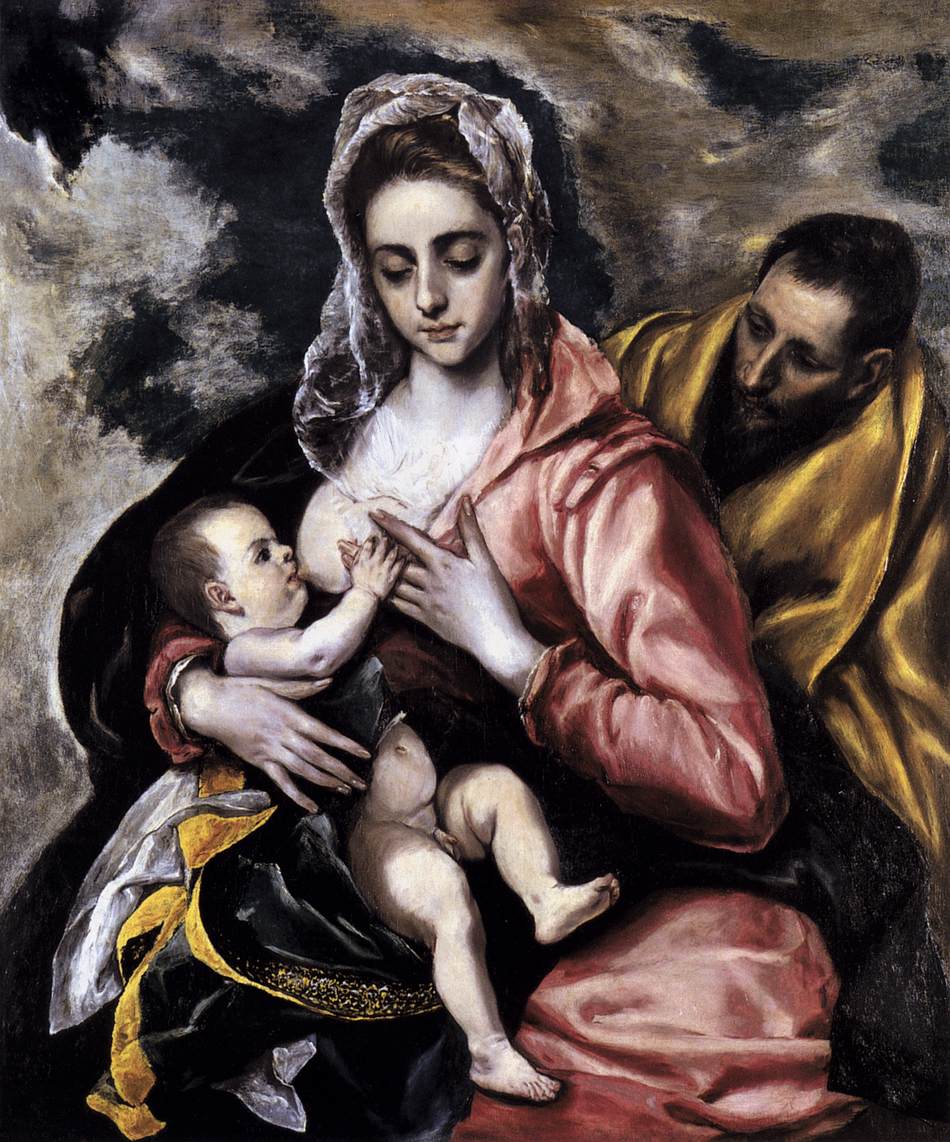
A young mother nurses her child against an open blue sky, while Joseph watches from behind in a coat of glowing yellow. It is counted among the most joyful pictures El Greco ever made, and the first of his four ways of painting the Holy Family.
The story behind the painting
El Greco painted this canvas around 1580 to 1585; Wikidata gives the year 1582. In Harold Wethey's catalogue of the painter's work it is number 84, and it is the model called type I, the simplest of four ways El Greco showed the Holy Family. The other three types grew out of this one by adding more figures to the main group: Saint Anne, Mary Magdalene, or Saint Anne with the young Saint John. Unlike those later types, no copies of this painting by El Greco, by his workshop or of serious age are known.
What to look for
The Virgin sits almost facing us, beautifully idealised, holding the Child on her lap as she nurses him. She wears a pink tunic, with a very dark blue mantle at her right side, and her head is covered by a veil painted with remarkable skill. Joseph stands behind her on the right, shown as a serious young man in a bright yellow cloak, watching mother and child closely. The Child is not idealised at all: he is painted too large, very naturalistically, even a little awkwardly, and naked. There is no setting, only a blue sky with white clouds.
Meaning and intent
Neither the Holy Family as a group nor the nursing Virgin comes from the canonical gospels, yet both were long loved in Christian art, and the Church of the Counter-Reformation allowed the nursing Virgin as long as modesty was respected. Joseph's watchful, protective pose reflects the new importance that Church gave him. Showing the Child naked stresses his humanity rather than his divinity. By removing every detail of place and setting the figures right at the front against the sky, El Greco gives the scene a strong spiritual feeling and pulls all our attention onto the three faces.
Legacy
The source calls this one of El Greco's most cheerful works, noting that he rarely matched the sweetness of the Virgin's face, the grace of her pose or the beauty of the colour here. Its line of owners runs through Spain and France: the Count of Oñate, José de Madrazo in 1856, the Marquis of Salamanca, whose collection was sold in Paris in 1875, a Paris owner sold in 1892, and Raimundo de Madrazo in Madrid in 1908. Today it hangs at the Hispanic Society of America in New York. It measures about 106 by 88 cm.
Le saviez-vous ?
- Painted around 1580-1585, Wikidata gives 1582.
- Type I of El Greco's four Holy Family compositions in Wethey's catalogue.
- No copies by El Greco or his workshop are known.
- Held by the Hispanic Society of America, New York.
À propos de l'artiste
Le Greco (1541-1614)
art religieux · sainte Famille · The Hispanic Society of America · allaitement
Autres œuvres de Le Greco
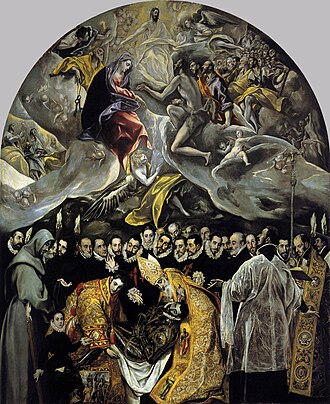 L'Enterrement du comte d'Orgaz - El Greco (1586)
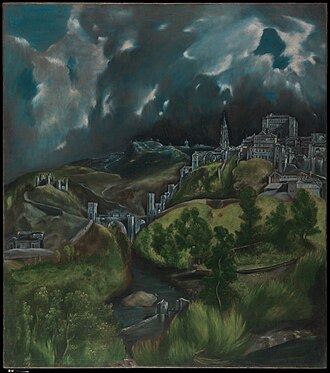 Vue de Tolède - El Greco (1596)
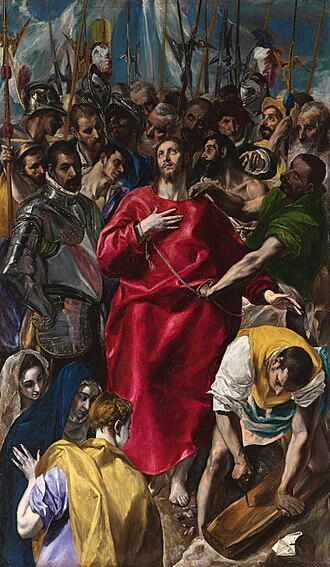 Le Dépouillement du Christ - El Greco (1570s)
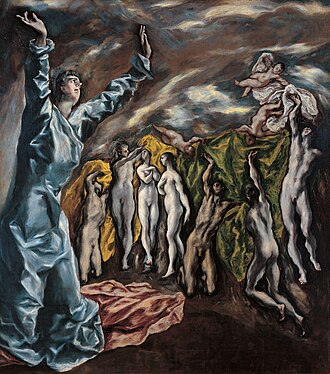 L'Ouverture du cinquième sceau - El Greco (1610)
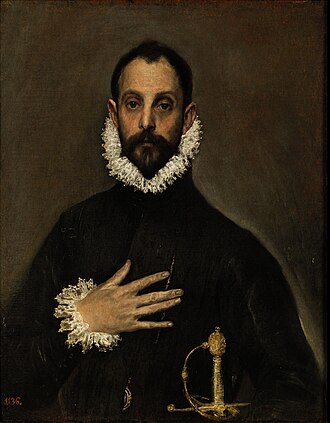 Le Gentilhomme à la main sur la poitrine - El Greco (1580)
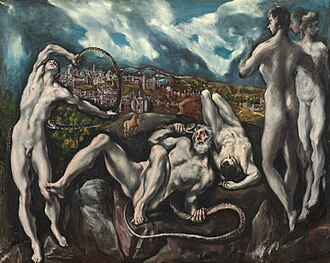 Laocoon - El Greco (1610s)
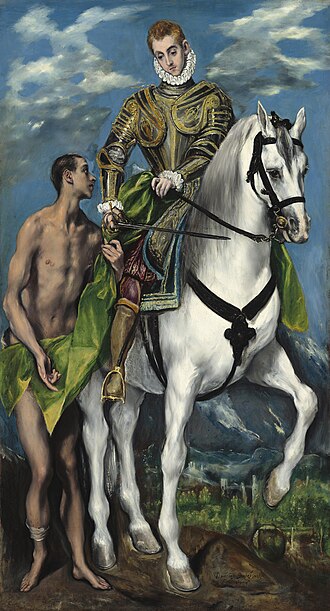 Saint Martin et le Mendiant - El Greco (1597)
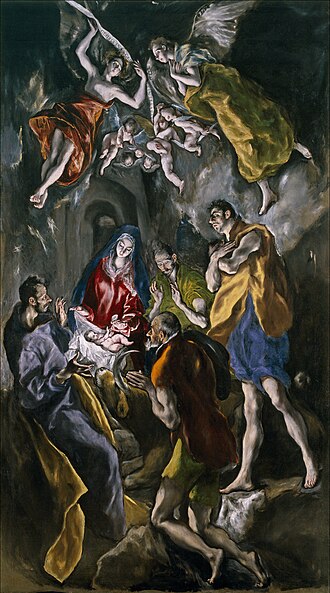 L'Adoration des bergers - El Greco (1612)
Œuvres d'artistes liés
 Les Noces de Cana - Paolo Veronese (1560s)
 Le Repas chez Levi - Paolo Veronese (1573)
 La Cène - Jacopo Tintoretto (1563)
 Miracle de l'esclave - Jacopo Tintoretto (1540s)
 Vénus d'Urbin - Titian (1538)
 L'Assomption de la Vierge - Titian (1510s)
 Le Souper à Emmaüs - Caravaggio (1601)
 La Vocation de saint Matthieu - Caravaggio (1609)
 Les Ambassadeurs - Hans Holbein the Younger (1533)
 Le Christ mort - Hans Holbein the Younger (1520s)