Trouvée
Dante Gabriel Rossetti · 1859
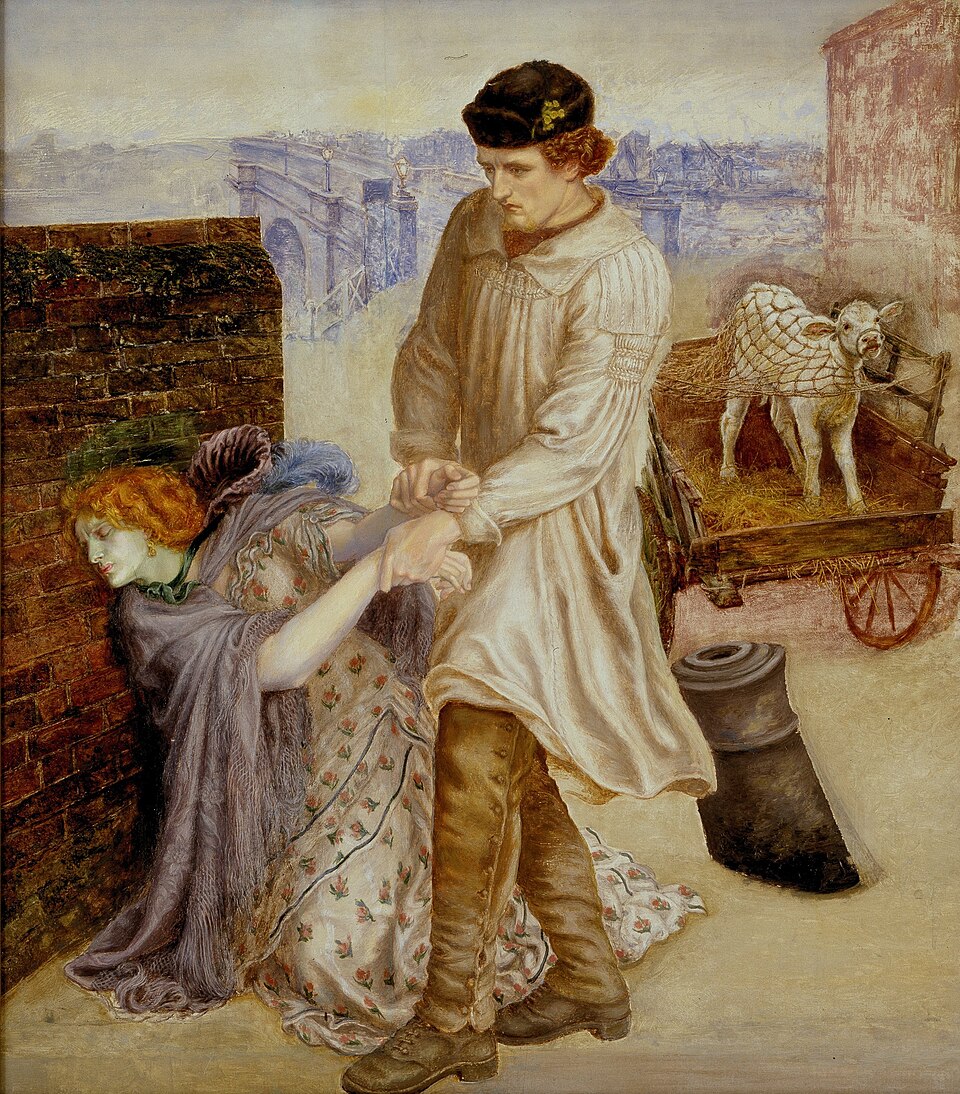
At dawn on a London street, a drover grips the hands of a young woman who has sunk to her knees in shame against a churchyard wall. Rossetti worked on this picture for almost thirty years and never finished it.
The story behind the painting
Found is Rossetti's only oil painting of a contemporary moral subject, urban prostitution. He had raised the theme in 1847 in letters to William Bell Scott, whose poem Rosabell dealt with it. An ink study is dated 1853, and on 30 September 1853 Rossetti asked his mother and sister to find him a wall, a cart and a calf as models. He began painting in autumn 1854. In 1855 he described the plan to Holman Hunt: a London street at dawn, lamps still lit on a distant bridge, a drover who runs after a girl he recognizes as she sinks in shame against a churchyard wall.
What to look for
The drover holds her hands as he seized them, half in bewilderment and half to stop her from hurting herself. In his cart, a white calf is tied on its way to market. The calf explains why the farmer has come to town, but it also mirrors the woman: an innocent animal trapped and on its way to be sold. Ford Madox Brown watched Rossetti struggle in November 1854, painting the calf hair by hair, which he thought sweetly drawn and felt. The woman's head was drawn from Fanny Cornforth, whom Rossetti met in 1858 and who recalled him putting her head against the wall to draw it.
Meaning and intent
Rossetti thought Found one of his most important works. His sister Maria found him a motto from Jeremiah 2:2, I remember thee; the kindness of thy youth, the love of thy betrothal, and he chose betrothal over espousal as closer to the Hebrew. The picture asks whether the woman refuses rescue, accepts it, or repents but cannot escape her fate, like the calf. He knew it might be seen as following Hunt's Awakened Conscience, though he had long planned such subjects. In 1870 he published a sympathetic poem about a prostitute, Jenny, and in 1881 a companion poem titled Found.
Legacy
Commissioned in 1859 by James Leathart, this Delaware version kept Rossetti busy on and off until at least 1881 and was left unfinished at his death in 1882; his assistants Henry Treffry Dunn and Frederic Shields helped, and Dunn and Edward Burne-Jones may have worked on it afterward. William Graham received it only after Rossetti died. Shown at the memorial exhibition in 1883, it moved Lewis Carroll, who saw in the farmer's face pain and pity, condemnation and love. Samuel Bancroft of Wilmington bought it in 1892 and hung it above his desk; his estate gave his collection to the Delaware Art Museum in 1935.
Le saviez-vous ?
- Rossetti's only oil painting on a modern moral subject.
- Worked on from 1854 to at least 1881, left unfinished.
- The woman's head was modeled by Fanny Cornforth.
- In the Delaware Art Museum since 1935.
À propos de l'artiste
Dante Gabriel Rossetti (1828-1882)
scène de genre · préraphaélisme · Delaware Art Museum
Autres œuvres de Dante Gabriel Rossetti
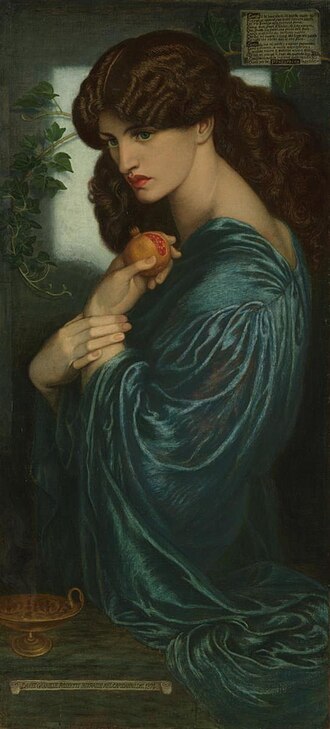 Perséphone - Dante Gabriel Rossetti (1874)
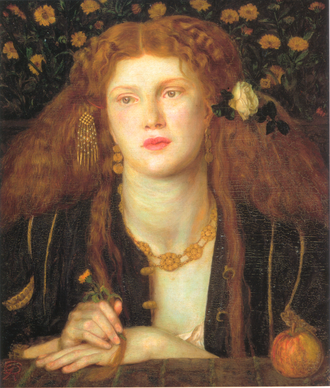 Bocca Baciata - Dante Gabriel Rossetti (1859)
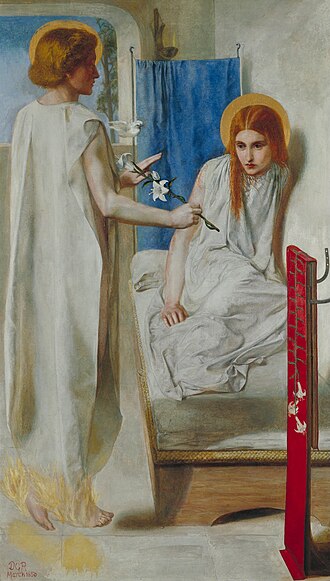 Ecce Ancilla Domini - Dante Gabriel Rossetti (1850)
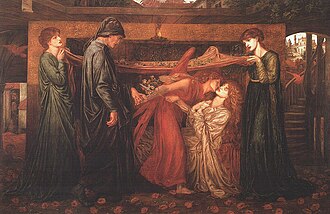 Le Rêve de Dante - Dante Gabriel Rossetti (1871)
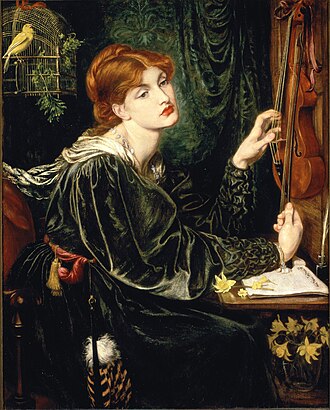 Veronica Veronese - Dante Gabriel Rossetti (1872)
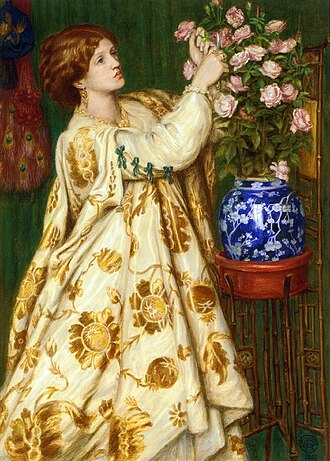 Monna Rosa - Dante Gabriel Rossetti (1867)
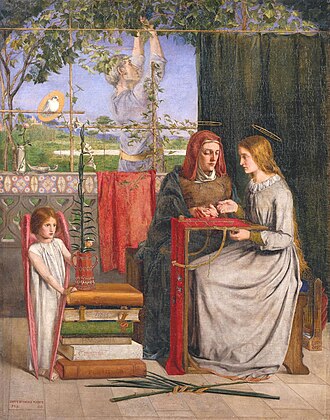 L’Enfance de la Vierge Marie - Dante Gabriel Rossetti (1840s)
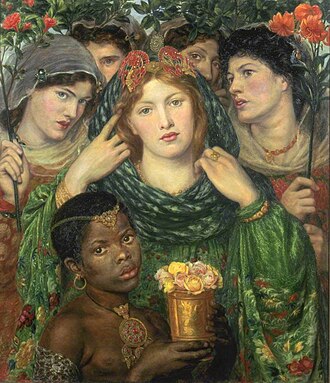 La Bien-Aimée ou La Mariée - Dante Gabriel Rossetti (1865)
Œuvres d'artistes liés
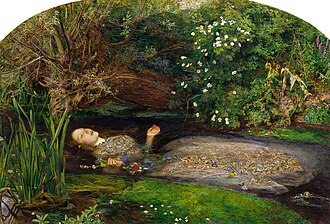 Ophélie - John Everett Millais (1851)
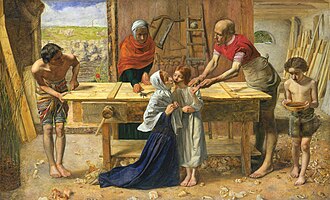 Le Christ dans la maison de ses parents - John Everett Millais (1849)
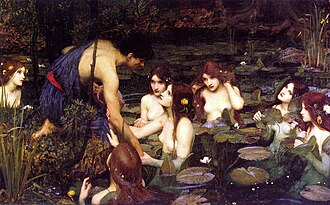 Hylas et les nymphes - John William Waterhouse (1896)
 The Lady of Shalott - John William Waterhouse (1888)