L'Expulsion des marchands du temple
Le Greco · 1595
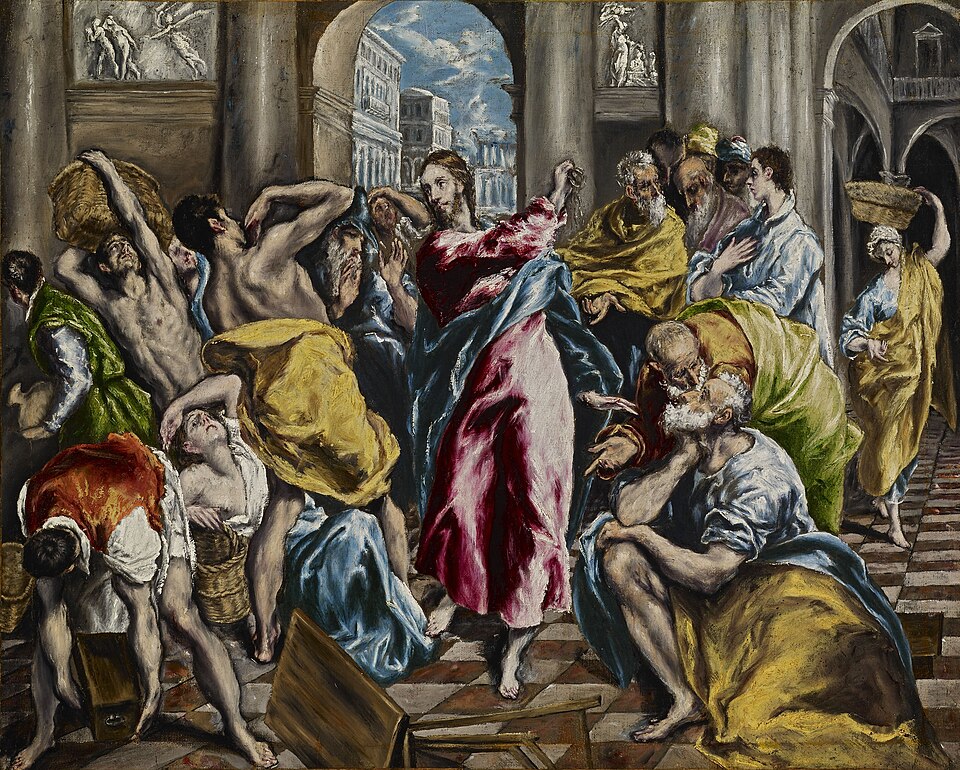
Christ, the only figure in red, strides into a swirl of frightened traders. El Greco returned to this scene of anger and purification again and again, and this small canvas hangs in the Frick Collection.
The story behind the painting
Wikipedia dates this version to 1595 to 1600, and Wikidata gives 1595, but the same article also says it was painted about four years before El Greco's death in 1614 and calls it one of his last major works in Toledo, so the sources do not agree on its date. The subject consumed El Greco through his career: besides this canvas, at least three other versions are known, in Washington, Minneapolis and London. The Washington picture, Christ Cleansing the Temple, is considered the original version and was painted in Venice.
What to look for
This is a small picture, about 42 by 52 cm, with a minimalist composition. Christ is the only figure dressed in red, set apart while the others swirl around him as he strides forward. He is larger than the rest, a use of hierarchical scale, and all figures are larger than life. Strong highlights and black shadows isolate him. On the left are the merchants, on the right the apostles. There are no oxen, sheep or doves, and the money changers are reduced to a few terrified sinners and one man grabbing his coins in fear.
Meaning and intent
The Cleansing of the Temple appears in all four Gospels, when Christ overturned the tables and said the house of prayer had become a den of thieves. In El Greco's time it was a common theme of the Counter-Reformation, when the Council of Trent sought to purify the Church. Christ seems to punish the traders with his right hand and reassure the apostles with his left. Two stone reliefs by the archway carry the double message: the Expulsion of Adam and Eve mirrors the expulsion of the merchants, and the Sacrifice of Isaac foretells the Crucifixion.
Legacy
The painting shows the many sources of El Greco's style. Trained as an icon painter in the Byzantine tradition in Crete, he kept its elongated forms and flattened space. In Venice, Titian and Tintoretto gave him rich colour and a sketchy manner, and the agitated drama here owes much to Tintoretto. He settled in Spain in 1577 and became an important figure of Spanish mysticism in Toledo. The version in the National Gallery, London, closely resembles this one in structure, poses and energy, differing mainly in its floor and its darker tone.
Le saviez-vous ?
- Wikipedia dates it 1595-1600, Wikidata 1595.
- About 42 x 52 cm, in the Frick Collection, New York.
- At least three other versions: Washington, Minneapolis, London.
- Christ is the only figure dressed in red.
À propos de l'artiste
Le Greco (1541-1614)
art religieux · The Frick Collection
Autres œuvres de Le Greco
 L'Enterrement du comte d'Orgaz - El Greco (1586)
 Vue de Tolède - El Greco (1596)
 Le Dépouillement du Christ - El Greco (1570s)
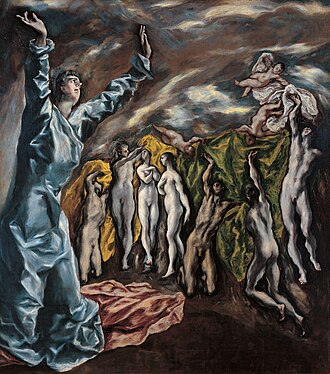 L'Ouverture du cinquième sceau - El Greco (1610)
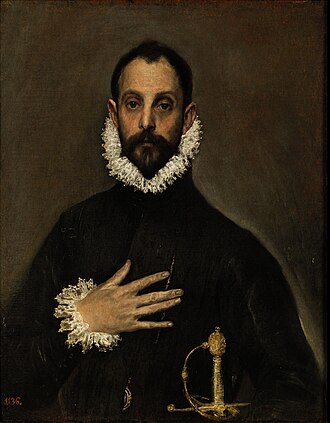 Le Gentilhomme à la main sur la poitrine - El Greco (1580)
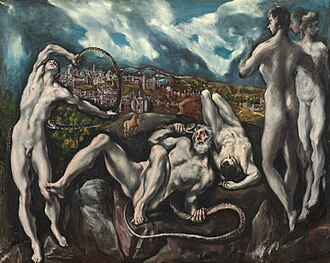 Laocoon - El Greco (1610s)
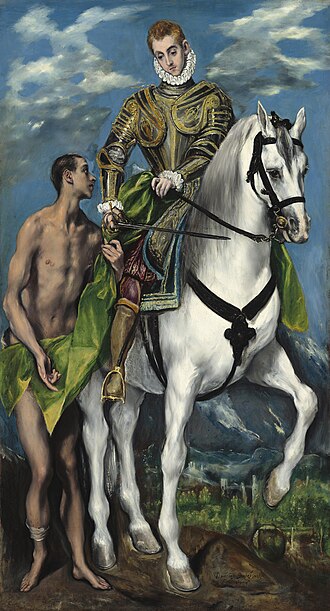 Saint Martin et le Mendiant - El Greco (1597)
 L'Adoration des bergers - El Greco (1612)
Œuvres d'artistes liés
 Les Noces de Cana - Paolo Veronese (1560s)
 Le Repas chez Levi - Paolo Veronese (1573)
 La Cène - Jacopo Tintoretto (1563)
 Miracle de l'esclave - Jacopo Tintoretto (1540s)
 Vénus d'Urbin - Titian (1538)
 L'Assomption de la Vierge - Titian (1510s)
 Le Souper à Emmaüs - Caravaggio (1601)
 La Vocation de saint Matthieu - Caravaggio (1609)
 Les Ambassadeurs - Hans Holbein the Younger (1533)
 Le Christ mort - Hans Holbein the Younger (1520s)