La Femme en robe verte
Claude Monet · 1866
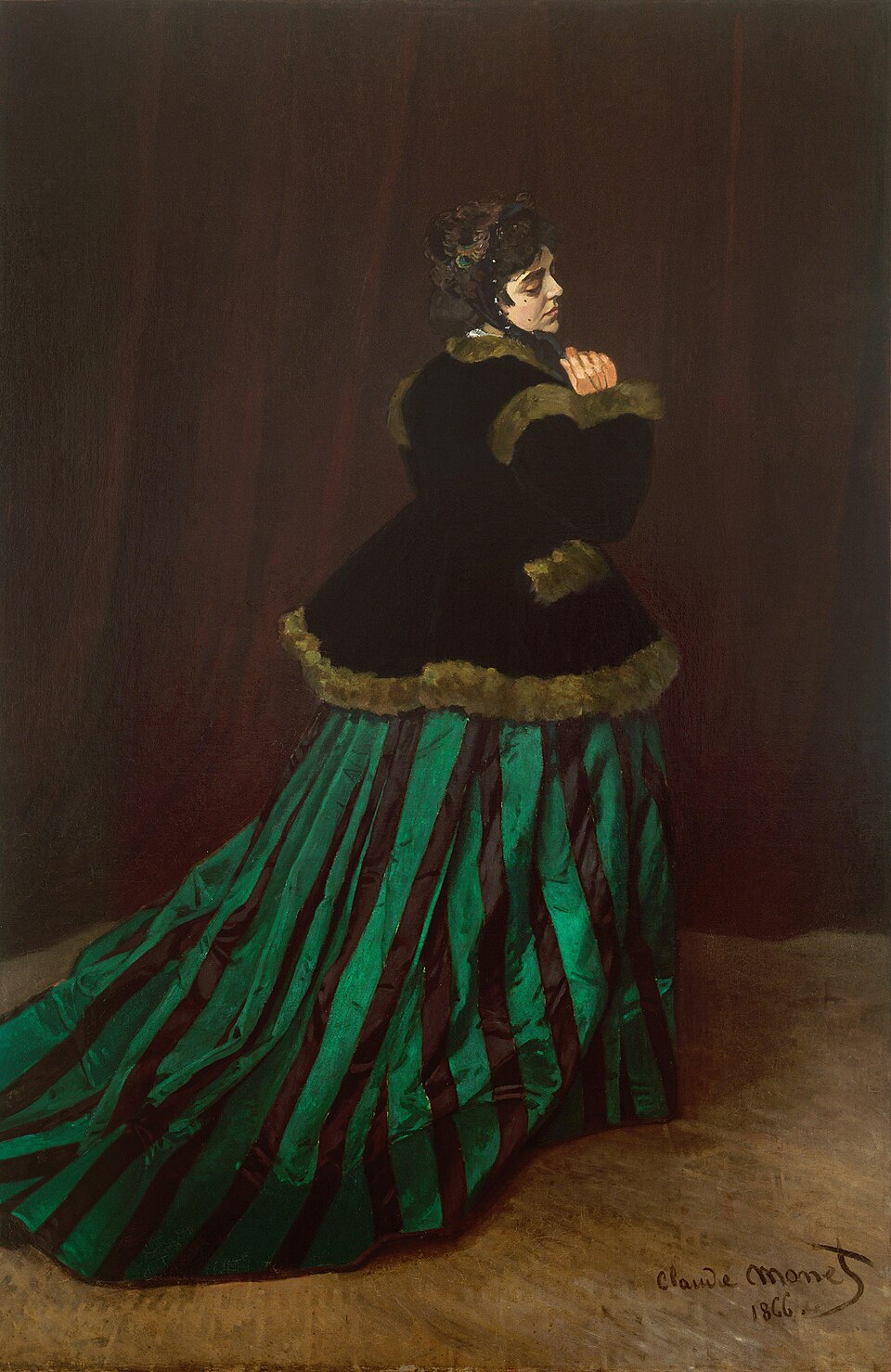
A young woman in an emerald silk dress turns away from us, eyes lowered, as if lost in her own thoughts. She was Camille Doncieux, and the painter who placed her life-size on canvas would one day become her husband.
The story behind the painting
In 1866 Claude Monet painted a life-size portrait of Camille Doncieux, the woman who would later become his wife. The canvas is large, 231 by 151 centimetres, and Monet sent it to the Paris Salon of that same year. There it found a warm reception from the critics, an encouraging moment for a painter still making his name. The work is known by several titles: Camille, The Woman in the Green Dress, and in German Camille in the Green Dress. Monet signed it proudly at the lower right, Claude Monet 1866. Today the painting belongs to the Kunsthalle Bremen in Germany, where visitors can still stand before this full-length figure at her own human scale.
What to look for
Begin with the dress. It is green and black striped silk, its emerald tone and contrasting vertical stripes matching the fashion of the day. Over it Camille wears a black jacket trimmed with fur, with yellow leather gloves and a dark feathered capote. Her hair is gathered in a bun tied with black ribbons at the nape of her neck. Behind her hangs a curtain of dark red, almost black. Now notice the left edge: the train of the dress is cut off by the frame, so the movement seems to carry on beyond the picture. The folds of the skirt ripple with life. The light is soft and its source unclear, perhaps a window to the left, forming a pale half-circle on the floor around her.
Meaning and intent
What makes this portrait so tender is the moment it catches. Camille's head is turned slightly backward, as if she has paused mid-step. Her eyes are cast down, avoiding the viewer completely. Rather than responding to someone speaking to her, she seems to be listening to herself. Monet gives us not a posed society likeness but a private instant of reflection, wrapped in the public splendour of a fashionable dress. The contrast is part of its charm: an elaborate costume, and inside it a quiet, inward figure. The diffused light, catching her face, her hand and her skirt, gently guides us toward the person rather than the clothes alone.
Legacy
The success of Camille at the Salon of 1866 shows a young Monet earning the praise of critics with a grand, ambitious portrait. Its genre is portraiture and Wikidata places it within realism, a reminder that his path began with careful study of real people and real fabrics. The painting also preserves an image of Camille Doncieux at the start of her life with the artist, a document of love as much as of fashion. Kept today in the Kunsthalle Bremen, it continues to invite visitors to look closely at how Monet built movement and light into a single standing figure: the cut-off train, the trembling folds, the soft glow at her feet.
Le saviez-vous ?
- Painted in 1866, oil on canvas, 231 x 151 cm
- Shown at the Paris Salon of 1866, where critics received it well
- Signed lower right: Claude Monet 1866
- Held by the Kunsthalle Bremen
À propos de l'artiste
Claude Monet (1840-1926)
Autres œuvres de Claude Monet
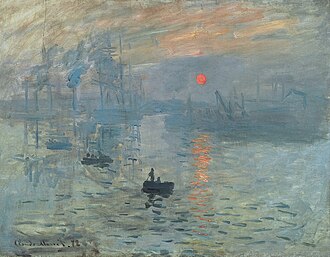 Impression, soleil levant - Claude Monet (1872)
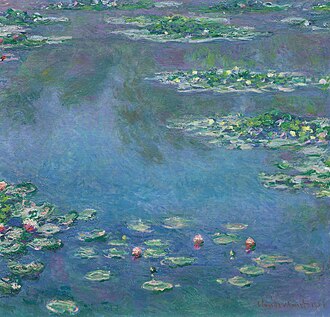 Nymphéas - Claude Monet (1906)
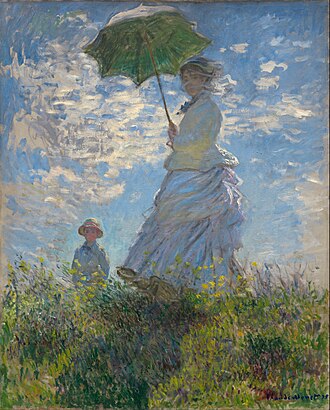 La Femme à l'ombrelle - Claude Monet (1875)
 Terrasse à Sainte-Adresse - Claude Monet (1867)
 Femmes au jardin - Claude Monet (1866)
 La Pie - Claude Monet (1868)
 La Dame en blanc au jardin - Claude Monet (1867)
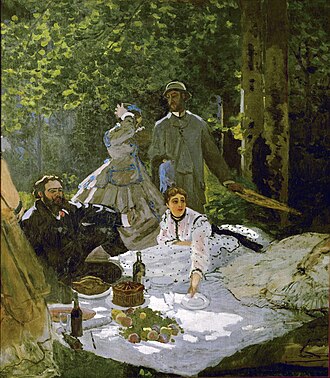 Le Déjeuner sur l'herbe - Claude Monet (1866)
Œuvres d'artistes liés
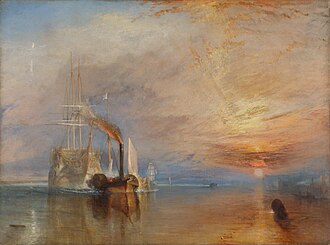 Le Dernier Voyage du Téméraire - J. M. W. Turner (1839)
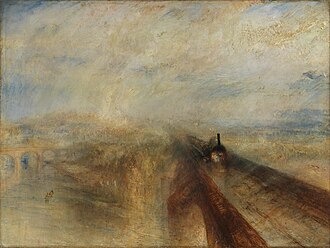 Pluie, Vapeur et Vitesse - J. M. W. Turner (1844)
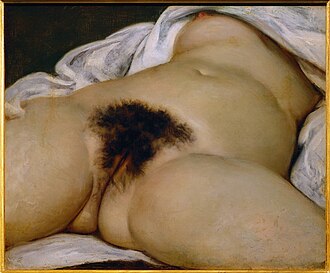 L'Origine du monde - Gustave Courbet (1866)
 Un enterrement à Ornans - Gustave Courbet (2020)
 Le Déjeuner sur l'herbe - Édouard Manet (1863)
 Olympia - Édouard Manet (1863)
 Bal du moulin de la Galette - Pierre-Auguste Renoir (1876)
 Le Déjeuner des canotiers - Pierre-Auguste Renoir (1881)
 La Nuit étoilée - Vincent van Gogh (1889)
.jpg) Terrasse du café le soir - Vincent van Gogh (1888)
Terrasse du café le soir - Vincent van Gogh (1888) D'où venons-nous ? Que sommes-nous ? Où allons-nous ? - Paul Gauguin (1897-1898)
%201889.jpg) Le Christ jaune - Paul Gauguin (1889)
Le Christ jaune - Paul Gauguin (1889)