Le Déjeuner sur l'herbe
Claude Monet · 1866
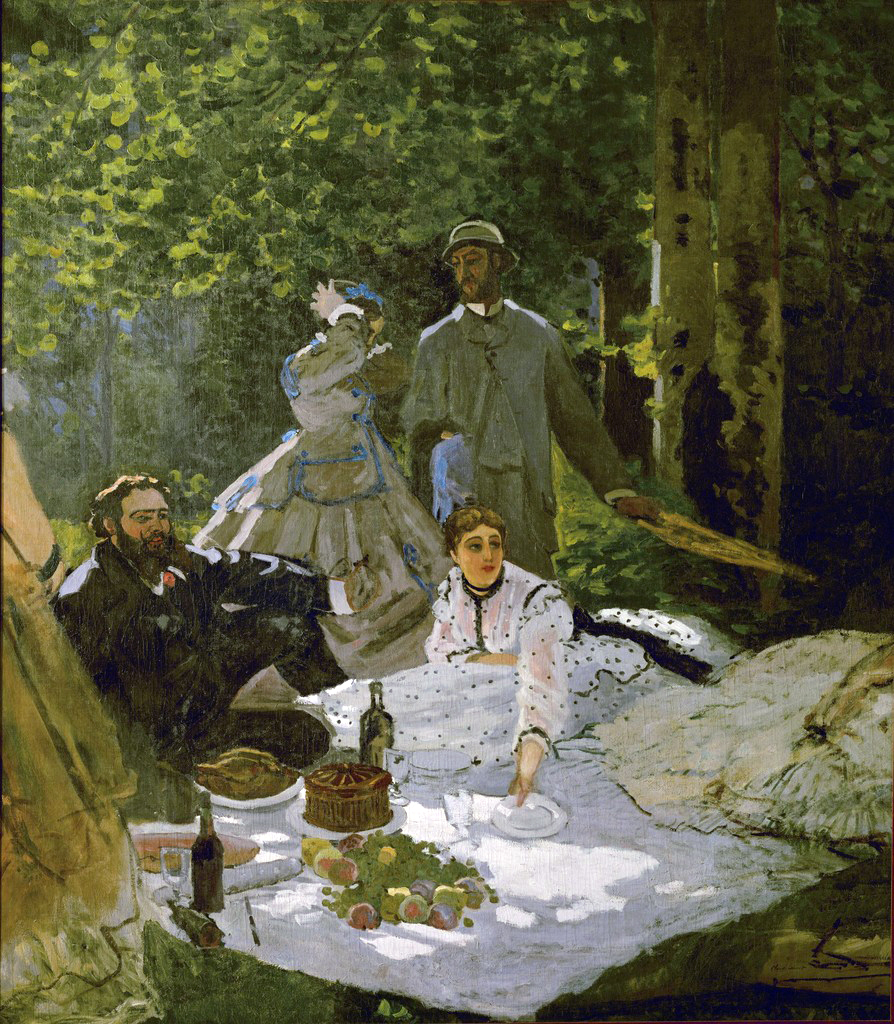
Monet set out to paint a picnic on a canvas big enough to hold life-size figures in sunlight. He never finished it, and what survives are two fragments rescued from damp and ruin.
The story behind the painting
Monet's Luncheon on the Grass was painted in 1865 to 1866 in response to Édouard Manet's 1863 painting of the same title. Wikidata dates it to 1866 and records the forest setting of Chailly-en-Bière. Monet planned to submit it to the Salon of 1866, but he underestimated how long it would take to transfer his sketches to a life-size canvas, and it was unfinished when the exhibition came. Later he offered the huge canvas to his landlord in place of rent. When he bought it back, it had been badly damaged by damp storage, and he had to cut it up to preserve the undamaged parts. Two large fragments, the central and left sections, survive.
What to look for
The full composition shows twelve people dressed in the Parisian fashion of the time, picnicking near a forest glade. They gather around a white cloth spread with fruit, cake and wine. Above them a deciduous tree breaks the sunlight into shifting light and shade, which creates the mood. Monet primed his canvas in a light tone to help the painting glow. Notice the brushwork: bold and emphatic, with large patches of light rather than smooth gradients. In the left panel, look for the bright accents on a woman's dress, which André Dombrowski described as an unnatural visual siren piercing the harmony of the scene. Wikidata records the work at 460 by 600 cm.
Meaning and intent
Monet's picnic carries a different message from Manet's. Joel Isaacson notes that, according to Émile Zola, every painter of the time dreamed of putting life-size figures in a landscape; Monet wanted to paint the scene in a contemporary, objective way, avoiding the artificialities of Manet's version. John House saw him seeking freshness and immediacy through an informal grouping, and contrasted his sparkling natural light with Manet's studio light. Stephan Koja argues the style was meant to make the scene feel entirely present. Mary Gedo Matthews goes further, suggesting Monet wanted to show his vision was superior. Gustave Courbet appears in the picture, as does Monet's close friend Frédéric Bazille, depicted four times in the original composition.
Legacy
The two surviving fragments are now in the Musée d'Orsay in Paris. A smaller version, signed by Monet, is in the Pushkin Museum in Moscow. It was long considered a preparatory sketch, but the museum now states it is likely a later repetition of the finished work; it shows how the whole composition looked before the cut. That version once belonged to the opera singer Jean-Baptiste Faure and was bought by Sergei Shchukin from Paul Cassirer between 1901 and 1908, before the Soviet state seized his collection in 1918. Scholars have linked Monet's painting to Manet's Music in the Tuileries and Courbet's The Hunt Breakfast. Even in fragments, it remains an ambitious early statement of Impressionist light.
Le saviez-vous ?
- Painted 1865 to 1866 per Wikipedia; Wikidata gives 1866 (Wikipedia, Wikidata).
- Recorded size 460 × 600 cm (Wikidata).
- Two fragments are in the Musée d'Orsay; a smaller version is in the Pushkin Museum (Wikipedia).
- Not to be confused with Manet's 1863 painting of the same title (Wikipedia).
À propos de l'artiste
Claude Monet (1840-1926)
femme · scène de genre · portrait · homme · impressionnisme · musée d'Orsay · position assise · station debout · décubitus
Autres œuvres de Claude Monet
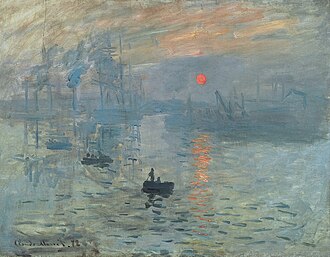 Impression, soleil levant - Claude Monet (1872)
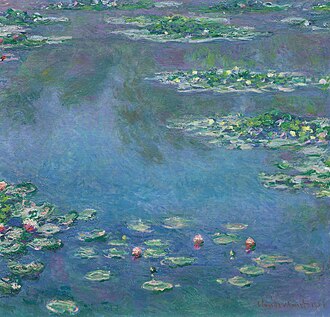 Nymphéas - Claude Monet (1906)
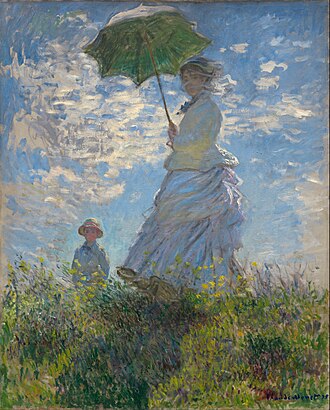 La Femme à l'ombrelle - Claude Monet (1875)
 Terrasse à Sainte-Adresse - Claude Monet (1867)
 Femmes au jardin - Claude Monet (1866)
 La Pie - Claude Monet (1868)
 La Dame en blanc au jardin - Claude Monet (1867)
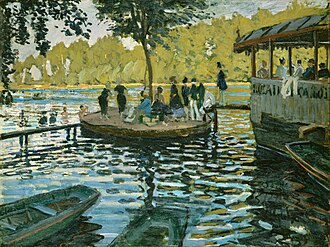 La Grenouillère - Claude Monet (1869)
Œuvres d'artistes liés
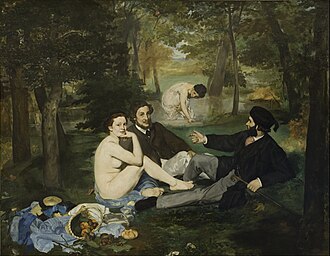 Le Déjeuner sur l'herbe - Édouard Manet (1863)
 Olympia - Édouard Manet (1863)
 Bal du moulin de la Galette - Pierre-Auguste Renoir (1876)
 Le Déjeuner des canotiers - Pierre-Auguste Renoir (1881)
 La Nuit étoilée - Vincent van Gogh (1889)
.jpg) Terrasse du café le soir - Vincent van Gogh (1888)
Terrasse du café le soir - Vincent van Gogh (1888)