El sueño del caballero
Rafael Sanzio · 1504
.jpg)
A young knight sleeps while two women stand beside him, one offering a book and sword, the other a flower. Raphael painted it on a panel barely 17 cm across, and scholars still debate what the dream means.
The story behind the painting
Raphael finished this small painting in 1503 to 1504. It is egg tempera on poplar, about 17 cm square, and it is known by several names: The Vision of a Knight, The Dream of Scipio, or simply Allegory. It probably formed a pair with Raphael's Three Graces, a panel of the same size now in the Musée Condé. The two little pictures may once have been seen side by side, but today they live in different countries, and the knight's panel is in the National Gallery in London.
What to look for
At the centre a knight lies asleep, and two female figures stand with him. One holds a book and a sword; the other, in looser robes, holds a flower. Behind one of them rises a steep and rocky path. Raphael used an extensive palette for this colourful scene, and pigment analysis by ColourLex has identified lead-tin yellow, ultramarine, verdigris and ochres. Look at how much colour and detail Raphael fits into a panel smaller than a page, and at the objects in the women's hands, which carry the meaning of the scene.
Meaning and intent
There are several theories. Some art historians see the sleeper as the Roman general Scipio Aemilianus, who according to Cicero's Dream of Scipio had to choose in a dream between Virtue, with her steep path, and Pleasure, in her loose robes. Yet the two women do not look like rivals. They may instead stand for the ideals a knight should unite, the book, sword and flower pointing to the scholar, the soldier and the lover. The most likely literary source is a passage in the Punica, an epic poem on the Second Punic War by the Latin poet Silius Italicus.
Legacy
The panel was brought to England by William Young Ottley in 1800, and it is now part of the National Gallery. Its meaning has never been settled, and that uncertainty is part of its charm: a picture small enough to hold in two hands that asks how a life should be lived. One writer quoted in the source compares the sleeper to Lancelot and to Scipio, who toured the cosmos in a dream and learned that virtue is rewarded with a place among the stars, a reminder of how much this miniature has made people imagine.
¿Sabías que…?
- Painted by Raphael in 1503-1504, egg tempera on poplar.
- About 17 cm square.
- Probably paired with The Three Graces in the Musée Condé.
- Brought to England by William Young Ottley in 1800.
Sobre el artista
Rafael Sanzio (1483-1520)
Alto Renacimiento · pintura mitológica · National Gallery de Londres · paisaje · río · escudo
Más obras de Rafael Sanzio
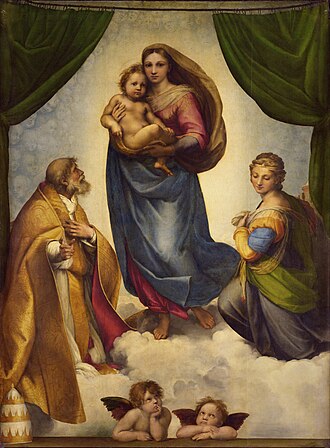 Madonna Sixtina - Raphael (1510s)
.jpg) La Fornarina - Raphael
La Fornarina - Raphael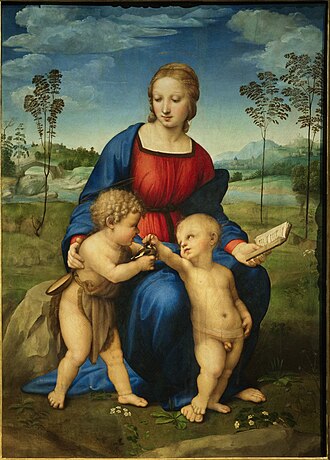 Virgen del jilguero - Raphael (1500s)
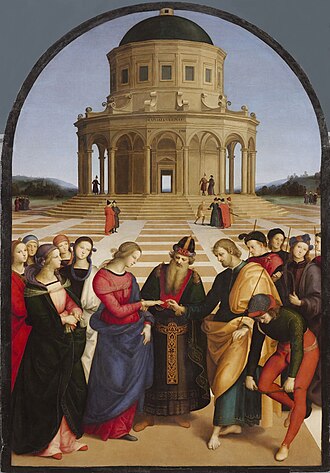 Los desposorios de la Virgen - Raphael (1504)
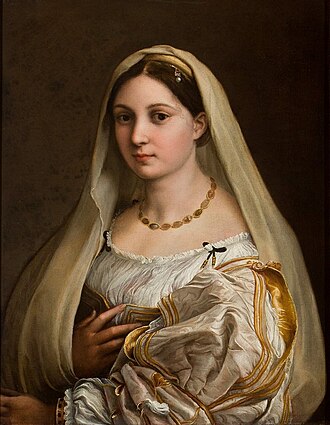 La velada - Raphael (1510s)
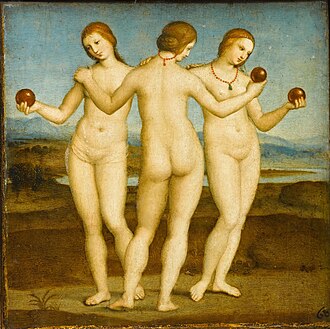 Las Gracias - Raphael (1504)
 Virgen de la Casa de Alba - Raphael (1510)
%20-%20La%20Madonna%20del%20Granduca%20-%20178%20-%20Galleria%20Palatina.jpg) Madona del gran duque - Raphael (1500s)
Madona del gran duque - Raphael (1500s)
Obras de artistas relacionados
 Tondo Doni - Michelangelo (1500s)
 Los tormentos de San Antonio - Michelangelo (1487)
.jpg) Venus de Urbino - Titian (1538)
Venus de Urbino - Titian (1538) La Asunción de la Virgen - Titian (1510s)
 La Gioconda - Leonardo da Vinci (1503-1519)
 La dama del armiño - Leonardo da Vinci (1490)
 Autorretrato de Durero - Albrecht Dürer (1500)
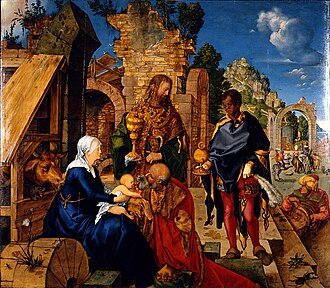 Adoración de los Magos - Albrecht Dürer (1504)
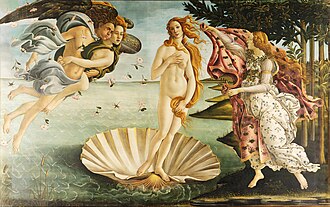 El nacimiento de Venus - Sandro Botticelli (c. 1485)
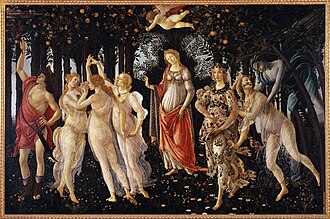 La primavera - Sandro Botticelli (1480s)
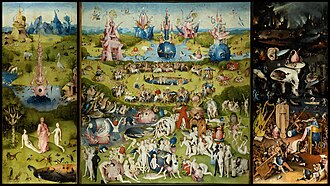 El jardín de las delicias - Hieronymus Bosch
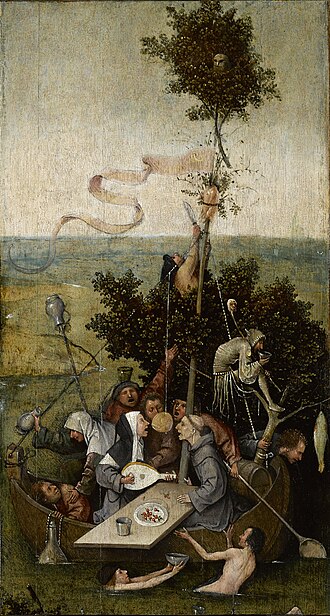 La nave de los locos - Hieronymus Bosch (1500s)