Los desposorios de la Virgen
Rafael Sanzio · 1504
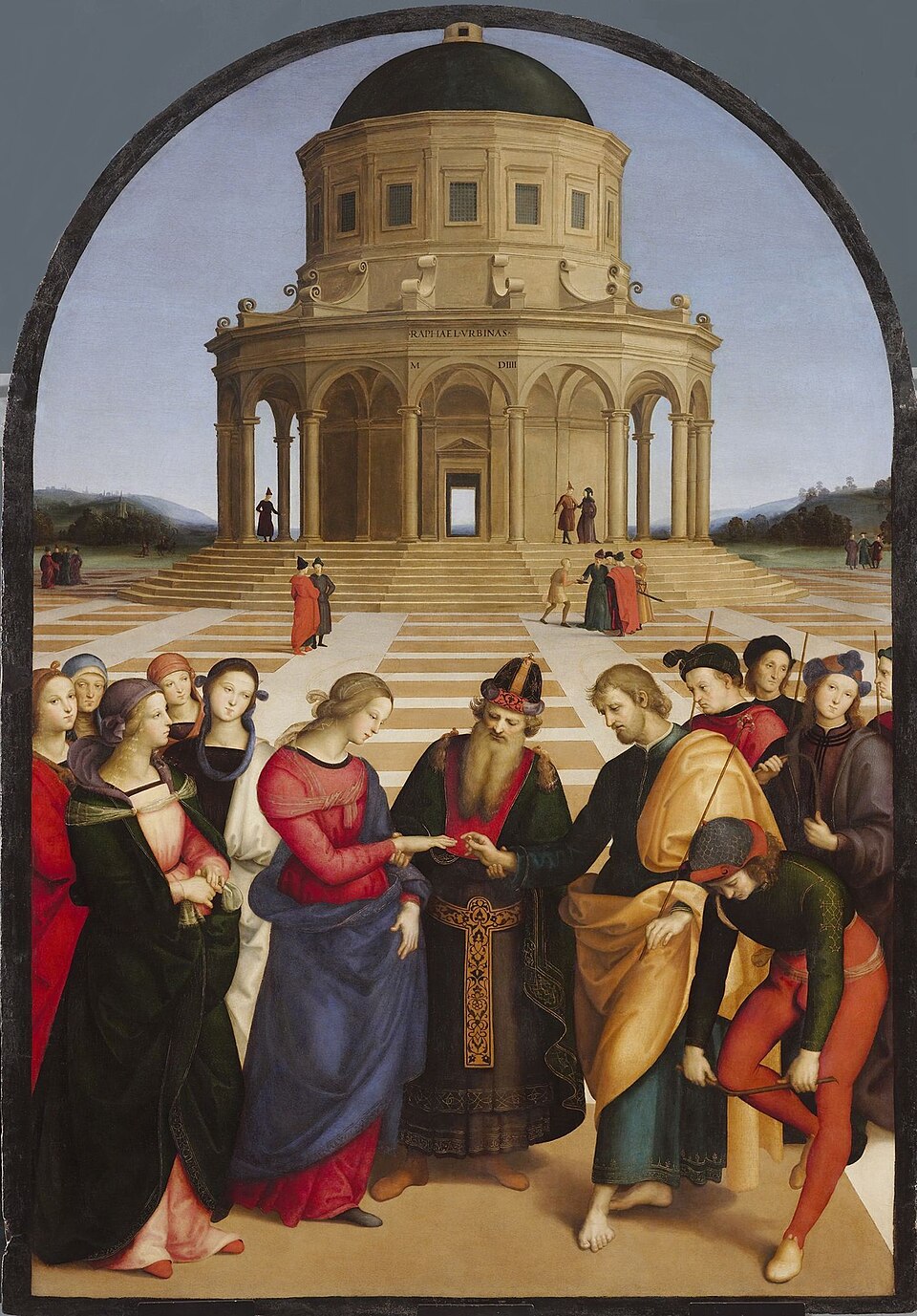
Before a domed temple drawn in careful perspective, Joseph offers Mary a ring. Raphael signed and dated it 1504, and within decades Vasari saw in it the moment the pupil surpassed his master.
The story behind the painting
The Marriage of the Virgin, also known as Lo Sposalizio, was completed in 1504 for the Franciscan church of San Francesco in Citta di Castello, according to the date beside Raphael's signature. Filippo degli Albezzini commissioned it for his family's side altar. It was the last of three commissions from Citta di Castello sent to Raphael's teacher Pietro Perugino and completed, in Perugino's absence, by Raphael. The picture stayed in its church until General Giuseppe Lechi came to the town and received it, as a gift or perhaps a demand. Sources disagree on what followed; by 1806 it had passed to the Italian state and the Pinacoteca di Brera, its home ever since.
What to look for
The scene is the marriage ceremony of Mary and Joseph, set before a domed building that represents the Temple of Jerusalem, very likely imagined as a Renaissance version of the Dome of the Rock. Vasari admired how this temple was drawn in perspective with such evident care that it was marvellous to see the difficulties Raphael had set himself to solve. The panel measures 175 by 118 centimetres. It has been described as somewhat discoloured, and in 1857 the painter Giuseppe Molteni spent months flattening and rehydrating the cracked, bowed panel, cleaning it gently so as to preserve the original.
Meaning and intent
Raphael was clearly inspired by Perugino's own Marriage of the Virgin. Some historians have questioned whether Perugino's picture came first, or was even his, but sixteenth-century documents indicate that Perugino began it in 1499 and finished it after 26 December 1503. For Vasari, Raphael's version showed his style becoming much more subtle and refined, surpassing the manner of his teacher. Seen this way, the painting is both a sacred wedding and a quiet milestone: a young artist taking a familiar model and making it his own.
Legacy
Molteni's decision to keep the original panel, rather than transfer the paint to canvas, allowed twentieth-century historians to study the underdrawing with infrared reflectography. The painting survived many moves, and even an 1859 proposal to give it to France. Its influence reached beyond painting: Franz Liszt wrote a piece for solo piano titled Sposalizio, based on this work, in his Annees de pelerinage. The sources disagree on Lechi's role: one says he kept it until his death, given as 1804, though Lechi died in 1836; another says he sold it in 1801 to Giacomo Sannazaro, who sold it in 1804 to Milan's Ospedale Maggiore.
¿Sabías que…?
- Signed and dated 1504; made for San Francesco, Citta di Castello.
- At the Pinacoteca di Brera, Milan, since 1806.
- Restored by Giuseppe Molteni from November 1857.
- Inspired Liszt's piano piece Sposalizio.
Sobre el artista
Rafael Sanzio (1483-1520)
arte religioso · mujer · Virgen María · Alto Renacimiento · José de Nazaret
Más obras de Rafael Sanzio
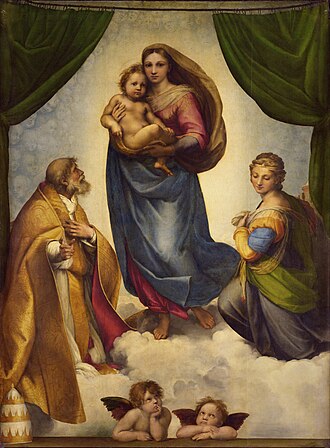 Madonna Sixtina - Raphael (1510s)
.jpg) La Fornarina - Raphael
La Fornarina - Raphael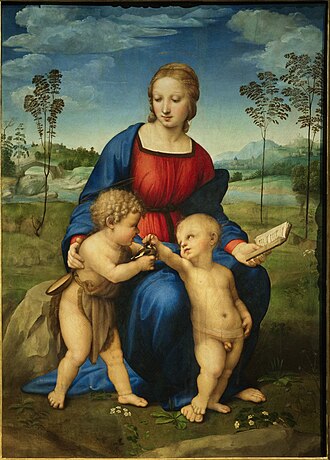 Virgen del jilguero - Raphael (1500s)
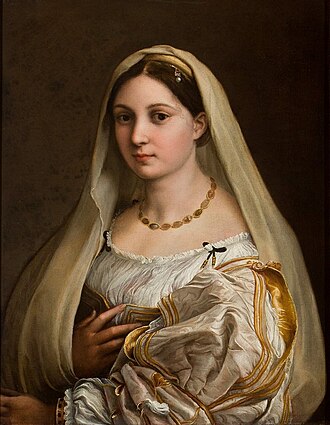 La velada - Raphael (1510s)
 Las Gracias - Raphael (1504)
 Virgen de la Casa de Alba - Raphael (1510)
%20-%20La%20Madonna%20del%20Granduca%20-%20178%20-%20Galleria%20Palatina.jpg) Madona del gran duque - Raphael (1500s)
Madona del gran duque - Raphael (1500s)%20September%202015-1a.jpg) La transfiguración - Raphael
La transfiguración - Raphael
Obras de artistas relacionados
.jpg) Venus de Urbino - Titian (1538)
Venus de Urbino - Titian (1538) La Asunción de la Virgen - Titian (1510s)
 La Gioconda - Leonardo da Vinci (1503-1519)
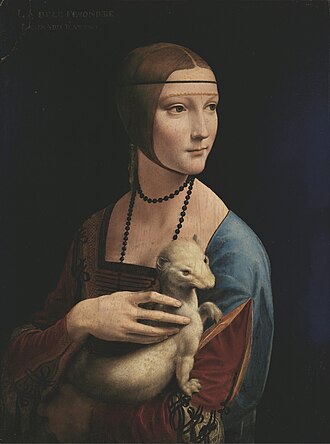 La dama del armiño - Leonardo da Vinci (1490)
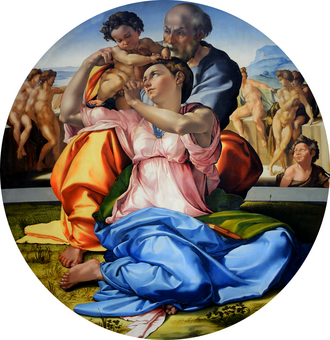 Tondo Doni - Michelangelo (1500s)
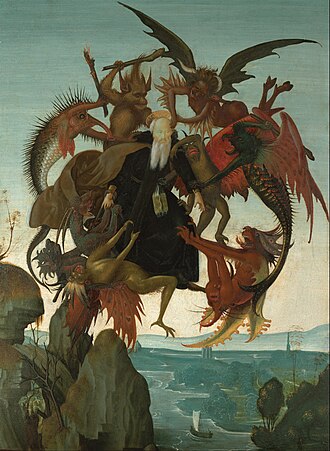 Los tormentos de San Antonio - Michelangelo (1487)
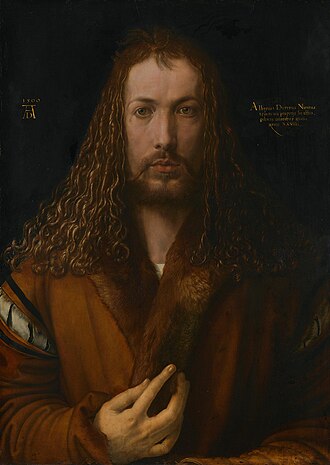 Autorretrato de Durero - Albrecht Dürer (1500)
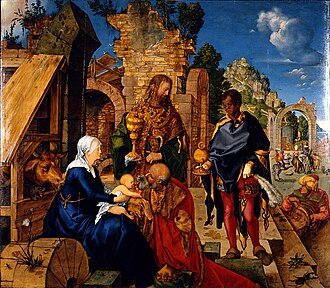 Adoración de los Magos - Albrecht Dürer (1504)
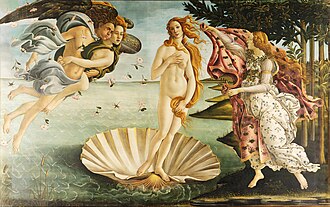 El nacimiento de Venus - Sandro Botticelli (c. 1485)
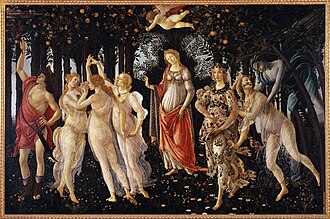 La primavera - Sandro Botticelli (1480s)
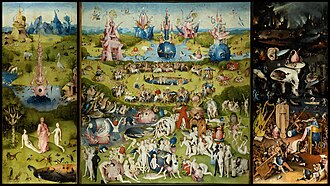 El jardín de las delicias - Hieronymus Bosch
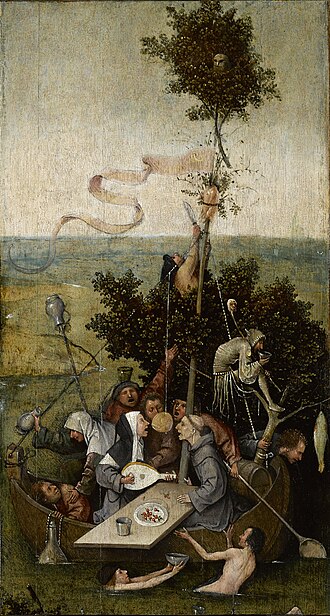 La nave de los locos - Hieronymus Bosch (1500s)